

What Time Is 8 Hours From Now?
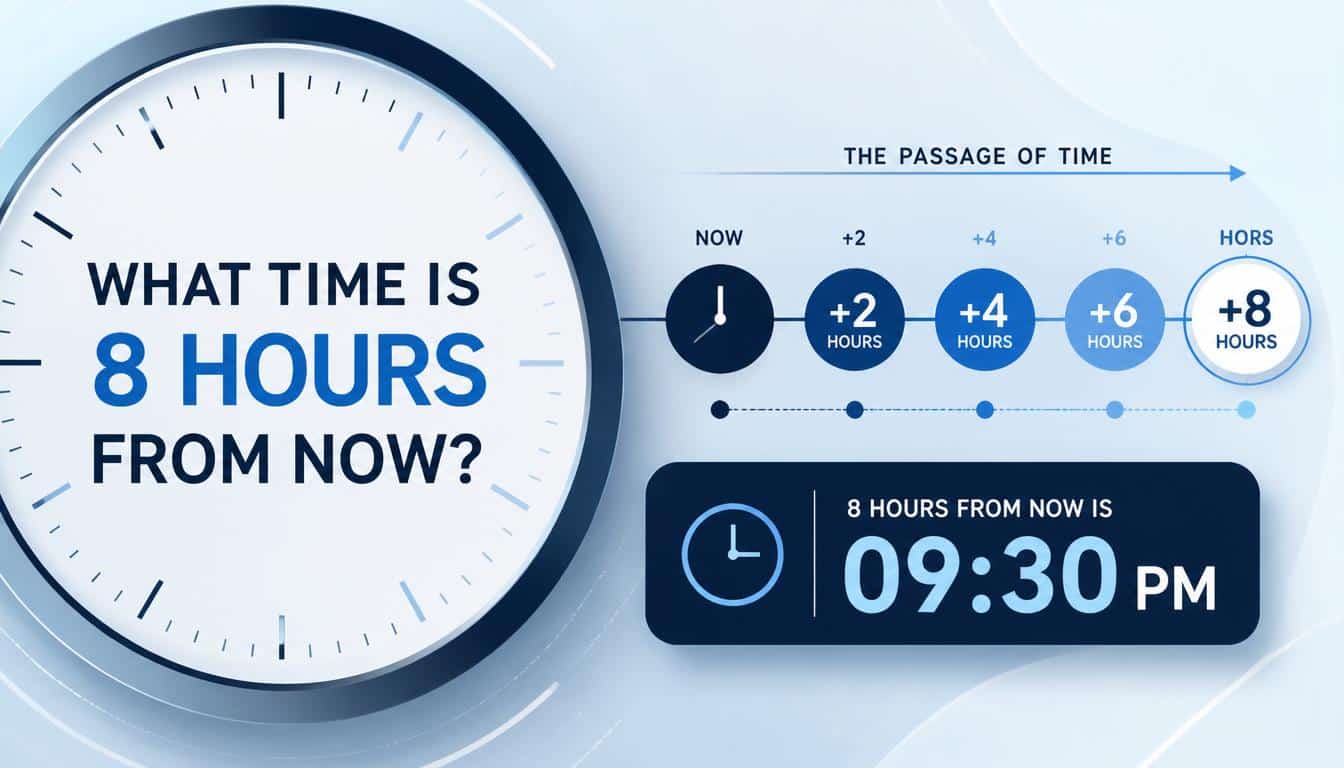
There is something strangely comforting about asking, “What time is 8 hours from now?” It sounds like a tiny question, almost too small to deserve a whole article, but time has a funny way of becoming important when you are waiting for something.
Maybe it is a late-night message, an early appointment, a flight, a work shift, or simply the moment when you hope tomorrow will feel a little different.
Eight hours can be a night of sleep, a long journey, or a surprisingly short stretch when you are watching the clock.
For the date and time context used here, the starting point is Friday, August 21, 2026, at about 9:11 PM in GMT+5. Adding 8 hours brings the resulting time to about 5:11 AM on Saturday, August 22, 2026.
So, if you are asking what time will it be in 8 hours, the practical answer from that starting point is 5:11 AM the following morning.
Tiny difference in minutes can change the displayed answer, so a clock that says 9:16 PM would produce 5:16 AM instead, which is why exact starting time matters.
| Question | Answer |
| What time is 8 hours from now? | 5:16 AM, Saturday, August 22, 2026 |
| Current time | 9:16 PM, Friday, August 21, 2026 |
| Calculation | 9:16 PM + 8 hours |
| Result | 5:16 AM next day |
What Time Is 8 Hours From Now?
The simplest way to solve 8 hours from now is to take the current time and move the clock forward by eight hours.
If the clock says 9:11 PM, you can add eight hours in your head: three hours takes you to midnight, and the remaining five hours takes you to 5:11 AM.
It looks almost too easy once you see it, though crossing midnight is where people sometimes get themselves tangled.
For a starting time of 9:16 PM, the calculation becomes 9:16 PM + 8 hours = 5:16 AM. Notice that the minutes do not magically change during the time calculation; only the hour moves forward.
The date changes too, because the calculation passes midnight, which is one of those little details our brains sometimes forget at 1 AM.
If your starting point is 9:16 PM, then 8 hours from now is 5:16 AM on Saturday, August 22, 2026.
That example may be useful when comparing a clock, search result, or hours from now calculator, especially if another website is showing a slightly different answer because its current time was captured at a different minute.
The Quick 8-Hour Time Calculation
You dont need a complicated formula for ordinary adding hours to time. Think of the clock as a circular road.
Start at your time, travel eight hourly steps, and notice whether you cross midnight. If you do, the answer belongs to the next calendar day, even though the clock itself has simply gone around the circle.
For example:
- 1:00 AM + 8 hours = 9:00 AM.
- 4:30 AM + 8 hours = 12:30 PM.
- 8:00 AM + 8 hours = 4:00 PM.
- 11:00 AM + 8 hours = 7:00 PM.
- 4:00 PM + 8 hours = 12:00 AM the next day.
- 9:00 PM + 8 hours = 5:00 AM the next day.
- 11:30 PM + 8 hours = 7:30 AM the next day.
The important trick is not really arithmetic, its remembering that AM/PM conversion and the calendar date have to follow the clock.
When you pass 12:00 AM, you are no longer on the same date, and that small fact is what makes some time questions look more mysterious than they really are.
What Is 8 Hours in Minutes, Seconds, and Milliseconds?
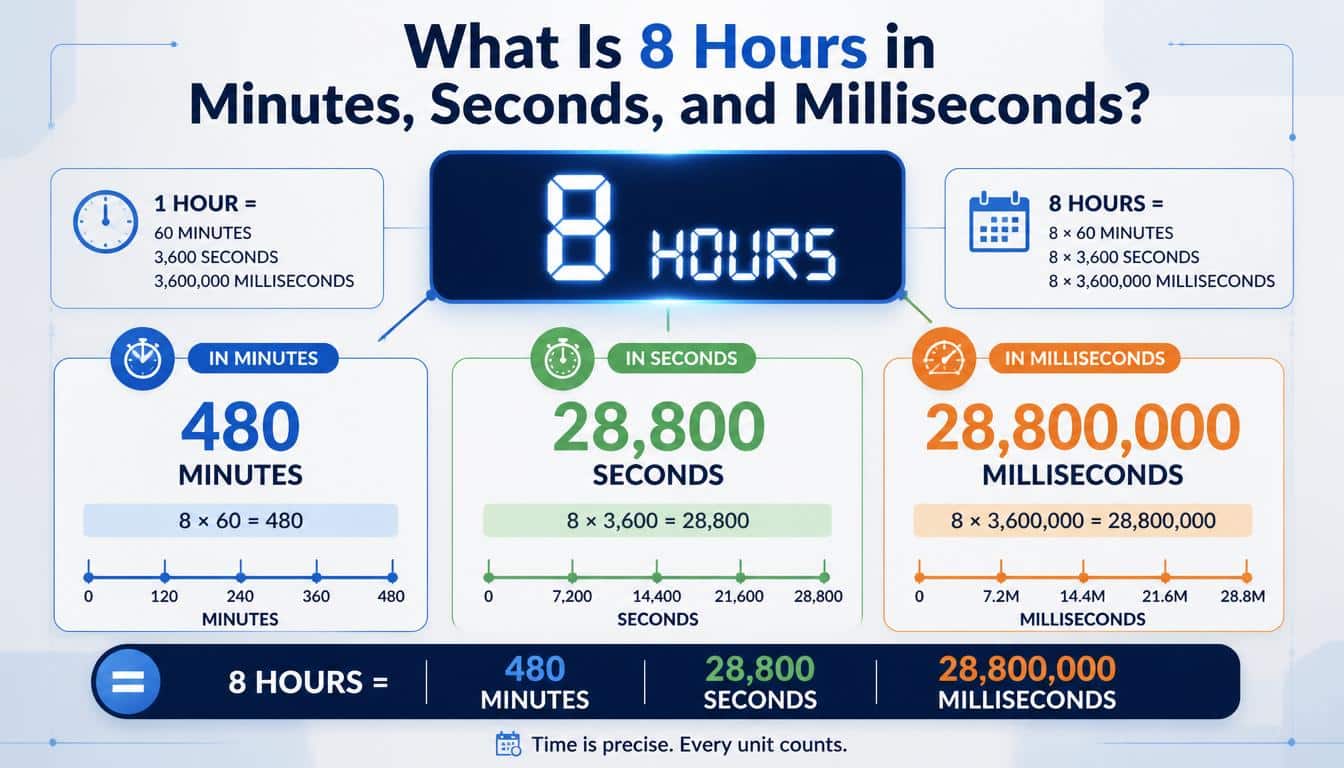
An hour contains 60 minutes, so 8 hours in minutes is 8 × 60, giving 480 minutes. That makes eight hours long enough to cover an ordinary working day, a substantial sleep period, or a very determined airport layover, depending on your life choices.
For smaller units, the duration conversion is equally straightforward. Eight hours contains 28,800 seconds, because 8 × 60 × 60 = 28,800. In milliseconds,
it becomes 28,800,000 milliseconds, since every second contains 1,000 milliseconds.
it gets a little ridiculous to talk about milliseconds when planning breakfast, but the math remains perfectly obedient.
So the useful conversions are:
- 8 hours = 480 minutes
- 8 hours = 28,800 seconds
- 8 hours = 28,800,000 milliseconds
These conversions are handy when software, schedules, timers, or technical systems ask for a duration instead of a clock time.
A person might say “come back in eight hours,” while a computer may quietly prefer “28,800 seconds,” because apparently computers enjoy making simple things look more serious.
What Time Was It 8 Hours Ago? Complet explane
Finding 8 hours ago is the reverse of finding the future time. Instead of adding eight hours, you subtract eight hours from the starting point.
If it is 9:11 PM, moving backward eight hours gives 1:11 PM on the same Friday, assuming the calculation starts from that exact time.
The same logic works around midnight, although the date may move backward. If it is 5:00 AM Saturday, for example, 8 hours ago was 9:00 PM on Friday.
This is simply subtracting 12 hours as a mental stepping stone and then adding four hours forward, or you can just count backward eight hours if your brain is awake enough.
That reverse calculation is useful for checking messages, work logs, travel records, or anything where you need to calculate time difference.
Just remember that “ago” travels backward while “from now” travels forward, which sounds obvious until you are doing it at 3 AM and questioning every decision that led you there.
Understanding AM and PM When Adding 8 Hours
The AM/PM system divides a day into two twelve-hour sections, and this is where time conversion can occasionally become annoying.
In a 24-hour clock, 9:00 PM is written as 21:00. Add eight hours and you get 05:00 the next day, which converts back to 5:00 AM.
A useful mental method is to switch temporarily to 24-hour time. For example, 8:30 PM becomes 20:30. Add eight hours and you get 28:30, but because a day only has 24 hours, subtract 24 and get 04:30.
The answer is therefore 4:30 AM the following morning. It looks more technical than necessary, but it can prevent silly AM/PM mistakes.
The same approach works for many questions such as what time is 9 hours from now, what time is 10 hours from now, or what time is 12 hours from now. You are really just moving along a 24-hour cycle, not performing some secret horological ritual.
What Time Is 8 Hours From Now When Midnight Gets Involved?
Midnight is the great troublemaker of simple time questions. If you start at 10:00 PM and add eight hours, you cannot simply say 18:00 and stop. The correct answer is 6:00 AM on the following day, because two hours pass before midnight and six more pass afterward.
This matters whenever the future time lands after midnight. A result such as 2:15 AM is not merely “2:15”; it belongs to a specific date.
When making travel plans or scheduling reminders, that date can be more important than the hour itself, and forgetting it can make a perfectly good plan go sideways real quick.
For example, if a train leaves at 11:45 PM and a journey lasts eight hours, the arrival time is 7:45 AM the next day. The journey has crossed a date boundary, but the duration is still exactly eight hours. Time is weirdly tidy like that.
Comparing 8 Hours With 9, 10, 11, 12, and 13 Hours
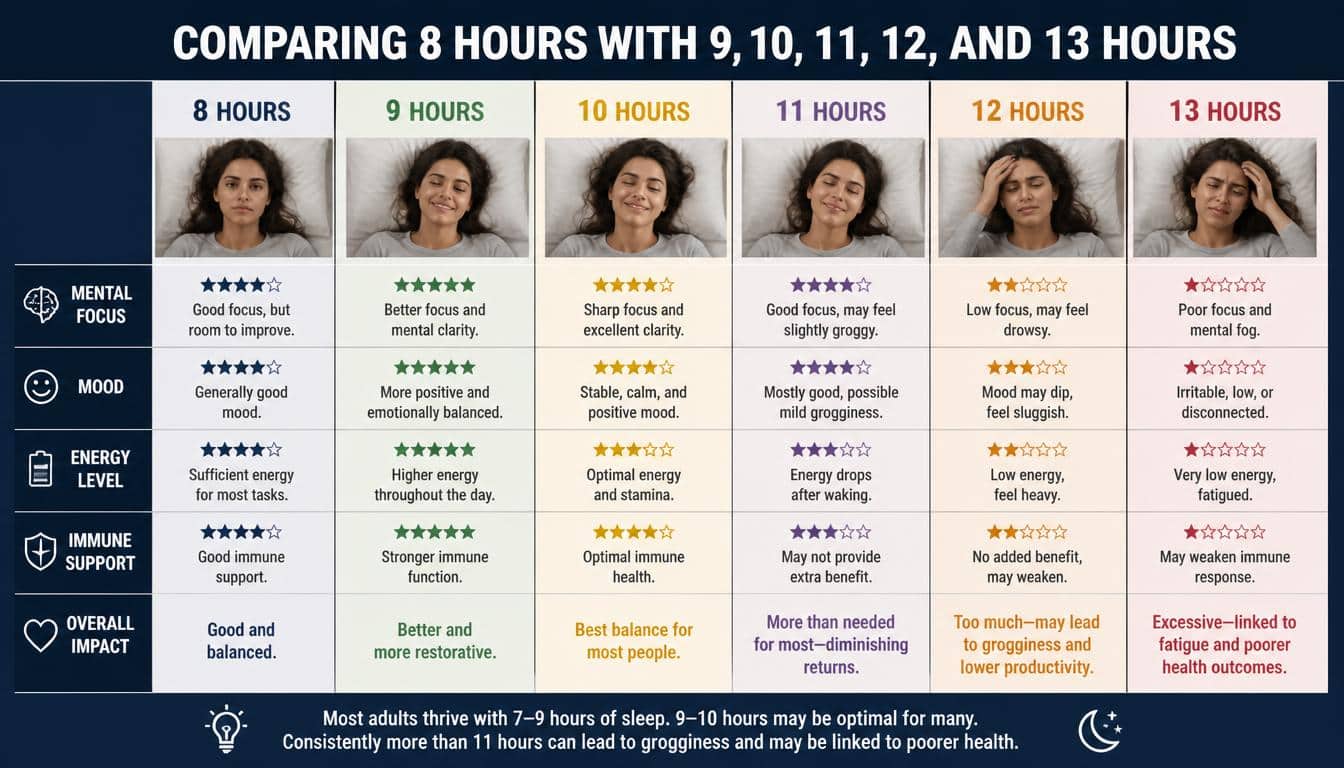
Once you know how to calculate 8 hours from current time, extending the calculation is easy. Every extra hour simply moves the result one hour farther around the clock.
This makes related searches such as 9 hours from now, 10 hours from now, 11 hours from now, 12 hours from now, and 13 hours from now variations of the same basic problem.
If the starting time is 9:16 PM, for example, the results would be:
- 8 hours from now = 5:16 AM Saturday.
- 9 hours from now = 6:16 AM Saturday.
- 10 hours from now = 7:16 AM Saturday.
- 11 hours from now = 8:16 AM Saturday.
- 12 hours from now = 9:16 AM Saturday.
- 13 hours from now = 10:16 AM Saturday.
Notice something useful here: the minutes remain 16 in every result because we are adding whole hours.
Thats a very simple observation, but it can save you from repeatedly recalculating the entire thing when comparing several future times.
Using an Hours From Now Calculator
A digital hours from now calculator can be useful when you need an exact answer and dont want to count across midnight manually.
Inch Calculator’s Hours From Now Calculator explains the basic process of identifying the starting time, adding the desired hours, and accounting for AM/PM and date changes. Inch Calculator
For a quick personal calculation, though, a calculator isnt always necessary. If the clock reads 2:00 PM and you need eight hours later, 10:00 PM is immediate.
If it reads 8:00 PM, think four hours to midnight and four more to 4:00 AM. The human brain is still pretty good at this particular little job.
Other resources, including an ordinary time calculator, can help when the question involves start and end times rather than simply adding a duration.
That distinction matters because “eight hours from now” is a forward-duration question, while “how many hours between 8 AM and 5 PM?” is a time-difference question. Inch Calculator
Why Exact Starting Minutes Matter
Suppose one person checks the clock at 9:11 PM and another checks it five minutes later at 9:16 PM. Their answers to what time is 8 hours from now will differ by five minutes.
Neither calculation is wrong; they simply began at different moments, which is why live time calculators can change their displayed answer even while you are staring at the page.
That explains why you may encounter 5:16 AM in one example and 5:11 AM in another. A time answer is only meaningful when paired with its starting moment and time zone. Without those details, “eight hours from now” is a moving target, rather like trying to photograph a fish that has decided it has other plans.
Time Zones and GMT+5
Time zones make these questions more interesting when people are communicating across countries.
If someone says the answer is 5:16 AM in GMT+5, that does not automatically mean it is 5:16 AM everywhere else. Another person might be experiencing a different local time at exactly the same instant.
For example, a meeting scheduled eight hours from now should ideally include a time zone when participants live in different regions.
Saying “5:16 AM” alone can create confusion, while “5:16 AM GMT+5” gives the reader the missing piece.
Time zones are boring right up until someone misses a meeting because of them, then suddenly everybody becomes very interested.
When 8 Hours From Now Means Saturday
If the starting point is Friday evening, adding eight hours naturally pushes the answer into Saturday, August 22, 2026. That makes the date change part of the answer, not an optional decoration.
The word “tomorrow” is sometimes enough in casual conversation, but an actual date is safer for appointments, travel, deadlines, and scheduled events.
So, from a starting time of 9:16 PM on Friday, August 21, eight hours later is 5:16 AM on Saturday, August 22.
If the actual starting time is 9:11 PM, the result is 5:11 AM Saturday. The five-minute difference comes entirely from the starting clock, not from a different mathematical rule.
A Simple Way to Calculate Time Yourself
If you want to calculate 8 hours from now without a website, begin with the exact current time.
Then add eight to the hour. If the result exceeds 23 in 24-hour time, subtract 24 and move to the next date. Finally, convert back to AM/PM if that is the format you prefer.
For example, 18:40 + 8 hours = 26:40. Subtract 24, giving 02:40 on the next day. In twelve-hour notation, that is 2:40 AM.
The method is almost stubbornly simple, which is nice because some calculations deserve to stay simple.
If you prefer the 12-hour clock, you can split the journey around midnight. From 6:40 PM, six hours reaches 12:40 AM, then two more hours reaches 2:40 AM.
This method is especially handy when you are doing adding hours to time without paper and your brain has gone on a small coffee break.
Common Mistakes With “8 Hours From Now”

One common mistake is forgetting that the date changes after midnight. Another is switching AM to PM incorrectly, especially when the calculation crosses noon.
A third is using an outdated current time because the page, phone, or mental calculation was based on a clock checked several minutes ago.
People also sometimes confuse a duration with a clock reading. 8 hours is a duration; 8:00 is a time of day.
Eight hours after 3:00 PM is 11:00 PM, whereas “8:00 PM” is simply another clock time. The distinction is small, but it matters when you are trying to calculate time difference accurately.
And then there is the classic mistake: seeing “8 hours ago” and accidentally adding eight hours instead of subtracting. It happens, honestly. Time has no sympathy for tired people.
Frequently asked questions
Sure keeping all 5 H3 headings exactly as they are, you can add these 1–2 line answers under each:
8 hours from now is what time
8 hours from now will be the current time plus 8 hours. If the calculation passes midnight, the answer will fall on the following day.
What is 8 hours from now
8 hours from now means adding 8 hours to the current time. For example, if it is 9:00 PM now, it will be 5:00 AM the next day.
What time is it in 8 hours
To find what time it will be in 8 hours, simply add 8 hours to the current time. Remember to change the date if the calculation crosses midnight.
What time will it be in 8 hours
The time in 8 hours depends on your current local time and time zone. Add 8 hours to the current time to get the exact future time.
Whats 8 hours from now
8 hours from now is found by adding 8 hours to the time right now. If you start in the evening, the result may be early morning on the following day.
Read This Blog: https://gracethemes.com/what-time-was-it-11-hours-ago/
Final Thoughts on Time 8 Hours From Now
The answer to what time is 8 hours from now depends on the exact starting clock and time zone, but the method is always the same.
Take the current time, add 8 hours, handle the AM/PM transition, and move to the next date if midnight is crossed.
From 9:16 PM on Friday, August 21, 2026, the answer is 5:16 AM on Saturday, August 22, 2026. From 9:11 PM, it is 5:11 AM Saturday.
For anyone who wants a quick reference, eight hours equals 480 minutes, 28,800 seconds, and 28,800,000 milliseconds.
Those numbers are useful in everything from scheduling to programming, even if most of us will thankfully never need to describe bedtime as 28,800,000 milliseconds long.
The broader lesson is pleasantly ordinary: time calculations dont need to feel complicated.
Whether you use a time calculator, an hours from now calculator, mental arithmetic, or a trusted resource such as Inch Calculator, the important thing is to identify the exact starting moment. Once that is clear, the clock does the rest.
And perhaps thats the nicest thing about a question as simple as this one. Eight hours from now is not just a number on a clock.
It might be morning after a long night, the start of a new shift, the moment a journey ends, or simply another ordinary piece of tomorrow waiting quietly to arrive.
Time keeps moving whether we watch it or not, so when you need to know where the clock will land, count the hours carefully, check the date, and then get on with your day. Hopefully, by then, whatever you were waiting for will be a little closer.
