
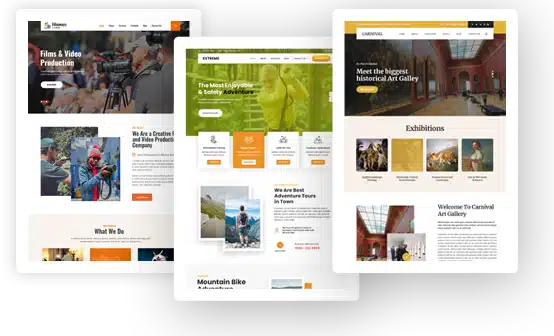
Eco Nature WordPress Themes
-
 $29
-
 $29
-
 $29
-
 $29
-
 $29
-
 $29
-
 $29
-
 $29
-
 $29
-
 $29





Eco Nature WordPress Themes for Green Businesses, NGOs and Outdoor Brands
Eco nature WordPress themes give people whose work protects, grows or celebrates the natural world a website design that is ready to fill with their own story. Conservation charities, solar energy companies, garden designers, florists, organic farmers, dairy cooperatives, fish farms, eco-tour brands and outdoor gear shops all need a site that feels as fresh as their mission and works as hard as their team.
A good nature WordPress theme gives you earthy styling plus practical building blocks, such as cause pages, product catalogs, image galleries, event areas and contact forms, so green organization websites can go live without hiring a developer.
This guide opens with key takeaways, a price-and-feature table of the ten designs in our eco nature category at GraceThemes and a review of each design, grouped by sector. Next come a definition of these themes, the reasons a green organization needs a credible site, the benefits of a ready-made design, website planning and the features worth insisting on.
Five chapters written only for this niche follow: environmental storytelling, donations and volunteer drives, honest green claims, ethical online selling and low-carbon web design. A theme-matching table leads into website guides for conservation NGOs, renewable energy firms, gardeners and landscapers, florists, organic grocers, dairy and fish farms, eco-tourism operators and outdoor sports shops, each ending with a recommended design.
The later chapters cover essential pages, the homepage, nature-inspired visuals, inclusive access and data protection, search visibility, performance and upkeep, tracking results, outreach, content ideas and frequent errors. We finish with a free versus premium comparison, a selection checklist, installation, pricing, related designs, answers to common questions and closing advice.
Key Takeaways
- Eco nature WordPress themes combine natural styling with tools a green organization uses daily: cause sections, online stores, galleries, event areas and inquiry forms.
- Our eco nature category lists ten premium designs at $29 each, spanning conservation groups, clean energy, gardening, floristry, sustainable food, fish farming, tourism and adventure sports.
- Greenest PRO is the most cause-focused option, with optional sections for causes, donation options, a volunteer team, current projects and environment news.
- Energix PRO, Rosebud PRO and Fishland PRO are built on Elementor, and Fishland PRO is also RTL compliant.
- Eco-friendly claims backed by verifiable metrics build more trust than leafy graphics, and lean websites support the environmental messaging they carry.
- Each premium design includes free installation, lifetime updates and support, and use on unlimited sites.
Comparing Our Eco Nature WordPress Themes
All ten designs below sell for $29 as a one-time payment. Each name links to that theme’s product page, where you can open the live demo version and read the full list of WordPress theme features.
| Theme (details and live demo) | Price | Best for | Page builder | Store support | Standout features |
| Greenest PRO | $29 | Environmental preservation groups, ecology, renewable energy organizations | Page builder plugins (not named) | WooCommerce compatible | Causes, donation options, volunteer team, environment news |
| Energix PRO | $29 | Solar and renewable energy businesses | Elementor | WooCommerce compatible | Weglot and Polylang, boxed service layouts |
| GreenVista PRO | $29 | Gardening companies, garden designers, outdoor service providers | Not stated | WooCommerce compatible | Sell plants, seeds and bulbs, fertilizers |
| Rosebud PRO | $29 | Floral studios, florists, floral designers | Elementor | WooCommerce compatible | Polylang, Weglot and WPML |
| Floret PRO | $29 | Flower shops, floral delivery, subscription providers | Page builder plugins (not named) | Not stated | Online booking, special offers and deals |
| MilkyLush PRO | $29 | Dairy farmers, organic milk producers, eco-friendly food brands | Not clearly named | WooCommerce, including subscription sales | WPML, Polylang and Weglot, farm event widgets |
| Groceem PRO | $29 | Online grocery stores | Builder plugins (not named) | WooCommerce compatible | Order buttons in the header, multiple homepages |
| Fishland PRO | $29 | Fish farms, fishing pools, animal conservation centers | Elementor | WooCommerce compatible | RTL compliant, WPML, Weglot and Polylang |
| Travel Trip PRO | $29 | Tour operators, travel agencies, resorts | Page builder (not named) | WooCommerce compatible | Destinations, tour packages, client reviews |
| Extreme PRO | $29 | Adventure sports clubs, sports gear shops, coaches | Built-in homepage creation | WooCommerce compatible | Mega menu, custom sidebars, retina-ready |
Our Eco Nature Theme Reviews by Sector
We sorted these eco nature WordPress themes into four sector groups so you can jump to the part that matches your work. Every statement below reflects the product description of that theme.
Conservation Groups and Clean Energy Firms
Greenest PRO, our environment WordPress theme, is written for organizations dedicated to preserving the environment. Its description also names agriculture, ecology, organic farming, ecosystem awareness and organizations that run on renewable energy.
Optional homepage sections cover a welcome message, mission and vision, causes with donation options, event and campaign videos, current projects, client feedback, a volunteer team, the latest environment news, accolades, testimonials and team members.
A full-screen header carries contact details and social links, while a built-in Nivo slider, a custom slider option, shortcodes, widgets and Google Maps integration round out the toolkit.
The description says multilingual translation is enabled without naming a plugin, and it lists compatibility with WooCommerce, Revolution Slider, Contact Form 7, NextGEN Gallery, Yoast SEO and WPForms. Anyone shopping for an NGO WordPress theme that can carry environmental campaigns, volunteers and news should look here first.
Energix PRO is a green energy WordPress theme built on Elementor. Its description speaks to solar and renewable energy businesses, wind turbine work and solar panel repair, and it also mentions heavy industry, which makes it flexible for solar energy providers and firms selling engineering-led clean energy solutions.
You get boxed layouts for presenting service details, over 1,300 fonts, more than 1,000 color schemes and a level-5 drop-down menu. Clock, calendar, client and testimonial widgets help display partners and customer reviews. It works with WooCommerce, names Weglot and Polylang for translation, and lists Accordions, Sliders and WordPress Forms among compatible plugins.
Garden Designers, Florists and Flower Shops
GreenVista PRO is designed for gardening companies, garden designers and outdoor service providers. Its WooCommerce compatibility is framed around selling plants, seeds and bulbs, and fertilizers, so a garden center can pair service pages with a small online storefront.
The design toolkit includes more than 1,300 fonts, over a thousand color schemes, menus that go five levels deep, boxed layouts and widgets for clocks, calendars, clients and testimonials. Weglot and Polylang handle translation, and the description names Accordions, WordPress Forms and Sliders as compatible plugins. No page builder is named.
Rosebud PRO is an Elementor-based theme aimed at floral studios, florists, floral designers and event management businesses. WooCommerce compatibility lets a studio sell arrangements online, while translation is handled through Polylang, Weglot or WPML.
The description names Rank Math and Yoast SEO for search settings, NextGEN Gallery for photo collections and Google Analytics for visitor tracking, along with shortcodes and widgets.
Floret PRO serves flower shop owners, online floral stores, floral delivery services, eCommerce stores and subscription providers. Its homepage can bring together navigation, a search box, a call-to-action, specialties, social links, online product selection, services, special offers and deals, online booking, contact details, YouTube videos, featured products and an about section.
A full-screen slider, a multi-level drop-down menu and custom post types for members and testimonials complete the layout. It is described as multilingual and translation-ready. The product page talks about selling online yet never names WooCommerce, so confirm your store plans with our team before you buy.
Sustainable Food Producers and Farm Sellers
MilkyLush PRO targets dairy farmers, organic milk producers, agricultural cooperatives, dairy product businesses and eco-friendly food brands. WooCommerce support covers both e-commerce and subscription sales, which suits weekly milk or cheese deliveries.
The homepage offers hero sliders in several layouts, product highlights, an about area, testimonials and a contact form, and extra pages include team, image and video galleries, FAQ, 404 and blog templates.
Widgets cover farm events, a testimonial slider and social sharing. WPML, Polylang and Weglot are named for translation, and Google Analytics and Jetpack appear among compatible tools. The description mentions full site editing and a page builder without naming one clearly.
Groceem PRO is made for online grocery stores. Its header area brings together search, social links, buttons that prompt visitors to place orders, navigation and store specialties. Multiple homepage styles, a full-screen slider, layered drop-down navigation, several header and footer layouts and a boxed option give you room to shape the storefront, and MailPoet and Mailchimp are named for email marketing.
It is WooCommerce compatible. The description does not single out organic food, but a farm shop can still use it as an organic WooCommerce theme by adding its own organic goods and sourcing notes.
Fishland PRO targets fish farms, fishing pools and animal conservation centers, and it is built on Elementor. It is WooCommerce compatible and RTL compliant, with WPML, Weglot and Polylang named for translation.
Layout options include a customizable header and footer, call-to-action buttons, several blog layouts, and full-width or boxed pages, while named plugin support covers Slider Revolution, Essential Grid, Contact Form 7, WPForms, Accordions, Newsletter, MailChimp and NextGEN Gallery.
Eco-Tourism Operators and Adventure Sports Brands
Travel Trip PRO is aimed at tour operators, travel agencies, resorts, hotels, travel bloggers, cruise companies, event organizers and adventure businesses. Its sections can present destinations, beaches, tour types, packages, travel articles, services, trip information and client reviews.
Supporting features include a full-screen slider, a popup YouTube video, a fixed header that stays visible on scroll, parallax effects, a photo gallery, a contact template with a form and Google Maps. It is translation-ready and multilingual, and WooCommerce can sell travel equipment.
Extreme PRO is written for gym equipment shops, sports footwear stores, sports clubs that offer adventure sports and sports coaches. It includes built-in homepage creation, a mega menu, an image slider, custom sidebars, widgets and retina-ready display, plus search, a call-to-action, social icons, a blog section and space for services and products.
It is WooCommerce compatible, supports multiple languages and names NextGEN Gallery and Contact Form 7. Nature travel is not part of its description, but an outdoor gear rental service or adventure sports club shares the same needs.
What Eco Nature WordPress Themes Are
A theme is the design layer of WordPress. It controls page layouts, headers, menus, footers, typography and the color palette, while your words, photos and products live separately in the dashboard.
Eco nature WordPress themes shape that design layer around green work, with nature-inspired imagery, calm earth tones and sections for missions, projects, products and events. You may also see them called environmental WordPress themes, eco-friendly WordPress themes or simply eco WordPress themes.
Plugins then add specific jobs, such as an online donation form, a shopping cart, an event calendar or a newsletter subscription box. Because self-hosted WordPress runs on hosting you choose, you can pick an eco-friendly hosting provider and keep full ownership of your content.
The Organizations Behind Green Websites
These designs serve a broad mix of mission-driven and commercial users:
- Environmental charities, ecology nonprofits, local advocacy groups, international advocacy organizations and grassroots causes.
- Solar energy companies, wind energy companies, renewable energy companies and other alternative energy companies.
- Recycling businesses, waste management firms and sustainability consultants.
- Garden designers, landscapers, lawn care crews and plant nurseries.
- Florists, floral studios and flower subscription services.
- Organic farmers, farmers market vendors, honey shops, organic bakery owners and food delivery businesses.
- Dairy cooperatives, fish farms and animal conservation centers.
- Eco-tour brands, hiking tour agencies, glamping sites and outdoor gear rental services.
- Environmental protection agencies, nature preservation companies and wildlife organizations.
- Climate-tech startups, green technology startups, ESG consulting firms and sustainable product companies.
Building Blocks Shared by Green Designs
Most designs in this niche share a predictable toolkit: a large hero image or carousel for landscapes, service or product sections, image galleries, team and testimonial areas, social icons, contact forms and a footer with maps and opening details. Many add custom post types, shortcodes and widget areas so you can present events, members or campaigns without code.
Sector Design or All-Purpose Template
A sector design already speaks the language of your field, so a clean energy firm gets service layouts and a florist gets image-led product pages. An all-purpose template can be reshaped, but it usually needs more styling before it feels authentic. If your work fits one sector clearly, starting from an eco website template in this category saves hours of adjustments.
Why a Credible Website Matters to Green Organizations
People who care about the planet tend to research before they give, buy or volunteer, and environmental business websites are where that research happens.
Supporters and Buyers Look for Evidence
Donors, members and eco-conscious consumers look for evidence: named projects, honest results, sourcing information and the people behind the work. A site that answers those questions turns curiosity into support, while a thin or outdated one sends visitors elsewhere.
A Permanent Home for Your Mission
Your website keeps the environmental mission, programs, research papers and impact reports in one place that search engines can index and supporters can share, giving you a lasting, mission-driven web presence.
Your Site Is Part of Your Message
A bloated webpage quietly contradicts a climate message. A lean, fast, accessible site proves that your sustainable business practices carry over into the sustainable digital experiences you offer, and it serves people on low-powered devices and limited data plans just as well.
Why a Ready-Made Green Theme Pays Off
Choosing one of our eco nature WordPress themes gives a small team a professional site at a fraction of custom web development costs.
- Small upfront cost. At $29 per theme, more of your budget stays with field projects, products or staff.
- Visuals that suit the niche. Layouts are already arranged for landscape photography, high-resolution photographs of products and sustainability-focused web copy.
- Quicker go-live. Demo layouts give staff a finished structure to fill with real content.
- Editing without developers. Theme customization options and page builders let volunteers with no coding knowledge update causes, prices and news themselves.
- Growth through plugins. Donations, stores, bookings and translation can be added as your organization expands.
Mapping Out an Eco Website
In environmental website design, a short planning session prevents a site that looks green but leads nowhere.
Set Your Mission and Primary Action
Write your mission in one plain sentence. Then pick the single action that matters most for a first-time visitor: give, volunteer, request a quote, book a tour or buy a product. Each page should push one main action.
Map Your Supporter and Customer Groups
A conservation charity speaks to donors, volunteers, partners and policymakers. A solar installer speaks to homeowners, businesses and procurement teams. An organic shop speaks to local families and gift buyers. List each group and the questions it brings, then plan pages that answer them in that order.
Pick a Domain and Low-Impact Hosting
Choose a short, memorable domain that matches your name. For hosting, look for sustainable hosting providers, often marketed as green web hosting or renewable energy hosting, that publish clear renewable energy commitments. Then add SSL, automatic backups and caching on day one.
Planning Questions for Green Teams
- What is your mission in a single sentence?
- Which action should a first-time visitor take?
- Will the site accept donations online, sell products or take bookings?
- Which environmental results can you back with real records?
- Do you need volunteer sign-ups, events or a newsletter?
- Which languages do your audiences speak?
- Which certifications, partners or memberships can you display honestly?
- Who will update projects, products and news each month?
Features to Demand From Eco Nature WordPress Themes
When you compare eco nature WordPress themes, these features separate a useful site from a pretty one.
Responsive, Lightweight Layouts
Supporters often visit on phones, sometimes over weak signals. Mobile-first design, compressed images and readable text keep pages usable on all mobile devices with reduced data transfer. Responsive website design is the baseline for a green brand, not an extra.
Cause, Project and Impact Areas
Greenest PRO offers mission and vision, current projects, accolades and environment news as optional sections, which gives nonprofits and green brands a ready place for an impact showcase.
Store Readiness for Green Products
Nine of the ten designs list WooCommerce compatibility. Floret PRO is the exception, as its description mentions online selling without naming WooCommerce. GreenVista PRO frames its shopping cart around plants, seeds and fertilizers, and MilkyLush PRO adds subscription sales.
Bookings, Events and Campaign Media
Floret PRO lists online booking on its homepage, Greenest PRO shows event and campaign videos, and MilkyLush PRO includes farm event widgets. Tour operators and garden services can add a booking plugin for excursions, consultations or deliveries.
Translation Options and Right-to-Left Text
Rosebud PRO, MilkyLush PRO and Fishland PRO name WPML, Polylang and Weglot, and Fishland PRO adds RTL compliance for Arabic, Hebrew or Urdu content. Energix PRO and GreenVista PRO name Weglot and Polylang. Greenest PRO, Floret PRO, Travel Trip PRO and Extreme PRO describe multilingual or translation-ready support without naming a plugin. Groceem PRO does not state translation support.
Visual Editing and Brand Controls
Energix PRO, Fishland PRO and Rosebud PRO run on Elementor, Extreme PRO offers built-in homepage creation and several others work with unnamed builder plugins. Look for custom fonts, a custom logo, a custom header, background options, typography settings and widget areas so the design reflects your brand rather than the demo.
Telling an Environmental Story That Persuades
Stories make people care enough to act.
Lead With Purpose, Then Proof
Good brand storytelling opens with who you are, what you protect and why it matters now. Follow with named projects, before-and-after photos and verifiable metrics such as acres restored, tree planting totals or waste diverted from landfills, always taken from your own records.
Show Real Places and People
Visual storytelling built on authentic wildlife photography, field teams at work and close-ups of your products creates a stronger emotional bond than generic stock images.
Give Every Program a Page
Each program, research project or campaign deserves its own page with goals, progress, partners and a clear call-to-action. Pages like these promote environmental projects to new audiences, and visitors who land from search should understand each initiative and know how to help without hunting.
Donations, Volunteer Drives and Member Programs
For a conservation group, an environmental nonprofit website is the busiest fundraising desk you have, so nonprofit website design should put giving one click away.
Giving Page or Complete Donation System
A giving page explains your causes and links to a payment form. A complete donation system adds monthly gifts, tribute giving, memorial gifts, gift membership, tax receipts and an annual giving statement. Greenest PRO provides the cause and donation space, while a dedicated plugin adds donation buttons, an online donation form and secure processing through gateways such as PayPal or Stripe payments.
Send each donor an automatic donation acknowledgment, and send paperless membership cards and renewal notices by email. Businesses with corporate social responsibility programs may also offer payroll deduction, matching gifts or pro bono services, so give them a clear contact path and a modest sponsor showcase.
Campaign Landing Pages
Give each appeal, petition or crowdfunding drive its own landing page with a goal, progress bars, updates and sharing buttons.
Volunteers, Members and Planned Giving
List volunteering opportunities with dates, places and simple sign-up forms. Explain membership benefits and renewal clearly, and add pages for planned giving, bequests, stock gifts, in-kind goods and workplace giving if you accept them. If you are a 501(c)(3) nonprofit, state clearly when gifts are tax-deductible.
Steering Clear of Greenwashing
Environmental claims attract scrutiny, and a single vague claim can undo years of goodwill.
Make Every Claim Specific and Provable
Swap broad phrases like “eco-friendly” or “natural” for precise facts: which materials, what share is recycled, how the claim was measured and by whom. Back each statement with quantifiable data from a lifecycle assessment, environmental audits, third-party verification or supply chain audits that prove supply chain transparency.
A label like “carbon neutral” also needs a plain account of what was measured, what was reduced and what, if anything, was offset. In the United States, the Federal Trade Commission’s Green Guides explain how environmental marketing claims should be qualified and supported, so review them before publishing product claims.
Display Certifications You Truly Hold
Show seals of approval, eco-labels and sustainability certificates only when you hold them. Examples include B Corp certification, Fair Trade certification, Cradle to Cradle, the Global Organic Textile Standard, LEED and Energy Star. Link each badge to the certifying body so visitors can check it.
Report Progress, Including Trade-Offs
Publish impact reports or sustainability reporting aligned with frameworks such as the GRI Standards if your size justifies it. Share year-over-year figures and any ESG performance metrics with consistent measurement methodologies so readers can judge progress fairly. Explaining trade-offs and next steps in transparent language earns more trust than claiming perfection.
Selling Green Products With Integrity
Many eco businesses sell ethical products online, and the product page is where trust is won or lost.
Product Pages With Full Sourcing Details
Explain materials, responsible sourcing, local sourcing, ethical working conditions, packaging and disposal on every product page. Terms such as biodegradable, compostable, recyclable and plant-based should come with specifics, because environmentally conscious customers check. Explain sustainable product pricing honestly, showing what fair wages and better materials cost, and highlight affordable eco-friendly products for first-time buyers.
Packaging, Delivery and Returns
Describe plastic-free packaging, recycled materials, delivery methods and any carbon offset programs you join. Keep shipping and returns information easy to find from the cart.
Subscriptions, Gifting and Local Delivery
Farm boxes, flower subscriptions and grocery deliveries fit a subscription model. MilkyLush PRO names subscription sales through WooCommerce, and Floret PRO names subscription providers among its users. Gifting options and local pickup add convenience for repeat buyers.
Repair, Reuse and Circular Options
Circular economy ideas sell best when they are practical. Offer take-back schemes, repair initiatives, refills or resale of pre-owned goods, and explain reuse and upcycling choices for products at the end of their life.
Brands in circular fashion often add care guides that extend product life, while food sellers can show how surplus boxes help in reducing food waste. Product quick view, a wishlist and a short checkout flow keep the sustainable shopping experience smooth.
Building a Low-Carbon Website
Every page view moves data across networks, data centers and devices, so every effort to reduce page weight also shrinks your digital carbon footprint. The sustainable website design habits below matter because even lightweight eco nature WordPress themes depend on how you build the pages on top of them.
Shrink Media Before It Ships
Resize images before upload, choose modern image formats such as WebP or AVIF for smaller file sizes, serve responsive versions with srcset or the picture element, and apply deferred loading to media below the fold. Replace autoplay media with click-to-load video embeds, and prefer SVG icons over icon fonts.
Trim Scripts, Fonts and Plugins
Remove unused JavaScript, dead CSS and overlapping plugins. Limit third-party scripts and web fonts, and use a system font stack or a single variable font in WOFF2 to reduce font overhead. Minified code and server compression shrink every request and leave a lean front end.
Host and Cache Efficiently
Choose sustainable web hosting where possible, enable page and browser caching, and use a CDN so visitors receive files from a nearby server. Fewer origin requests mean faster pages and lower energy consumption, and content delivery networks also cut the distance data travels.
Follow Recognized Sustainability Guidance
The Web Sustainability Guidelines (WSG), developed by the Sustainable Web Design Community Group at the World Wide Web Consortium, collect evidence-based best practices for low-impact websites.
Lighthouse performance checks help track asset weight and request count over time. The Sustainable Web Manifesto sums up the same thinking in six principles: clean, efficient, open, honest, regenerative and resilient.
Low-Carbon Habits for Content Teams
Sustainable web development is not only a developer task. Editors can resize every upload, merge duplicate pages, delete outdated PDFs, keep video embeds short and archive finished campaigns. A simple checklist covering image size, plugin overlap and new third-party scripts turns green coding practices into a publishing workflow that every staff member and volunteer can follow.
Dark Mode and Screen Energy
On OLED and AMOLED screens, dark pixels draw less power, so an optional dark mode can reduce battery usage for visitors who prefer it. Offer it as a choice rather than a forced default, keep text contrast high in both modes, and remember that screen brightness and battery-saving modes on the device also play a part.
Estimating Your Website’s Carbon Footprint
Digital emissions, the greenhouse gas emissions tied to websites, come from data transfer, server load and the energy used by visitors’ devices. Because real figures depend on hosting, networks and hardware, treat any website carbon footprint estimate as the output of a directional carbon model.
The Sustainable Web Design Model is one widely used method, and the free Website Carbon Calculator applies it to a single page. Measure web page weight, request count and bandwidth consumption before and after each change, and follow the trend rather than a single score.
Matching a Theme to Your Green Organization
Use this table to shortlist eco nature WordPress themes by sector. The guides that follow explain the reasoning for each match.
| Organization type | Main website goal | Suggested themes |
| Conservation NGO or environmental charity | Accept donations online, recruit volunteers, raise public awareness | Greenest PRO |
| Solar or wind energy company | Showcase previous projects and win installation leads | Energix PRO |
| Garden design or landscaping business | Show projects and sell garden supplies | GreenVista PRO |
| Florist or floral studio | Display arrangements and sell online | Rosebud PRO, Floret PRO |
| Organic grocery or farm shop | Run an online food store | Groceem PRO, MilkyLush PRO |
| Dairy farm or food cooperative | Sell products and subscriptions | MilkyLush PRO |
| Fish farm or conservation center | Present services and products | Fishland PRO |
| Eco-tour or outdoor travel operator | Sell excursions and tours, share safety details | Travel Trip PRO |
| Adventure sports shop or club | Offer gear rental and outdoor recreation activities | Extreme PRO |
Website Guides for Green Business Types
Each guide lists the content that matters most for that sector.
Conservation NGOs and Environmental Charities
Lead with the lands and waters you protect, the plant and animal life at risk and the results of your work. Pages titled “Places We Protect,” “Where We Work” and “Our Priorities” help visitors grasp your scope quickly. Name the issues you tackle, whether biodiversity loss, deforestation, overfishing, plastic pollution, sea level rise or climate change, and show the response, from restoring wildlife habitats and removing invasive plants to replanting native species and supporting ocean conservation and marine life protection.
Add pages for research, environmental education, environmental news and policy updates, then make giving, volunteering and joining equally easy to find.
Best theme fit: Greenest PRO, written for preservation groups, with cause, donation, volunteer and news sections ready to switch on.
Solar, Wind and Clean Energy Companies
Homeowners, farms and businesses comparing solar power, wind power and battery storage want to know what you install, how financing works, which incentives apply and what past projects look like. Case studies are the strongest renewable energy marketing you can publish.
Explain how your solar energy solutions lower electricity costs, how energy management tools track output and how a shift to clean power supports decarbonization, from rooftop arrays to EV chargers that support electric transportation. A request-a-quote form, project gallery, FAQ section and service-area pages support engagement and lead generation.
Best theme fit: Energix PRO, an Elementor design whose boxed layouts suit detailed solar and wind service pages.
Gardeners, Landscapers and Garden Centers
Show before-and-after projects, seasonal maintenance plans and a shop for plants and supplies, plus planting tips that keep visitors returning.
Best theme fit: GreenVista PRO, whose WooCommerce support is pitched at garden products such as plants and fertilizers.
Florists, Floral Studios and Flower Delivery
Floral buyers want occasion collections, clear delivery zones and cut-off times, and a quick checkout. Wedding and event florists also need a portfolio and an inquiry form.
Best theme fit: Rosebud PRO for studios and event floral design, or Floret PRO for shops that want online booking and special offers on the homepage.
Organic Grocers and Farm Shops
Shoppers want clear categories, stories about the local organic farmers you buy from, delivery slots and simple reordering. Recipes and seasonal guides help sell fresh vegetables and organic produce.
Best theme fit: Groceem PRO for a full organic food storefront, or MilkyLush PRO for eco-friendly food brands with subscriptions.
Dairy Farms, Fish Farms and Aquaculture
Producers who sell direct need product pages, farm stories, visiting information and delivery or pickup options. Fish farms and fishing pools also benefit from booking and pricing details.
Best theme fit: MilkyLush PRO for dairy producers, or Fishland PRO for fish farms, fishing pools and conservation centers.
Eco-Tourism and Nature Travel Operators
Travelers comparing guided hiking tours, camping trips, cabin rental stays or wildlife viewing excursions want clear itineraries, difficulty levels, safety notes and prices. Introduce your knowledgeable guides with short profiles, because a competent guide is what turns a weekend getaway into a safe trip.
Add packing lists for camping gear and hiking equipment, Leave No Trace guidance and inspiring national park images of mountains, forests and lakes to support adventure travel, outdoor adventure tourism and nature exploration.
Best theme fit: Travel Trip PRO, with destinations, tour types, packages and client reviews.
Adventure Sports Shops and Outdoor Clubs
Rafting, kitesurfing, paragliding, cycling and rock climbing businesses need gear catalogs, rental terms, coaching details and event schedules for adventure seekers and outdoor enthusiasts. An outdoor business website with a gear rental page listing sizes, deposits and availability saves a stream of phone calls.
Best theme fit: Extreme PRO, with a mega menu, custom sidebars and WooCommerce compatibility.
Essential Pages for a Green Website
Most eco sites need these pages.
- Homepage. Your mission, primary action and highlights, covered in detail below.
- About page. Founding story, values, leadership and team.
- Programs or services page. Every offering, linked to its own detailed page.
- Impact page. Case study pages, verified results and photos from the field.
- Shop page. Products with sourcing and packaging notes, if you sell online.
- Get involved page. Donations, volunteering opportunities, membership and partnership options.
- News and resources page. Updates, a resource library, field guides, recycling guides and educational resources.
- Contact page. Address, interactive maps, email and a short form.
- Policy pages. A privacy policy, terms of use and, for stores, shipping and returns information.
Shaping an Eco Homepage
Visitors decide quickly whether to stay.
Mission-First Hero Section
Pair one strong hero image with a short mission headline and a single button, such as “Give Monthly,” “Get a Solar Quote,” “Book a Hike” or “Start Your Adventure.”
Proof Below the Fold
Follow with a few verified impact numbers, certifications, partner logos and short testimonials, so the claim in your headline is backed up immediately.
Pathways for Every Visitor
Add short paths for donors, buyers, volunteers and partners, then close with your newsletter sign-up, social icons and contact details.
Nature-Inspired Design Choices
Good nature-themed website design feels calm, natural and trustworthy without becoming a cliché.
A Palette Drawn From Nature
An earthy color palette works best with restraint. Use green color accents sparingly and borrow from the wider landscape for a natural and green look: brown for earth, blue for water and sky, and accents such as rustic red or the gold of autumn leaves. A contrasting button color keeps calls to action visible.
Textures, Patterns and Imagery
Leaves, bark, water and stone are classic eco-friendly design elements and make strong backgrounds for nature-inspired layouts when used lightly. Keep every image compressed so the page stays light.
Restraint as a Design Principle
Minimalist design principles such as generous white space, short paragraphs and simple navigation lower cognitive load and page weight at the same time. A timeless design also lasts longer, which means fewer full redesigns.
Motion, Layout and Visual Hierarchy
Subtle animations, gentle hover effects and light microinteractions can add life, but heavy parallax scrolling and constant motion cost energy and distract readers. Build a clear visual hierarchy on a simple grid system, and keep brand consistency through one logo motif and a small, honest set of green imagery that builds a recognizable green brand identity.
Legible Fonts for Every Screen
Pick one or two readable typefaces, limit weights and keep strong contrast between text and background.
Inclusive Access and Data Protection
Accessible design widens your audience and often makes pages lighter. Aim for WCAG 2.2 AA compliance, the level of the Web Content Accessibility Guidelines most organizations target. In practice, that means a contrast ratio of at least 4.5:1 for normal text and 3:1 for large text. It also means alt text on meaningful images, keyboard navigation, a skip to content link, labeled form fields, captions on videos, semantic HTML and a logical heading hierarchy.
Check screen reader compatibility to confirm assistive technology can reach every link and button, and make buttons large enough for touch-friendly interactions. Publish an accessibility statement that explains your standard and how visitors with visual disabilities or other needs can report a barrier.
Donor and customer data need equal care. Use SSL across the site, secure every donation and checkout form, explain cookies and email preferences in a clear privacy policy and include an unsubscribe link in every e-newsletter. Review GDPR obligations if you collect data from visitors in Europe, so security and privacy compliance stays current.
Search Visibility for Green Websites
Search engine optimization is how many supporters and customers first discover green organizations.
Research Real Search Intent
Find the phrases your audience uses, such as “solar panel installation near me,” “organic grocery delivery” or “guided hikes in [region],” and build pages that match the search intent behind them.
Page-Level and Structural Optimization
Write a distinct title tag and meta description for every page, use descriptive headings and alt text, and add structured data for your organization, products, events and FAQs. Lean pages also support search engine rankings and improve crawling and indexing, because search engines can fetch them quickly.
Add Open Graph metadata so social sharing cards show the right image and title, set a favicon, and use internal linking between programs, products and guides. Short, well-structured FAQ answers also help as more people turn to AI search tools. Run a technical SEO audit after launch and again after major changes.
Local Search Signals
If you serve a specific area, complete your Google Business Profile, list identical business details (name, street address and phone) on every directory and invite satisfied customers to leave Google reviews.
Educational Content That Earns Links
Guides on composting, saving energy, sustainable living and other eco-related topics attract links and shares while building your expertise.
Performance, Protection and Ongoing Care
Launch is only the start.
Load Speed and Core Web Vitals
To keep page load time low, aim for Core Web Vitals in the “good” range: Largest Contentful Paint within 2.5 seconds, Interaction to Next Paint within 200 milliseconds and Cumulative Layout Shift below 0.1. Set a performance budget for page weight and test every new feature against it, so page loading speed never slips unnoticed.
Safeguards for Donor and Customer Data
Use strong passwords and two-factor authentication, update WordPress, themes and plugins promptly and keep off-site backups. Payment and donation pages deserve the closest security monitoring.
Content Governance and Cleanup
Assign owners for each section, refresh impact figures and product details on a schedule, and remove duplicate pages or outdated posts. Good content governance keeps the site lean and accurate.
Tracking What Your Green Website Achieves
Set a measurement baseline at launch, then measure donations, volunteer sign-ups, quote requests, bookings, sales and newsletter growth in your website analytics. Map the user journey from first visit to action, and use A/B testing on key pages such as the donation form or product page as part of conversion rate optimization.
Watch organic traffic growth, page weight and load times alongside these goals, so efforts to reduce environmental impact show up year over year alongside performance gains.
Spreading the Word About Your Eco Work
Other channels should feed visitors to your site.
- Social platforms. Use social media sharing for field updates, short videos and wildlife or product photography that links back to full stories.
- Email updates. Send a regular e-newsletter with campaign progress, new products and upcoming events.
- Partner networks. Collaborate with community groups, local businesses and other environmental organizations on joint campaigns.
- Seasonal moments. Tie content to Earth Day, World Environment Day or Great Outdoors Month in June.
- Community events. Promote clean-ups, planting days, farm visits and guided walks on your event pages.
- Cause marketing. Partner with ethical brands on campaigns where a share of sales supports a named project, and report the result openly.
- Reviews and social proof. Collect online reviews and testimonials, then feature them near donation buttons, quote forms and product pages.
Content Ideas for Nature-Focused Sites
Ideas that bring visitors back:
- Field reports with photos and verified results.
- Guides to composting, recycling and reducing single-use plastic.
- Seasonal planting calendars and garden care tips.
- Profiles of suppliers, farmers and craftspeople behind your products.
- Volunteer and member spotlights.
- Species, habitat and biodiversity explainers for environmental education.
- Recipes using seasonal, locally sourced foods.
- Explainers on circular economy principles, carbon reduction and waste reduction at home.
- Visits to partner farms that practice sustainable agriculture and regenerative practices.
Pitfalls That Undermine Green Websites
Avoid these errors that weaken trust and results.
- Unsupported eco claims. Broad labels without proof invite doubt and complaints.
- Bloated pages. Uncompressed images, sliders and autoplay video slow the site and waste energy.
- Buried calls to action. Visitors should see how to help or buy within seconds.
- Stale results. Old impact figures suggest an inactive organization.
- Plugin overload. Every extra plugin adds weight, maintenance and risk.
- Manipulative design. Dark patterns such as pre-ticked donation upgrades erode the trust a green brand depends on.
Even the best eco nature WordPress themes rely on honest copy and disciplined pages to avoid these traps.
Free Green Themes vs Our Premium Designs
A free theme can carry a small local project. Premium designs add sector layouts and dependable help.
| Factor | Free eco themes | Our premium eco themes |
| Cost | $0 | $29 one-time per theme |
| Sector layouts | Few pre-made templates | Conservation, energy, garden, floral, food, farm, travel and adventure designs |
| Store support | Varies | WooCommerce compatible in nine of ten designs |
| Translation options | Limited | WPML, Polylang or Weglot named in selected designs |
| Setup help | Rarely included | Free installation |
| Help and updates | Community forums | Lifetime support and updates |
A volunteer group testing an idea can begin with a free option. When income from gifts, orders or tour bookings starts to flow through your pages, paid design work backed by ongoing support becomes the sensible step.
A Checklist for Choosing Your Eco Theme
Work through these steps before you select a theme from our range of eco nature WordPress themes.
- Start with your sector. Use the matching table to narrow the list to two or three designs.
- Confirm your main conversion. Donations, sales, bookings and quotes each need different sections.
- Verify store and language needs. Check the product page for WooCommerce and translation details.
- Open the theme demo site on your phone. Judge readability, speed and the main button on a small screen.
- Plan a lean plugin list. Write down only the tools your goals require.
- Picture the editing routine. Make sure the person updating projects or products finds the layout easy.
Setting Up Your Eco Theme
Most green organizations can launch a website within a day.
- Purchase your chosen design and save the theme ZIP to your computer.
- Open the dashboard, choose Appearance > Themes and click Add New Theme.
- Choose Upload Theme, pick the ZIP, then install and activate.
- Install the plugins your goals need, such as Elementor, WooCommerce or a donation tool.
- Import the demo data file if you want the preview layout as a starting point.
- Add your logo, palette and fonts through the theme options or the live theme customizer.
- Swap demo text and photos for your own mission, projects and products.
- Compress images, enable caching and test the contact, donation or checkout forms.
- Review each page on several screen sizes, then publish.
Free installation is included with every premium design, and you can reach our support staff through online chat, email or the forum.
Eco Nature Theme Pricing Options
Four plans are available.
| Option | Price | What you get |
| Single theme | $29 one-time | One theme, lifetime updates and support, free installation |
| Elementor Themes Bundle | $59 one-time | 20+ Elementor-based themes, unlimited domains, free installation |
| All Theme Package | $79 per year | All 100+ premium themes for one year, one year of updates, lifetime support |
| Lifetime Package | $99 one-time | All 100+ premium themes, lifetime updates and support |
One design is enough for most green organizations, since a single theme purchase already allows use on unlimited sites, including campaign microsites. Bundles make sense for agencies or networks that need several different looks, such as a charity with a separate shop and tour brand. The $79 plan delivers updates for twelve months, while the $99 plan keeps them coming for life. Unlimited sites, online chat assistance and free installation are part of the $29 purchase and both full-library packages.
Explore Related Categories
Green work overlaps with farming, wildlife care, charity and fundraising. These designs from other GraceThemes categories may suit those neighboring needs.
| Related area | Theme | Link |
| Organic farms and produce stores | Agronomics PRO | https://gracethemes.com/themes/organic-farm-wordpress-theme/ |
| Wildlife parks and sanctuaries | Ecolife Park PRO | https://gracethemes.com/themes/wildlife-wordpress-theme/ |
| Safari parks and animal rescue | Wild Safari PRO | https://gracethemes.com/themes/animal-pets-wordpress-theme/ |
| Charities and NGOs | Social Care PRO | https://gracethemes.com/themes/charitable-organizations-wordpress-theme/ |
| Fundraising and crowdfunding | Raising PRO | https://gracethemes.com/themes/fundraising-wordpress-theme/ |
Frequently Asked Questions
What are eco nature WordPress themes used for?
They power websites for conservation groups, renewable energy firms, gardeners, florists, sustainable food producers, eco-tour operators and adventure brands, combining nature-led design with tools for causes, stores and bookings.
Which design suits a conservation charity?
Greenest PRO, because its homepage can feature causes with giving options, volunteers, ongoing projects and the latest environment updates.
Is there a solar energy WordPress theme?
Yes. Energix PRO is built on Elementor for solar and renewable energy businesses, with boxed layouts for service details and Weglot and Polylang for translation.
Can I run an organic food store with these designs?
Yes. Groceem PRO and MilkyLush PRO both list WooCommerce compatibility, and MilkyLush PRO also names subscription sales for regular deliveries.
Can visitors donate through the site?
Greenest PRO provides space for causes and donation options. Add a donation plugin and a payment gateway to process gifts securely and handle recurring giving.
Which themes are built on Elementor?
Three designs use Elementor: Energix PRO for clean energy, Rosebud PRO for floral studios and Fishland PRO for fish farms. Extreme PRO offers its own homepage creation, and several other designs work with builder plugins.
What does a theme cost?
Each design is a one-time $29 purchase. Bundles are $59 for the Elementor collection, $79 per year for every premium theme and $99 for lifetime access.
How do I lower my website’s carbon footprint?
Compress images, cut unused plugins and scripts, enable caching, use a CDN and choose a green hosting provider.
Final Thoughts
A green organization’s website should mirror its values: honest, useful, light on resource consumption and built for people and planet. Our eco nature WordPress themes give conservation groups, energy firms, garden and floral businesses, food producers, tour operators and adventure brands a strong place to begin.
Choose the design that matches your sector, tell your story with real projects and verified results, and keep each page lean. With regular care, the site will keep turning visitors into supporters, customers and partners in protecting the planet.
