

What Date Is 2 Months From Today?
Sometimes a date looks like a tiny thing until you actually need it. A birthday, a bill, a travel plan, an appointment, a project deadline, or simply that little promise you made to yourself can suddenly make the question “what date is two months from today?” feel surprisingly important.
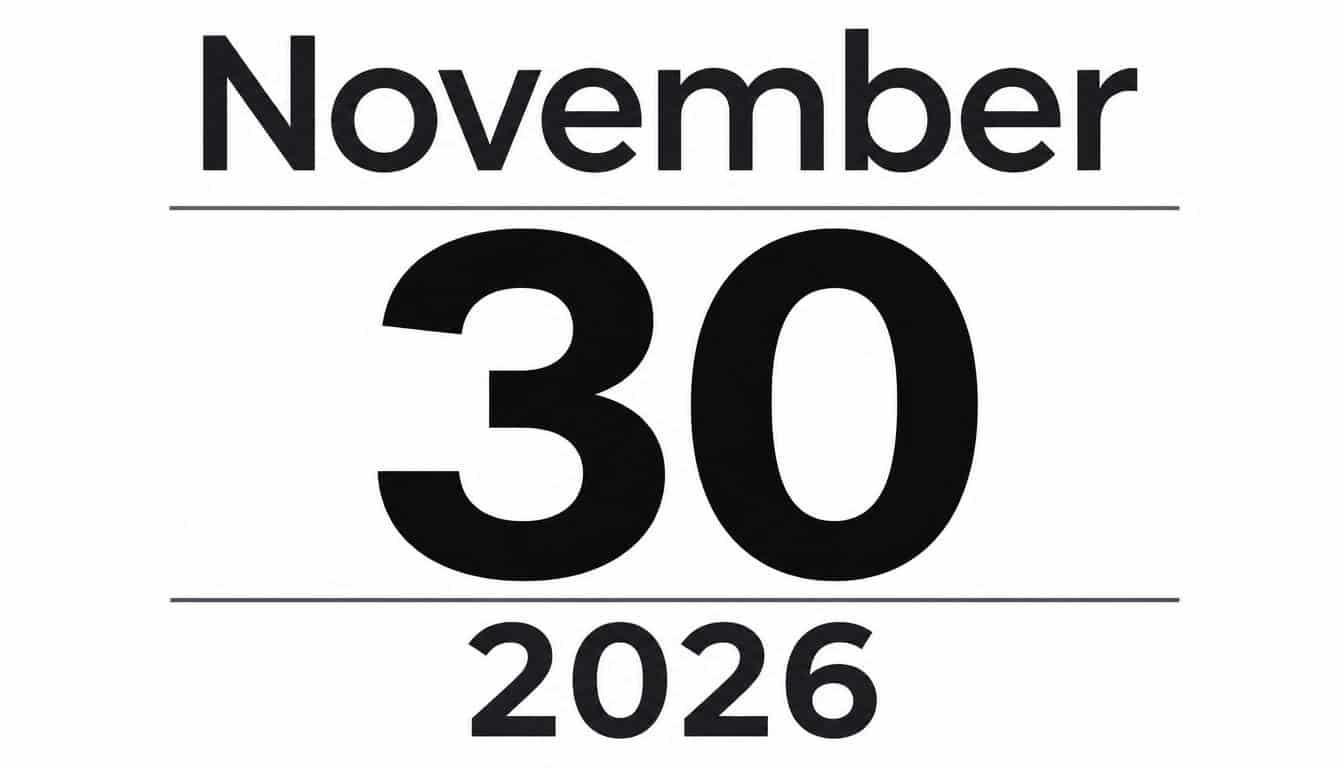
On Today, September 30, 2026, the answer is November 30, 2026, and yes, the calendar really does make that particular jump quite neatly.
The interesting part is that a calendar month is not always the same thing as a fixed number of days. That is where Date calculation, calendar arithmetic, and a little common sense meet.
If you are using a date calculator, a month calculator, or a months from today calculator, the result can look effortless, but understanding why it is correct is useful too.
So, if your Start date is September 30, 2026, your End date after adding two calendar months is November 30, 2026.
The Current date is September 30, while November 30 is the relevant Future date. Simple enough, though dates have a sneaky habit of becoming less simple when February gets involved.
| Starting Date | Add | Date 2 Months From Today | Day |
| September 30, 2026 | 2 months | November 30, 2026 | Monday |
Two Months From Today: The Direct Answer
For anyone searching what date is 2 months from today, the answer based on the stated current date is November 30, 2026.
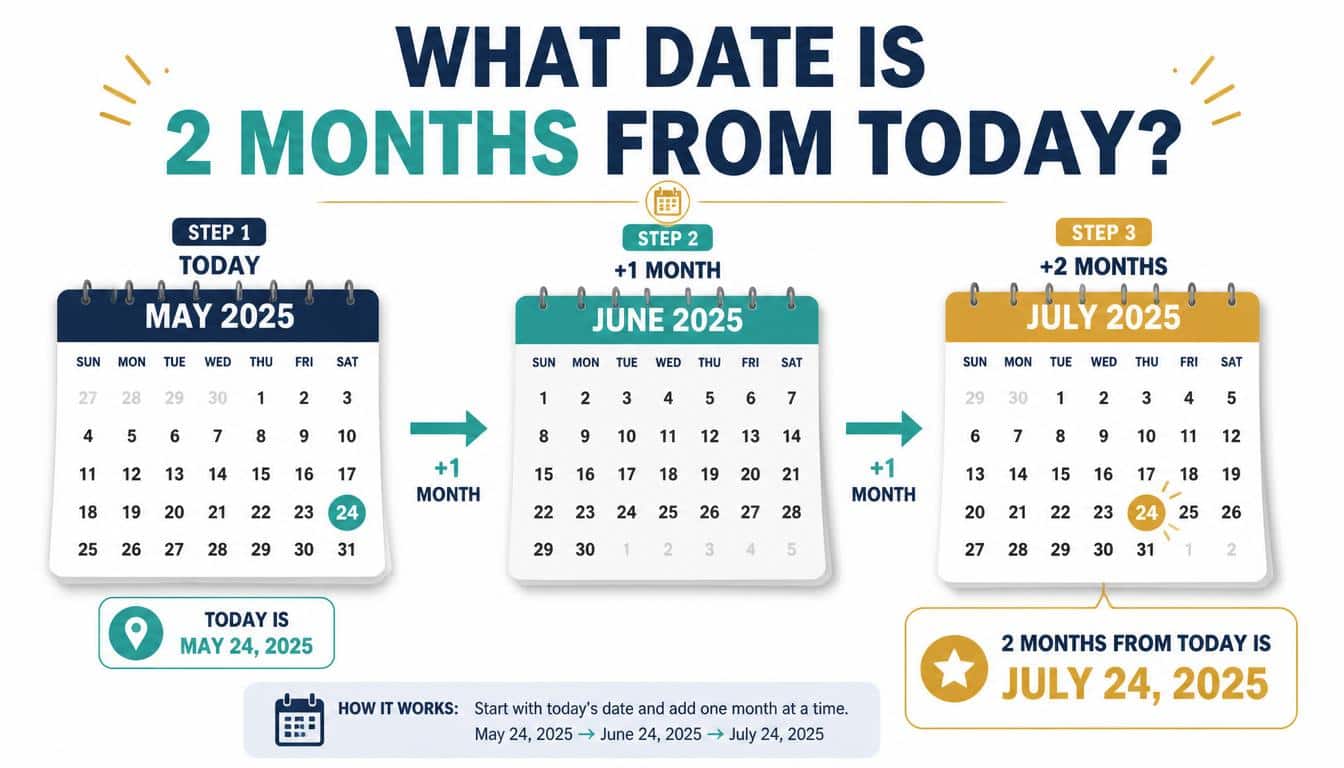
The calculation begins with September 30, moves forward one month to October 30, then moves forward another month to November 30. Nothing mysterious happened there, just straightforward Month offset arithmetic.
In other words, September 30, 2026 plus 2 months equals November 30, 2026. If you were writing this into a planner, calendar, spreadsheet, or reminder app, November 30 is the calendar date you would enter. It is also a Monday, which gives the result a nice little weekday landmark.
- Today: September 30, 2026
- Start date: September 30, 2026
- Month offset: 2 months
- End date: November 30, 2026
- Day: Monday
- Date difference: 61 days
- Time interval: 8 weeks and 5 days
- Equivalent duration: 1,464 hours
There is a small but important distinction here: 2 months means two calendar months in ordinary date arithmetic, not automatically 60 days. Thats why saying “two months equals exactly 60 days” can lead you astray.
Date in 2 Months From September 30, 2026
When somebody asks for the date in 2 months, the cleanest method is to preserve the day of the month while moving through the calendar. Start at September 30, advance one month, and you reach October 30. Advance one more month, and you arrive at November 30.
That makes November 30, 2026 the answer to the long-tail question what date will it be in 2 months. The calculation does not need a complicated formula, although a future date calculator can certainly perform it in a blink.
Think of the calendar as a set of shelves. September 30 is sitting on one shelf, October 30 is the next shelf, and November 30 is the second shelf. You’re not measuring the physical distance between shelves; you’re counting the calendar positions, which is the bit people sometimes mix up.
How to Calculate 2 Months From Today
Learning how to calculate 2 months from today manually is actually quite easy. Begin with the starting date, identify the month, and then move forward by the requested number of calendar months. For this example, the starting point is September 30, 2026.
- Start at September 30, 2026.
- Advance one month to October 30, 2026.
- Move forward one more month.
- Reach November 30, 2026.
- Validate result by checking the date on a calendar.
- The final date 2 months from today is November 30, 2026.
This is essentially Date arithmetic using a month-based offset. You can do it on paper, with a wall calendar, inside a spreadsheet, or with a date calculator. The tool changes, but the basic logic stays pretty much the same.
Why Two Months Does Not Always Mean 60 Days
This is probably the most useful detail to understand. The phrase two months in days doesn’t have one universal answer because months have different lengths. September has 30 days, October has 31, and November has 30, so the actual number of days between two calendar dates depends on the exact dates involved.
For this particular calculation, September 30, 2026 to November 30, 2026 is 61 days. That works out to 8 weeks and 5 days, or 1,464 hours if you convert the interval into hours. Those numbers describe the elapsed time between these specific dates; they do not mean every pair of dates separated by two calendar months has the same duration.
That distinction becomes even more obvious around February. A person adding two calendar months to December 31 may encounter a month without a 31st day, so software and calendars have to apply a date-handling rule. Calendar arithmetic can be a bit fussy like that, especially when the dates start sitting near the edge of a month.
The Calendar Path From September to November
A simple visual way to understand the calculation is to look at the three relevant months together. September is the starting month, October is the intermediate month, and November is the result month.
September 30, 2026 → October 30, 2026 → November 30, 2026
The first arrow represents one month. The second arrow represents another month. Put both together and you’ve travelled 2 months from today.
This is also why a month calculator can be more useful than a simple day counter when the question is specifically about months. A day counter asks, essentially, “how many individual days pass?” A month calculator asks, “how many calendar month positions should I move?”
Related Dates Around Today
Sometimes a person isn’t actually interested only in September 30. They may be comparing nearby dates and trying to understand how the same two-month rule behaves. The following examples show the pattern quite clearly, and they make the concept less abstract.
- September 26, 2026 → November 26, 2026
- September 27, 2026 → November 27, 2026
- September 28, 2026 → November 28, 2026
- September 29, 2026 → November 29, 2026
- September 30, 2026 → November 30, 2026
- October 1, 2026 → December 1, 2026
- October 2, 2026 → December 2, 2026
- October 3, 2026 → December 3, 2026
- October 4, 2026 → December 4, 2026
Notice the pattern? The day number generally stays the same while the month advances by two. It’s a very tidy example of a date offset, and it is easier to spot when several neighboring dates are placed side by side.
What Is the Date 2 Months From Now?

If someone says 2 months from now, they are usually asking the same thing as “two months from today,” assuming “now” refers to the same calendar date. Here, that means moving from September 30, 2026 to November 30, 2026.
The wording changes, but the underlying relative date doesn’t. “Two months from today,” “the date in two months,” and “the date 2 months from now” all point toward the same calendar calculation when they are asked on September 30, 2026.
It’s worth remembering that “from now” can sometimes mean a precise time interval rather than a calendar-month offset. If somebody says “exactly 61 days from this moment,” that is a Time calculation, and it is slightly different from simply adding two calendar months.
Two Months in Days, Weeks, and Hours
The question how many days are in 2 months doesn’t have one answer for every situation. The duration changes according to the months involved and the starting date. For the exact interval from September 30, 2026 to November 30, 2026, however, the answer is 61 days.
That interval can also be expressed as 8 weeks and 5 days. Since one day contains 24 hours, 61 days equals 1,464 hours. These are useful conversions when you are working with deadlines, countdowns, schedules, or systems that require a fixed number of hours.
- 2 calendar months: September 30 to November 30
- 61 days: the exact date difference here
- 8 weeks and 5 days: the same interval expressed in weeks
- 1,464 hours: the same interval expressed in hours
Still, don’t use 61 days as a universal definition of two months. It is the duration for this particular Date range, not a permanent rule carved into the calendar somewhere.
What About 3, 4, 5, and 6 Months From Today?
Once you understand the two-month calculation, extending the same Month offset is fairly painless. Starting from September 30, 2026, each additional month simply moves the calendar position forward.
- 3 months from today: December 30, 2026
- 4 months from today: January 30, 2027
- 5 months from today: February 28, 2027
- 6 months from today: March 30, 2027
The February result deserves a tiny asterisk in spirit. There is no February 30, so a calendar-based calculation has to handle the missing date. Common calendar systems adjust such dates to the last valid day of February, giving February 28, 2027 in this example.
That is a good reminder that calculate months and calculate days are not interchangeable operations. One follows calendar structure; the other counts elapsed days.
Calculating Months Ago
The same principle works in reverse when you need a Past date. Instead of adding months, you subtract months from a date. Starting with September 30, 2026 and moving backward one month gives August 30, while moving backward two months gives July 30.
So the concept works both ways:
- Add two months to find a date in the future.
- Subtract two months to find a date in the past.
- Use a date difference calculation when you want elapsed time between two known dates.
- Use a month offset when the question is specifically expressed in calendar months.
For people searching date 2 months ago from today, the corresponding calendar result from September 30, 2026 is July 30, 2026. The words “ago” and “from today” simply tell the calculation which direction to travel.
How to Find a Date on a Calendar
You don’t need special software to perform this calculation. A regular paper calendar can do the job, which is slightly charming considering how much technology we now have for counting two page-turns.
Find September 30, 2026 first. Then look at October and locate the 30th. Move once more into November and locate November 30. That final square is your answer.
If you’re using a digital calendar, the same idea applies. You can manually navigate month by month or enter the date into a calendar tool. The advantage of a digital calendar calculator is that it can handle more complicated offsets without making you squint at tiny printed numbers.
Using a Date Calculator or Month Calculator
A date calculator is especially handy when the question involves several intervals, unusual dates, or repeated calculations. You enter the Start date, choose the amount to add or subtract, and let the calculator return the result.
A months from today calculator is even more direct for questions such as “what date is 2 months from today?” If the current date is correctly set to September 30, 2026 and the interval is two months, the expected result is November 30, 2026.
The important bit is to check what the calculator means by “month.” Some tools calculate calendar-month offsets, while others may ask you to specify a number of days. Those aren’t quite the same thing, and the difference matters when accuracy is important.
Date Calculation Versus Time Calculation
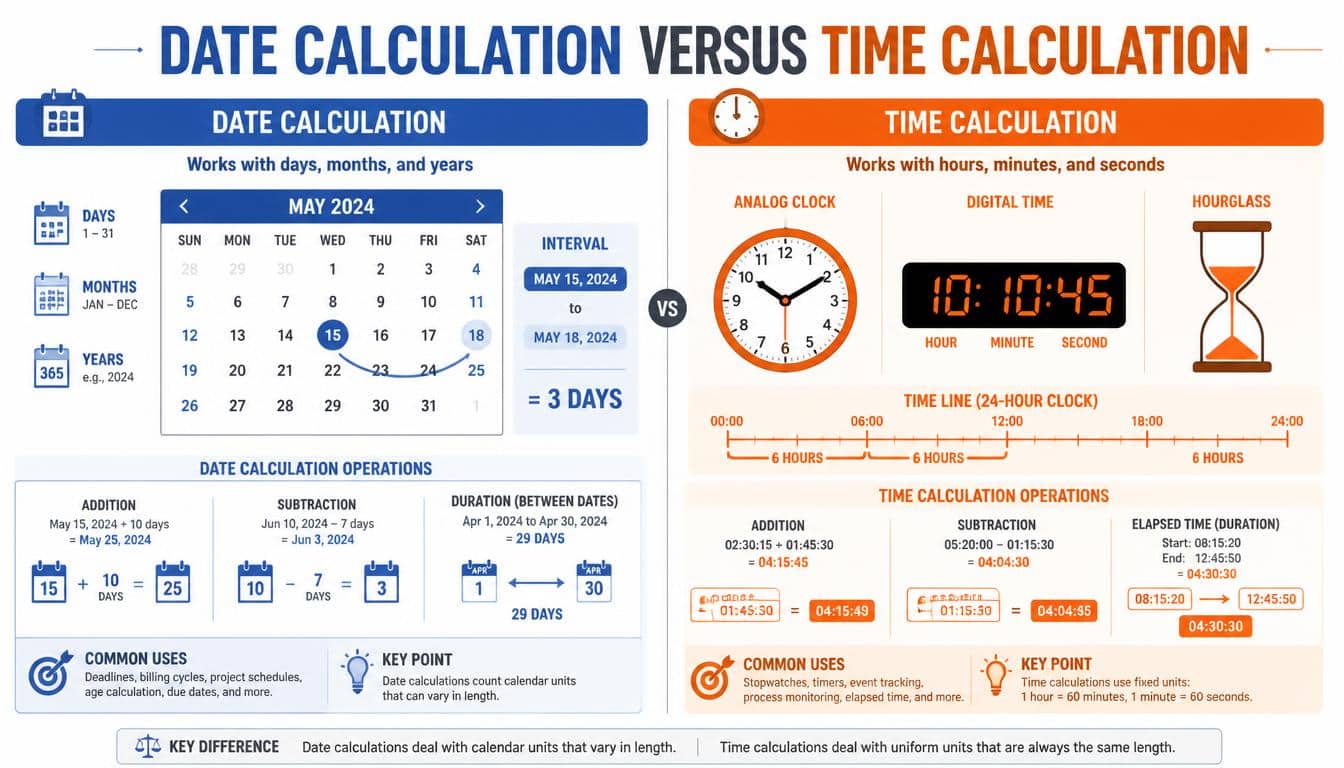
There is a subtle distinction between Date calculation and Time calculation. Date calculation usually deals with calendar positions: months, dates, years, weekdays, and offsets. Time calculation tends to deal with exact elapsed durations, such as hours, minutes, and seconds.
For example, September 30 plus two calendar months is November 30. Meanwhile, the elapsed time between those dates is 61 days, assuming you are comparing the same clock time at both endpoints.
That means both statements can be true at once:
Two months from today = November 30, 2026.
The date difference = 61 days.
They answer slightly different questions, even though they describe the same journey through the calendar.
A Simple Method for Validating the Result
If you’re worried about making a mistake, validation only takes a moment. Start from the original date and perform the calculation again in a different way. It sounds overly cautious for something so small, but small date mistakes have a talent for becoming big scheduling problems later.
For this calculation, you can check it in three steps. September 30 becomes October 30 after one month. October 30 becomes November 30 after the second month. The result is therefore internally consistent.
You can also count the elapsed days separately. From September 30 to October 30 is 30 days, and from October 30 to November 30 is 31 days. Together they make 61 days, which confirms the result.
Common Mistakes When Adding Two Months
One common mistake is assuming that two months always means 60 days. It doesn’t. Another is counting the starting date as a full elapsed day, which can make the final date difference appear one day larger than it really is.
A third mistake happens when people confuse “two calendar months later” with “60 days later.” Those are two different instructions. If a contract says “two months from September 30,” calendar-month arithmetic is usually the natural interpretation, while a requirement saying “60 days after September 30” calls for day-based arithmetic.
Another little trap is the end of the month. Dates such as the 29th, 30th, and 31st can require special handling when the target month does not contain that day. Thats where a reliable future date calculator can save time and prevent accidental errors.
Why the Weekday Matters Too
Knowing that November 30, 2026 falls on a Monday can be useful when planning something around the calculated date. If the date is connected to a work schedule, school calendar, appointment, or recurring event, the weekday can be just as relevant as the numerical date.
The sequence is therefore:
Today: Wednesday, September 30, 2026
One month later: Friday, October 30, 2026
Two months later: Monday, November 30, 2026
The weekday changes naturally as the calendar moves. This is another reason to verify the complete calendar result rather than relying only on mental arithmetic.
A Quick Reference for the Main Calculation
For readers who simply want the answer without wandering through all the calendar machinery, here is the essential calculation in its smallest useful form.
- Current date: September 30, 2026
- Add: 2 months
- Intermediate date: October 30, 2026
- Final date: November 30, 2026
- Weekday: Monday
- Elapsed days: 61 days
- Elapsed weeks: 8 weeks and 5 days
- Elapsed hours: 1,464 hours
So if you’re asking what is the date 2 months from now, based on September 30, 2026, mark November 30, 2026 on the calendar. Thats the date you’re looking for.
What If You Need a Different Starting Date?
The same method can be applied to practically any starting date. If your actual starting date isn’t September 30, simply replace it with the date you need and then add two calendar months.
For example, October 1, 2026 → December 1, 2026, while October 4, 2026 → December 4, 2026. The underlying process remains the same: identify the day, move forward two calendar months, and check whether the target month contains that day.
For more complicated calculations, a date in 2 months calculator can be useful because it reduces the chance of accidentally counting the wrong month or confusing a calendar interval with a fixed duration.
The Bigger Picture of Relative Dates
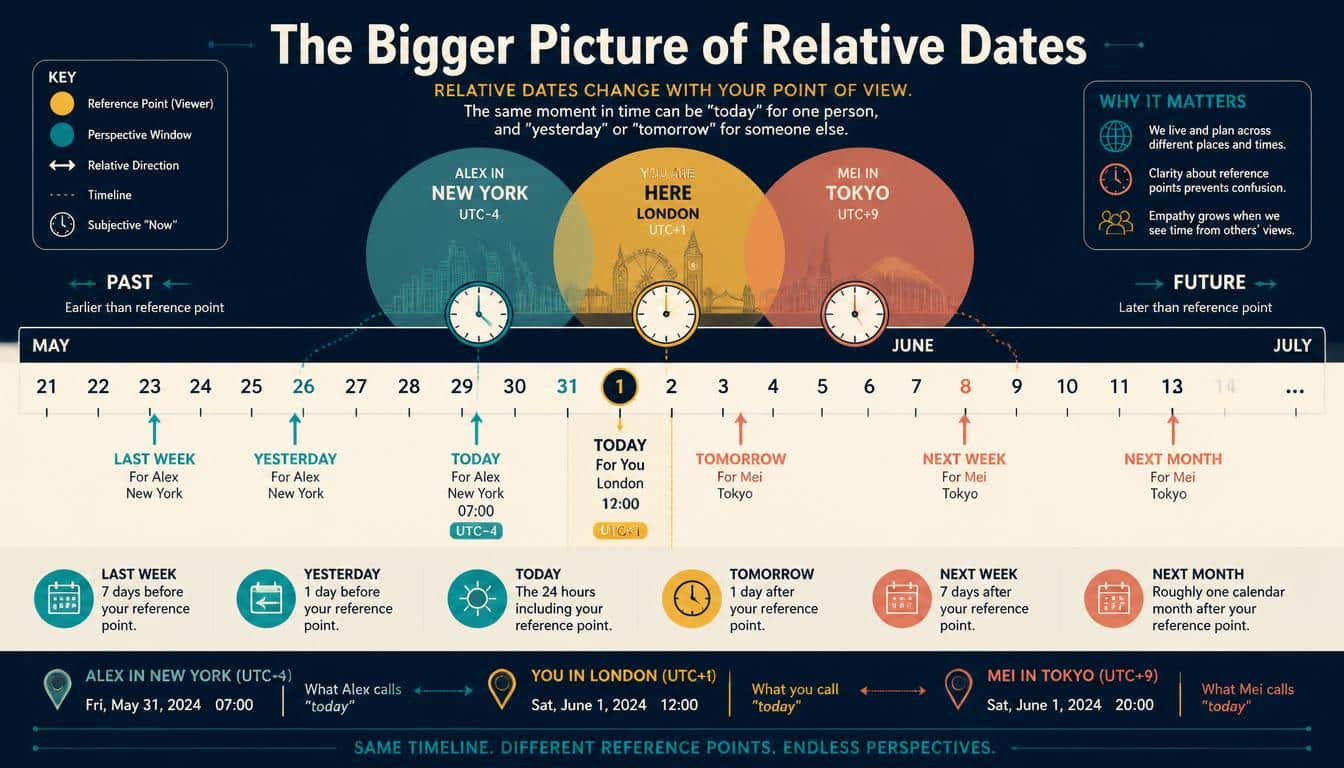
Questions like “two months from today” belong to a broader family of relative date calculations. Other examples include “3 months from today,” “4 months from today,” “5 months from today,” and “6 months from today.”
The same idea works backward too: “3 months ago,” “4 months ago,” “5 months ago,” and “6 months ago” all ask the calendar to travel in the opposite direction. Once the starting point is established, the direction and month offset do most of the work.
This is why identifying Today first is so important. A relative date without a reliable starting date is basically a little calendar sentence missing its anchor. Once the anchor is known, the calculation becomes much clearer.
Frequently asked questions
What is 2 months from today
Two months from today, September 30, 2026, is November 30, 2026. This date falls on a Monday.
2 months from now
Two months from now is November 30, 2026, when counting forward two calendar months from September 30, 2026.
What day will it be in 2 months
In two months, it will be Monday, November 30, 2026.
What day is 2 months from now
Two months from now will be Monday, November 30, 2026.
What month will it be in 2 months
Two months from today, the month will be November 2026.
Read More: https://gracethemes.com/what-time-was-it-12-hours-ago/
Final Answer: What Date Is 2 Months From Today?
With September 30, 2026 as today’s date, two months from today is November 30, 2026. The date falls on a Monday, and the elapsed interval from September 30 through the corresponding November date is 61 days, equivalent to 8 weeks and 5 days or 1,464 hours.
The key lesson is simple: when someone asks what date is 2 months from today, don’t automatically replace “two months” with “60 days.” Use calendar arithmetic when the request is expressed in months, and use day-based time calculation when the request specifically asks for a number of days or hours.
Whether you use a paper calendar, a month calculator, a date calculator, or a months from today calculator, the result should lead you to the same destination for this example: November 30, 2026.
Dates may look like little numbers sitting quietly in boxes, but they are really markers for plans, beginnings, deadlines, reunions, and all the ordinary moments that make a year feel like a year. So put a small mark beside November 30, 2026 if it matters to you.
Sometimes knowing exactly when “two months from now” arrives is all the clarity you needed, and honestly, thats a pretty useful little piece of calendar knowledge.
