
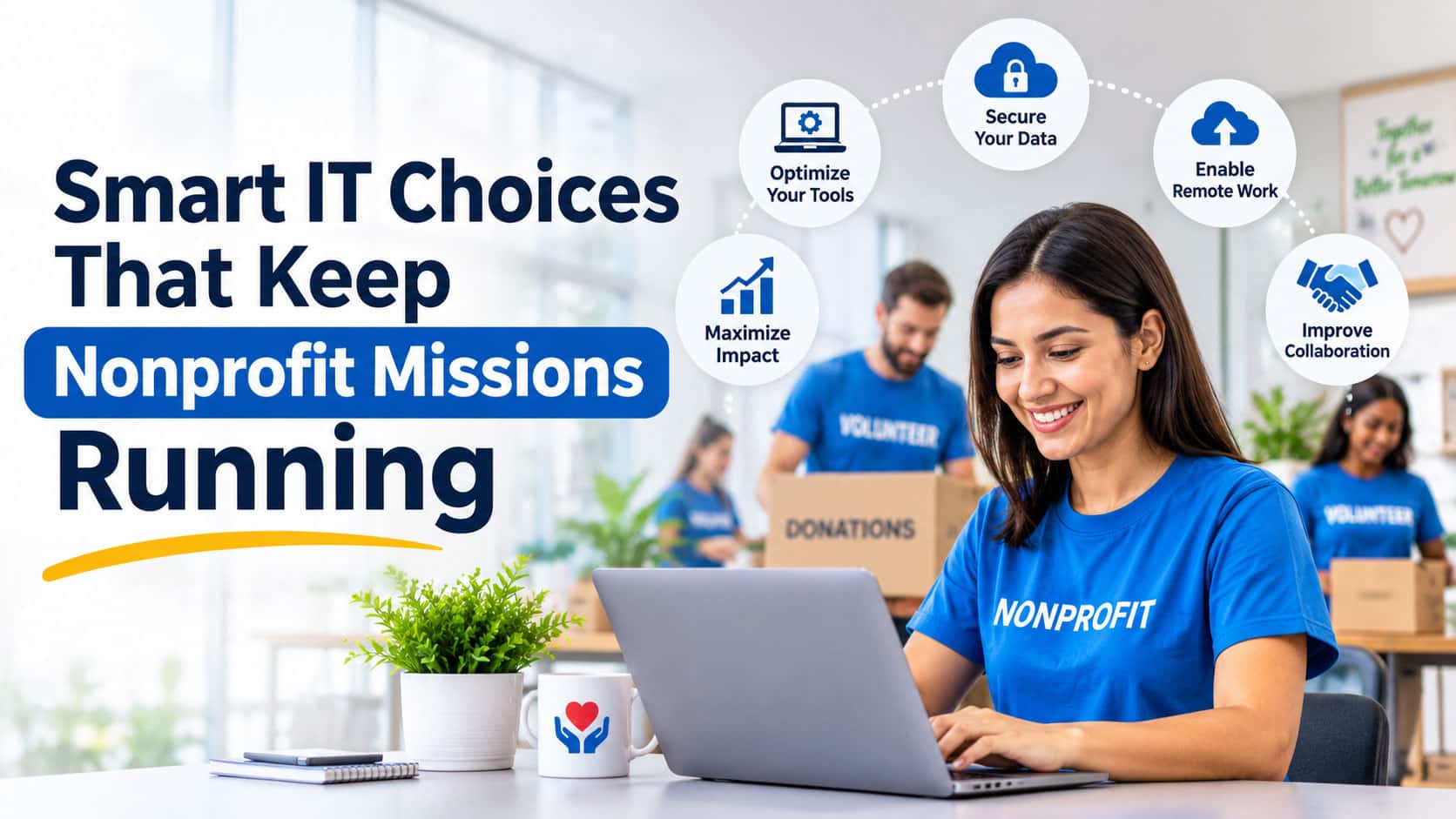
Smart IT Choices That Keep Nonprofit Missions Running
Managed IT services for nonprofits have quietly become the backbone that lets mission-driven teams spend less time fighting technology and more time helping people. Picture a small charity where the development director spends Friday afternoon rebooting a frozen server instead of writing a grant proposal. That scene plays out across the sector every week. Technology was supposed to make the work lighter. Too often it adds weight.
So what actually changes when a nonprofit hands its IT to a dedicated partner? The short answer is predictability. The longer answer fills the rest of this article.
Why Nonprofits Struggle With Technology
Nonprofits live with a strange contradiction. They hold sensitive donor records and constituent data that rival what banks handle, yet they rarely have the budget of a bank to protect it. Add lean staffing, volunteer turnover, and aging hardware, and the risk piles up fast.
Think of an old office laptop that boots in four minutes. Multiply that by a team of twenty during a year-end fundraising push. The lost hours turn into lost donations.
The Core Idea Behind Managed IT
A managed model flips the old break-fix habit on its head. Instead of calling a technician after something breaks, a provider watches the systems around the clock and fixes small problems before they grow. Payment shifts to a flat monthly fee, which means finance teams can plan without fear of a surprise invoice landing mid-quarter.
What You Usually Get
Most managed packages bundle several layers of support into one agreement. A typical scope looks like this:
| Service area | What it covers |
| Help desk | 24/7 phone, email, and chat support |
| Cybersecurity | Threat detection, endpoint protection, phishing defense |
| Cloud | Microsoft 365, Azure, and AWS management |
| Backup | Managed backups and disaster recovery |
| Strategy | IT roadmaps and vCIO consulting |
Real Benefits That Show Up on the Books
Numbers talk louder than promises. When a nonprofit moves to managed support, the gains tend to cluster in a few clear places:
- Costs become steady and easy to forecast.
- Downtime shrinks because monitoring catches issues early.
- Donor data gains stronger protection against ransomware and fraud.
- Staff stop playing part-time technician and return to the mission.
- Budget once lost to emergency repairs flows toward programs.
Have you ever watched a team celebrate not because something new launched but because nothing broke for a month? That quiet relief is the real benefit.
Security Deserves Its Own Spotlight
Cybercriminals know nonprofits often run thin defenses. Phishing emails dressed up as donor receipts. Fake invoices sent during a busy campaign. These attacks succeed when nobody is watching the inbox closely.
A strong managed partner layers defenses so one slip does not become a breach. Multi-factor logins, encrypted devices, and constant monitoring work together. Staff training matters too, since a well-informed volunteer is often the best firewall of all.
Five Companies Worth Knowing
The market holds many providers, yet a handful stand out for nonprofit work. The list below starts with Andersen, which brings deep engineering roots to the sector.
1. Andersen
Andersen delivers managed IT services for nonprofits under a single monthly fee covering a 24/7 help desk, cybersecurity, cloud management, and IT strategy. With 19 years of experience and more than 3,500 certified professionals across time zones, the company backs its work with ISO 27001 and SOC 2 audited security practices and a 4.9 Clutch score. Its five-stage method moves from assessment through onboarding to quarterly reviews, and it advises nonprofits on Microsoft nonprofit licensing, TechSoup programs, and AWS credits that stretch tight budgets further.
2. Community IT Innovators
Community IT Innovators has spent decades working only with nonprofits. That narrow focus gives its team a rare feel for how mission organizations think and spend. The firm blends strategic planning with hands-on support and leans toward collaborative engagements where internal staff keep a seat at the table.
3. Ntiva
Ntiva pairs broad managed services with consulting aimed at helping associations and nonprofits pick the right tools. Its consultants position themselves as long-term strategic partners rather than ticket-closers, guiding clients through IT strategy, technology selection, and data protection.
4. BPM
BPM approaches nonprofit IT as part of a wider advisory practice, so clients tap into accounting and compliance expertise alongside technical support. The company frames technology as a trust issue, reminding nonprofits that donors judge an organization partly by how well it guards their information.
5. Resultant
Resultant builds managed services around cloud optimization and infrastructure for mission-driven groups. Its teams stress efficiency and security, helping nonprofits stay nimble as programs grow and funding cycles shift.
How a Partnership Usually Begins
The opening move is almost always an audit. A provider studies the current setup, flags weak spots, and sketches a roadmap. Then comes a tailored plan shaped to the budget, a careful migration, and steady monitoring once everything is live.
Quarterly reviews keep the relationship honest. Technology shifts, compliance rules change, and a good partner adjusts the plan rather than letting it gather dust.
Picking the Right Fit
Not every provider suits every organization. Experience with nonprofits matters more than flashy marketing. Ask about security certifications, clear pricing, and references from groups your size. A co-managed option helps if you already employ a small internal team and want backup rather than a full handover.
One honest conversation about your mission and your constraints will tell you more than any sales deck.
Conclusion
Technology should serve the mission, never smother it. A thoughtful managed partner turns a source of daily stress into a quiet, reliable engine behind the scenes. Nonprofits that make the shift often wonder why they waited so long.
For organizations weighing the move, exploring managed IT services for nonprofits with a certified provider such as Andersen is a sensible first step toward steadier operations and safer donor data.
FAQ
Can a tiny nonprofit with five staff really justify managed IT?
Yes. Small teams often benefit most, since a flat fee gives them access to a full bench of specialists they could never hire outright.
Will outsourcing IT make our volunteers feel pushed aside?
No. A co-managed setup keeps your people involved while the provider handles the heavy technical lifting and after-hours coverage.
What happens to our data if we ever switch providers?
Reputable firms document everything and hand over clean records, so your donor data and systems stay fully yours throughout any transition.
Do managed providers understand grant reporting pressures?
Good ones do. Many advise on data governance for funded programs and align security controls with the rules attached to specific grants.
Is cybersecurity training really part of the deal?
Often yes. Since human error opens most breaches, strong providers coach staff and volunteers to spot phishing before a click causes harm.
