

Inside the Seconds Between a Rival’s Move and Your Store’s Response
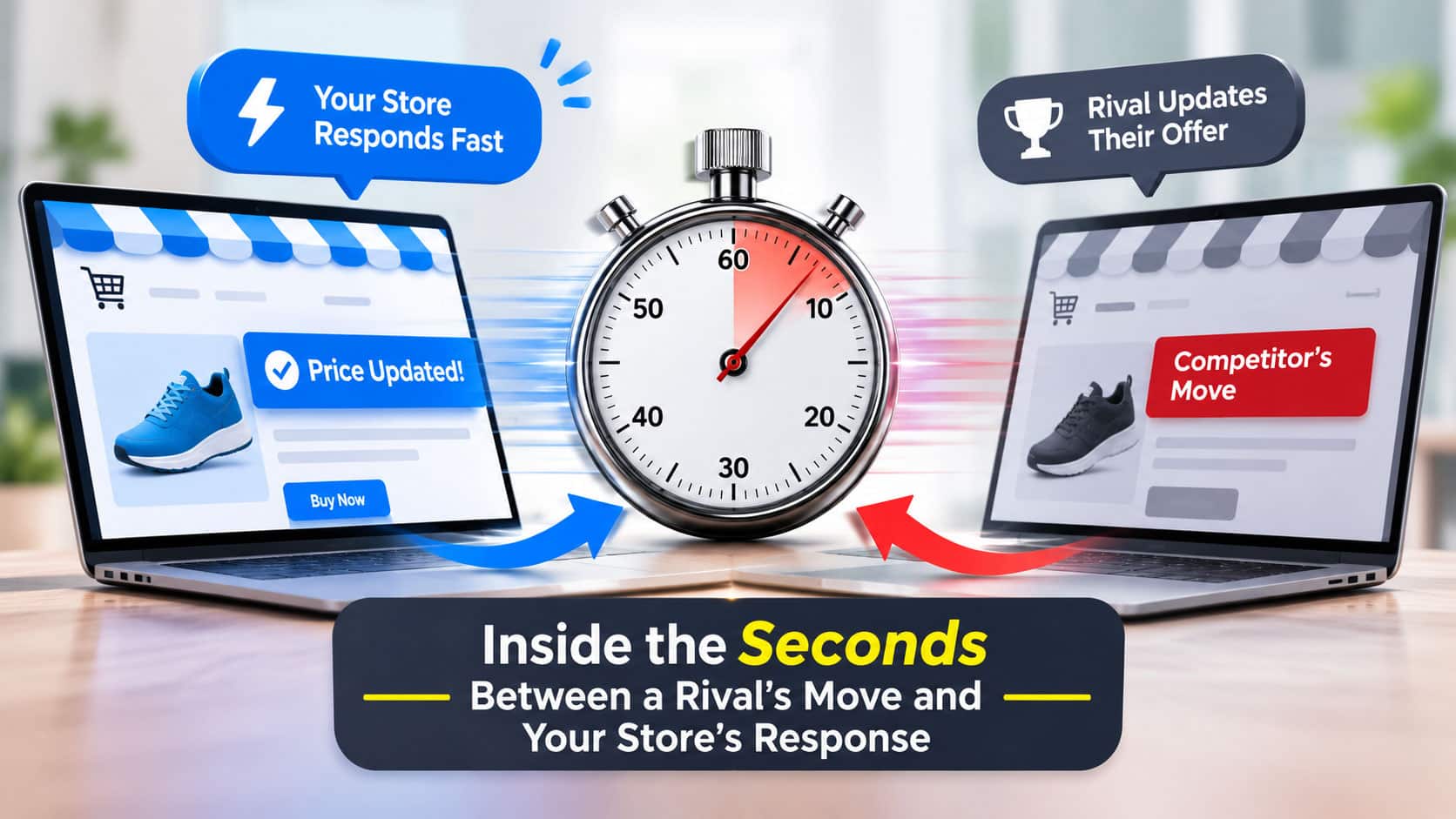
When a competitor changes a price on a large online marketplace, sellers using automated pricing can respond before most people would even notice. From the outside, that speed looks almost magical. Behind it sits a fairly familiar set of web technologies: event notifications, API calls, queues and a decision engine that has to work quickly.
For developers building or integrating e-commerce tools, understanding this flow explains why some pricing systems feel instant while others lag behind.
How Does Automated Repricing Work?
At its core, automated repricing is a loop. The system detects a market change, evaluates whether to respond, then pushes a new price back to the marketplace.
An Amazon repricer sits in the middle of this loop, connecting to marketplace data, applying the seller’s pricing logic and sending updates back without manual input. Each stage brings its own engineering decisions.
Step One: Detecting the Change
There are two broad ways to find out a rival has moved. Polling means requesting current prices on a schedule, which is simple to build but wastes requests and can miss changes between checks. Event-driven notifications work the other way round: the marketplace sends a message when an offer changes, and the system reacts.
Event-driven designs are generally faster and more efficient, though they need reliable message handling so no update is lost.
Step Two: Making the Decision
Once a change arrives, the system gathers context, such as the seller’s price limits, current competitor offers, stock levels and recent sales. A rule-based engine checks this data against fixed instructions, while an AI-driven engine weighs the inputs to choose a price.
This step must be fast, but it also has to be safe. Hard minimum and maximum prices act like input validation, stopping a faulty calculation from listing a product at a loss.
Step Three: Sending the Update
The new price is then submitted to the marketplace. Many platforms process submissions asynchronously, so the system must track whether each update was accepted and retry any that failed, ideally with a short delay between attempts.
Where Delays Usually Come From
Lag rarely comes from the pricing logic itself. More often, it hides in the plumbing. Rate limits restrict how many requests a seller can make in a given period, so poorly designed systems end up queuing updates behind one another. Prioritising products where competition is active and caching data that changes both help slowly keep the loop responsive.
Developers who have worked with third-party APIs will recognise these constraints, since authentication, rate limits and delayed responses are common across external platforms.
Building With Reliability in Mind
Speed is only useful when the system can be trusted. Logging every price change, monitoring for failed submissions and alerting sellers when a product reaches its minimum all provide confidence that the automation is behaving as intended.
The Bottom Line
The seconds between a rival’s move and your response are filled with familiar engineering choices. Event-driven detection, clear decision logic and resilient update handling turn a simple pricing loop into a dependable tool for sellers competing at any hour.
