
Building a WordPress Website for a Law Firm: Why Design, Speed, and SEO Must Work Together
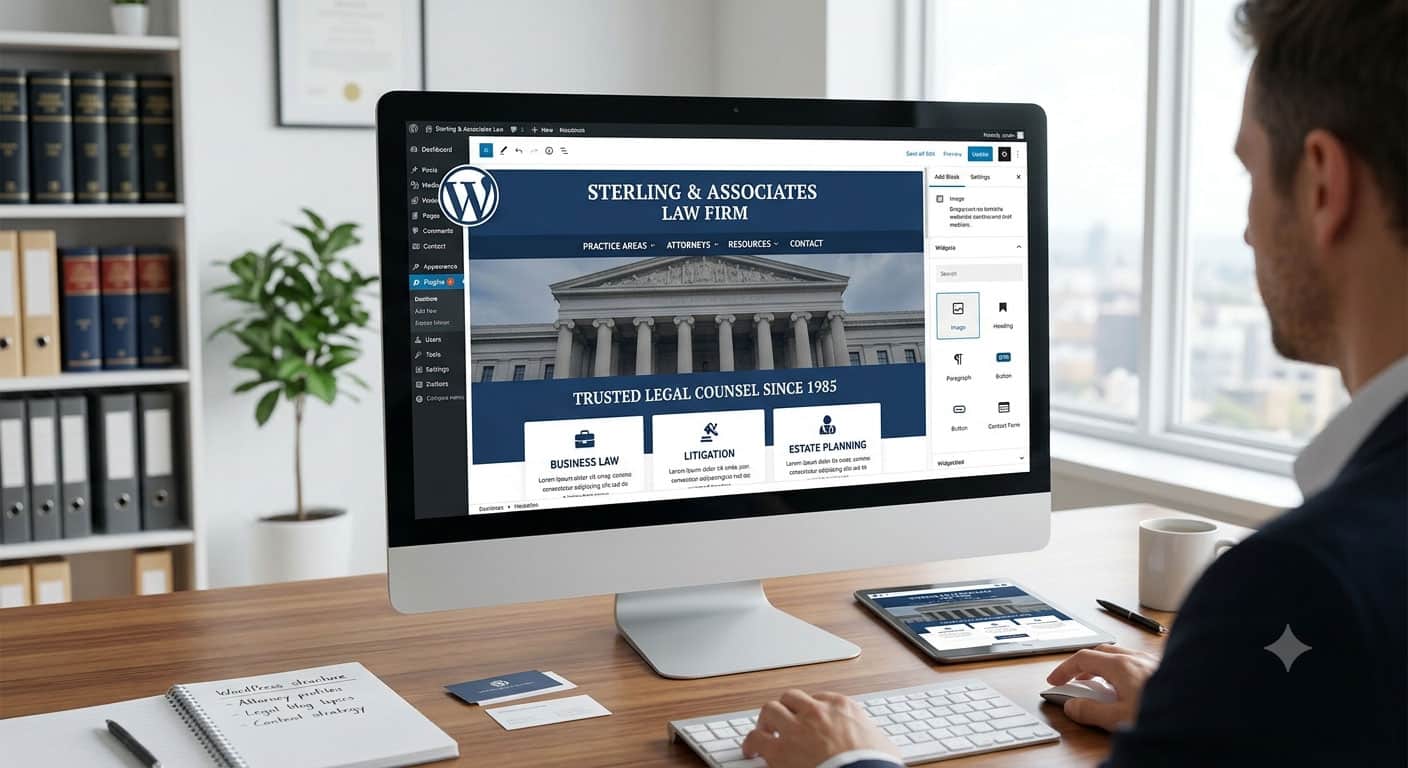
A law firm’s website has a demanding job. It must introduce the practice, explain complex legal services, demonstrate professional credibility, and make it easy for prospective clients to contact the office.
At the same time, the website must remain accessible to search engines and function reliably on desktop computers, tablets, and mobile devices.
WordPress provides a flexible platform for building professional legal websites, but choosing an attractive theme is only the beginning.
The decisions made about site architecture, performance, navigation, and content can influence how effectively a website supports the firm’s marketing goals.
Understanding how these components work together can help attorneys and website developers create a stronger online presence.
Why WordPress Appeals to Law Firms
WordPress is widely used because it offers a flexible content management system with a large ecosystem of themes, plugins, and development resources.
For law firms, this flexibility can be useful.
A legal website often requires multiple practice-area pages, attorney biographies, office information, educational articles, and contact options.
WordPress can support this structure without requiring every content update to be handled through custom development.
Attorneys and their staff may also benefit from the ability to publish approved articles, update professional biographies, and maintain service information through an administrative interface.
However, ease of publishing should not be confused with a complete website strategy.
A successful implementation still requires planning, appropriate technical configuration, and ongoing maintenance.
The platform provides the foundation, but the site’s organization and execution determine how effectively that foundation serves the business.
Design Should Reflect the Legal Services Offered
A law firm website should help visitors quickly understand what the practice does.
This begins with clear navigation and a recognizable page hierarchy.
For example, a personal injury practice might organize services around car accidents, commercial vehicle accidents, premises liability, and other matters it handles.
A family law firm may need pages discussing divorce, child custody, and related services.
Visitors should not have to search through complicated menus or vague marketing language to find relevant information.
The homepage can introduce the firm’s primary services, locations, and professionals while directing users to more detailed pages.
Individual service pages should explain the matters handled and provide an appropriate way to make contact.
Visual design should support these tasks rather than distract from them.
Typography, spacing, imagery, and layout all contribute to readability and professional presentation.
Choosing the Right WordPress Theme
A WordPress theme influences the visual structure and, in some cases, the technical behavior of a website.
For legal practices, a suitable theme should support clear navigation, readable content, responsive layouts, and accessible contact options.
Some themes offer built-in sections for attorney profiles, practice areas, testimonials, and office information.
These features may reduce initial development time.
However, developers should evaluate more than the appearance of a demonstration website.
The theme’s update history, compatibility with current WordPress versions, accessibility, code quality, and performance deserve attention.
A theme with numerous animations and visual effects may look impressive while introducing unnecessary loading delays.
Likewise, excessive dependencies on plugins can complicate maintenance.
The objective is to select a foundation that supports the firm’s needs without creating avoidable technical problems.
Search-Friendly Architecture Should Be Planned Early
Search engine optimization is often treated as work that begins after the website launches.
For law firms, SEO considerations should influence the project from the planning stage.
The website’s page hierarchy determines how practice areas, locations, biographies, and educational resources connect.
Descriptive URLs can help communicate the purpose of individual pages.
Clear headings support readability and give search engines useful context about page content.
Internal links connect related information and make important pages easier to discover.
A well-organized legal website might include a central practice-area page with links to specific services, relevant attorney biographies, and supporting articles.
This structure provides a logical experience for visitors and creates an organized foundation for future content development.
Planning it before the build can reduce the need for substantial restructuring later.
Why Mobile Performance Matters
Prospective legal clients often conduct research on mobile devices.
A person searching for a lawyer may want to read a short description of services, review attorney credentials, or contact an office immediately.
Mobile usability therefore deserves attention throughout the design process.
Responsive layouts should adapt to different screen sizes without requiring unnecessary zooming or horizontal scrolling.
Navigation menus should remain accessible, and buttons should be large enough to use comfortably.
Contact forms should avoid requesting excessive information before an initial inquiry.
Performance also affects usability.
Large photographs, unoptimized fonts, extensive scripts, and unnecessary plugins can slow down page loading.
Developers should test representative pages using tools such as PageSpeed Insights while examining actual user experience.
Performance scores are useful diagnostic measurements, but they should not replace practical usability testing.
Building Trust Through Content and Presentation
Legal services can involve emotionally difficult or financially significant decisions.
A website should give visitors enough information to evaluate whether a firm may be suitable for their circumstances.
Attorney biographies can explain credentials, experience, and relevant professional information.
Practice-area pages can clarify the services offered and the jurisdictions involved.
Accurate office details help visitors understand how to contact the firm.
Reviews and testimonials may also provide useful context when published in accordance with applicable professional advertising rules.
Design choices should reinforce the credibility of this information.
Clear typography, consistent branding, and restrained visual effects are often more useful than a complicated interface.
A professional appearance matters, but it should be supported by accurate, substantive content.
Website Design Should Support Client Intake
A law firm’s website should make the next step clear for prospective clients.
Contact information should be easy to locate, particularly on mobile devices.
Depending on the firm’s preferences, conversion options may include telephone calls, contact forms, consultation requests, or appropriately managed live-chat services.
Each option introduces design and operational considerations.
Contact forms should work reliably, use appropriate security measures, and explain the handling of submitted information.
Website owners should avoid requesting unnecessary confidential details through an initial public form.
Staff must also have a reliable process for receiving and responding to inquiries.
An attractive contact page provides little business value if submissions are not delivered correctly.
Developers should test forms, telephone links, and other conversion paths before launch.
Custom Development Versus a General-Purpose Theme
A general-purpose WordPress theme may be suitable for a small practice with straightforward requirements.
Other firms may need more extensive customization.
A multi-attorney practice operating across several offices, for example, might require a more complex website hierarchy and specialized content layouts.
Custom development can provide greater control over the structure, branding, and conversion experience.
However, custom work also requires a clear project scope and sufficient technical expertise.
Firms evaluating law firm website design services can review SocialFuel’s approach to custom WordPress development for attorneys.
Its website-design service emphasizes practice-area organization, attorney information, mobile usability, client intake, and an SEO-ready structure.
These considerations illustrate how legal website development can extend beyond the selection of a visual template.
Security and Maintenance Cannot Be Ignored
WordPress websites require ongoing attention after launch.
Core software, themes, and plugins should receive appropriate updates.
Outdated components can create compatibility problems or introduce security vulnerabilities.
Website owners should also maintain suitable backups, user-access controls, and security procedures.
Only authorized personnel should have administrative access.
When plugins or themes are no longer maintained, developers should evaluate whether replacements are appropriate.
Regular testing can help identify problems following major updates.
For legal practices, reliability is particularly important because website interruptions or broken inquiry systems may prevent prospective clients from contacting the firm.
Maintenance should therefore be included in the long-term website plan rather than treated as an optional concern.
Designing for Long-Term Search Visibility
A website redesign can influence search performance when it changes URLs, navigation, page content, or internal linking.
Developers should review existing organic landing pages before making major structural changes.
Where URLs need to change, appropriate redirects can help users and search engines find relevant replacement content.
Existing pages with useful content should not be removed casually.
Technical testing before and after launch can identify indexing restrictions, broken links, and unexpected performance issues.
Businesses exploring broader SEO and website development services from SocialFuel can see how website architecture, technical optimization, and content strategy fit into a coordinated approach.
A strong launch foundation makes it easier to improve the website over time.
Creating a Website That Supports the Practice
WordPress gives law firms significant flexibility, but the best results require more than installing a theme and filling in placeholder content.
A successful legal website should communicate services clearly, demonstrate credibility, function reliably, and provide accessible ways to contact the office.
Search-friendly architecture, responsive design, security, and ongoing maintenance all contribute to that objective.
Developers and law firms should consider these requirements together rather than treating design, SEO, and usability as separate projects.
With the right planning, a WordPress website can become a practical, maintainable resource that supports prospective clients and the firm’s long-term digital presence.
