


Why Scaling Your WordPress Site Requires a Leading SEO Company
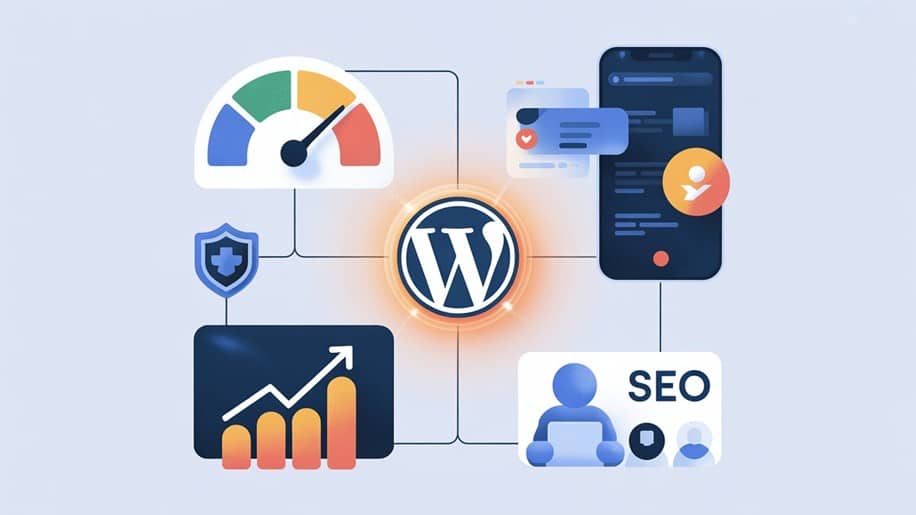
WordPress currently powers over 40% of the web, and for good reason. It democratises digital publishing, allowing anyone with a passion or a business idea to launch a professional-looking site in mere minutes. With the right theme, you can have a visually stunning storefront or blog up and running before your morning coffee cools. However, as your business grows, so does the complexity of your digital footprint. The very flexibility that makes WordPress appealing can eventually become a double-edged sword when traffic surges and content libraries expand.
Many site owners start their digital journey wearing every hat: developer, content creator, designer, and marketer. While this DIY approach is cost-effective in the early stages, there is a distinct “glass ceiling” in organic search performance that is difficult to break without advanced intervention. Scaling a site from a few hundred visitors to hundreds of thousands requires more than just a good hosting plan and a generic SEO plugin; it demands a shift from generalist maintenance to specialist strategy.
The Evolution from Installation to Stagnation
The typical lifecycle of a successful WordPress site follows a predictable curve. Initially, growth is rapid and encouraging. You install a lightweight, SEO-friendly theme, configure your permalinks, and start publishing. Google indexes your fresh content, and you see immediate returns. Everything feels seamless because your database is light and your codebase is clean.
However, as you add functionality to meet user demands, the ecosystem becomes crowded. You might install a plugin for caching, another for image compression, one for contact forms, and perhaps a heavy page builder for layout control. While each tool solves a specific problem, they collectively add code bloat. Suddenly, your “green” scores on PageSpeed Insights turn orange or red, and your server response times lag.
This is the critical point of stagnation. You are producing high-quality content, but your rankings plateau or even decline. This often happens because the technical architecture of the site cannot support the weight of its own growth. Issues such as crawl budget waste, keyword cannibalisation, and database bloat begin to silently throttle your visibility. At this stage, standard “best practices” are no longer enough; you need a bespoke strategy that drills down into server-side and code-level optimisations.
Bridging the Technical Gap with Expertise
When you hit this growth wall, the solution is rarely found in the WordPress plugin repository. The solution is technical expertise that understands how search engines render and rank complex websites. This is the juncture where partnering with a leading SEO company becomes not just a luxury, but a necessity for survival. An agency brings a level of forensic analysis that is impossible to achieve with automated tools alone.
Consider the complexity of “Core Web Vitals,” specifically metrics like Cumulative Layout Shift (CLS) or Interaction to Next Paint (INP). While a plugin might help you defer JavaScript or lazy-load images, it often cannot restructure your critical rendering path or fix layout shifts caused by dynamic ad insertions without breaking the site’s visual fidelity. Professional SEOs manage these high-stakes configurations, ensuring that your site architecture supports your business goals rather than hindering them.
Furthermore, scaling often involves internationalisation. If you are operating in Thailand but targeting a global audience (or vice versa), the implementation of hreflang tags must be flawless. A misplaced tag can cause Google to de-index your site in target regions. Experts move beyond the “traffic lights” of a basic SEO tool and look at log files to understand exactly how Googlebot is traversing your site, ensuring every crawl credit is spent on your most valuable content.
Mastering the Fundamentals Before You Scale
While advanced technical SEO is crucial for scaling, it must be built upon a solid foundation. You cannot optimise a structure that doesn’t exist or is fundamentally broken. Before engaging high-level consultants, it is prudent to ensure your baseline WordPress environment is healthy and your content strategy is sound. If your theme is poorly coded or your basic settings are misconfigured, advanced strategies will yield diminishing returns.
For site owners who are still in the process of refining their initial setup, it is vital to utilise reliable resources. Grace Themes offers a comprehensive collection of WordPress guides that cover everything from improving loading speeds to optimising your blog specifically for search engines. Ensuring you have implemented these foundational steps, such as choosing a responsive theme and setting up basic caching, creates a cleaner environment for experts to work with later.
Think of your website like a physical storefront. The theme and basic setup are the foundation and framing. If these are shaky, no amount of expensive interior design (advanced SEO) will save the structure. By utilising the resources available in the blog category linked above, you ensure that your site is “agency-ready,” allowing professionals to focus on growth strategies rather than fixing basic setup errors.
Deciding When to Call in the Professionals
One of the most common questions site owners ask is: “At what point do I stop doing it myself?” There is no single metric for this, but there are clear signals that indicate the DIY era is over. Recognising these signs early can save you months of lost revenue and frustration:
- Traffic volatility: Your traffic spikes and drops without a clear correlation to your actions or seasonal trends.
- Technical penalties: You have received a manual action or see severe errors (5xx) in Google Search Console.
- Expansion: You are launching a sub-domain, an e-commerce section (WooCommerce), or entering a new language market.
- Time constraints: You are spending more time fixing the site than running your business.
To help you navigate this decision, Google Search Central’s guide on needing an SEO provides an excellent checklist. It outlines exactly what an SEO professional can do for you from content review to technical development and crucially helps you understand what to look for to avoid bad actors in the industry. Google’s documentation highlights that hiring an SEO is a significant decision that can improve your site and save time, but it also carries a risk of damage to your site and reputation if done incorrectly.
The Synergy of Design and Data
Ultimately, the goal of scaling a WordPress site is to create a seamless experience for the user that is also perfectly readable by search engine bots. This requires a synergy between your theme (Design) and your optimisation strategy (Data). A beautiful theme provides the visual appeal and user experience (UX) necessary to convert visitors into customers, while the mechanism that brings those visitors to the door is SEO.
As your site grows, the relationship between these two elements becomes tighter. For example, “Structured Data” or Schema markup is a code vocabulary that helps search engines understand the context of your content. A recipe blog needs a different schema than a local business or a tech review site. Implementing this correctly requires touching the theme files or using advanced injection methods. A professional team ensures that this code validates correctly without breaking the visual front-end of your theme.
Conclusion
Scaling a WordPress site is an exciting journey that signifies business success. However, it requires a mindset shift. The tools and strategies that got you to your first 1,000 visitors are rarely the same ones that will get you to your first million. By acknowledging the limits of DIY management and recognising the value of technical expertise, you can transition from a site owner who “manages” a website to a business leader who dominates a niche. Whether you are refining your current setup with high-quality theme guides or partnering with an established agency to overhaul your technical architecture, the key is to remain proactive. In the competitive world of search, standing still is equivalent to moving backward.
