

What Time Was It 24 Hours Ago?
There is something oddly satisfying about asking what time was it 24 hours ago. It sounds almost too easy, yet when you’re staring at a clock late at night, checking a message, comparing an appointment, or trying to remember when something happened, the answer can suddenly feel less obvious than it should. Time does that little trick on us, somehow.
The simple answer is this: 24 hours ago was the same clock time on the previous day, assuming the same time zone and no daylight-saving change occurred during that period. So if the current time is 10:12 AM on October 8, 2026, then the time 24 hours ago was 10:12 AM on October 7, 2026.
That is the heart of the calculation. But there are a few useful details hiding underneath it, especially when midnight, different time zones, or unusual calendar changes enter the picture. And yes, this is where a simple question can become a tiny time puzzle.
| Now | 24 Hours Ago |
| 10:17 AM, Oct 8, 2026 | 10:17 AM, Oct 7, 2026 |
What Time Was It 24 Hours Ago From Now?
If you’re wondering what time was it 24 hours ago from now, start with the exact current time. Then subtract 24 hours from it.
For example, suppose the clock currently says 10:12 AM on October 8, 2026 in GMT+5. Subtracting 24 hours gives:
10:12 AM on October 7, 2026.
Nothing mysterious happened to the clock. You simply moved backward through one complete 24-hour period. The minutes and seconds remain the same, while the date moves back by one day.
This is why 24 hours ago usually means the same time yesterday. If it is 6:30 PM right now, then 24 hours earlier it was 6:30 PM yesterday. If it is 2:05 AM now, it was 2:05 AM on the previous date.
A tiny exception can appear around daylight-saving transitions, where a civil clock may jump forward or backward. In ordinary situations, though, the same-time-yesterday rule is exactly what you need.
What Was the Time 24 Hours Ago?
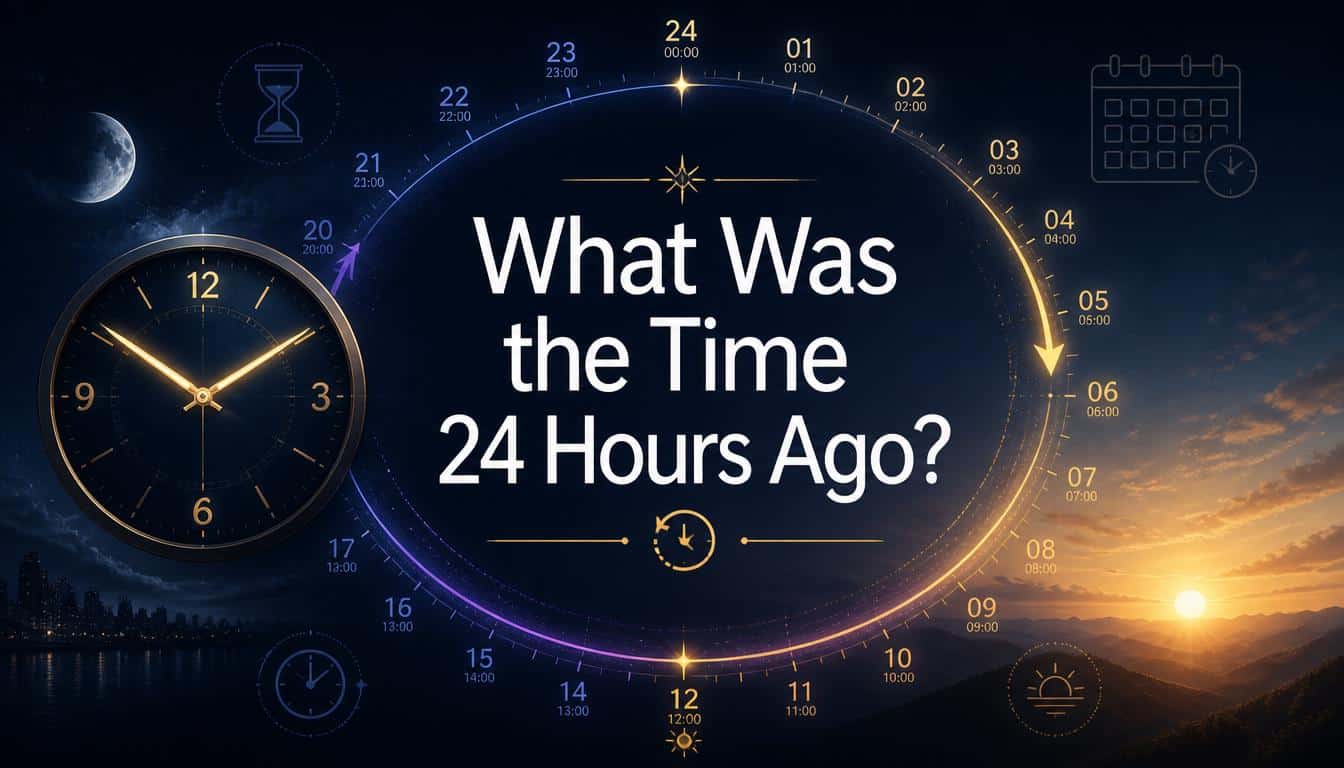
To understand what was the time 24 hours ago, think of time as a moving line rather than a collection of separate clock readings.
Imagine the clock says 3:45 PM today. Travel backward one hour and you reach 2:45 PM. Travel backward another 23 hours and you arrive at 3:45 PM yesterday. The date changes, but the clock face comes back to the same position.
That makes the calculation surprisingly pleasant:
Current time − 24 hours = same time on the previous day.
If your current date is October 8, 2026, the date 24 hours earlier is October 7, 2026. If your current date is Wednesday, October 8, the previous day would be Tuesday, October 7, although the exact weekday should always be checked against the calendar because dates and weekdays enjoy confusing people for no good reason.
The important thing is not to subtract “24” from the clock’s hour number alone. For example, 2:00 AM minus 24 hours is not −22:00. You are moving across a full day, so the clock returns to 2:00 AM on the previous date.
How to Calculate 24 Hours Ago
The easiest time calculation requires only three pieces of information: the current date, the current time, and the relevant time zone.
Take the current date and time as your starting point. Then subtract exactly 24 hours.
For instance:
- Current date: October 8, 2026
- Current time: 10:12 AM
- Duration to subtract: 24 hours
- Result: October 7, 2026 at 10:12 AM
You can also think of it as subtracting 1 day. Since a normal day contains 24 hours, the result is generally identical.
This method works beautifully for everyday questions such as remembering when an email arrived, checking a social-media timestamp, working out when a countdown began, or figuring out whether an event occurred yesterday or the day before. It’s basic, but useful in more situations than you’d expect.
How Many Hours Is One Day?
One day normally contains 24 hours, and this is the foundation of the entire calculation.
In other units, 24 hours equals:
- 24 hours
- 1 day
- 1,440 minutes
- 86,400 seconds
- 86,400,000 milliseconds
So if someone asks what is 24 hours ago in minutes, the duration is 1,440 minutes ago. If they ask for seconds, it is 86,400 seconds. And in milliseconds, because apparently sometimes we need to make time sound extremely serious, it is 86,400,000 milliseconds.
The important word here is “duration.” These numbers describe how long 24 hours is, rather than telling you the actual clock time. To discover a clock reading, you still need a starting date and time.
24 Hours Ago Calculator: A Simple Way to Think About It
A 24 hours ago calculator is essentially performing one straightforward operation: subtracting a 24-hour duration from a starting date and time.
If you were building a basic time calculator, the logic could be expressed like this:
Starting date and time − 24 hours = result date and time.
Suppose you enter October 8, 2026 at 10:17 AM. The result is October 7, 2026 at 10:17 AM.
Notice something important: the calculator doesn’t merely change the hour. It handles the entire date-and-time combination together, which is much safer around midnight.
For example, if the current time is 12:30 AM on October 8, subtracting 24 hours gives 12:30 AM on October 7. A manual calculation can feel awkward because midnight sits at the edge of two dates, but the underlying mathematics remains very calm.
What Time Was It 24 Hours Ago at Midnight?
Midnight is where people most often second-guess themselves.
Suppose the current moment is 12:00 AM on October 8, 2026. Twenty-four hours earlier, it was 12:00 AM on October 7, 2026.
The same rule applies at 12:01 AM, 12:30 AM, or 12:59 AM. Subtracting a complete day preserves the clock time and moves the calendar date back by one.
The confusion usually happens because midnight can be described as both the beginning of one date and the end of the previous night in casual speech. For precise date and time calculation, it is better to use the actual date attached to the timestamp.
So instead of saying “midnight last night,” say “12:00 AM on October 7.” Your future self will thank you for this tiny act of kindness.
What Date Was It 24 Hours Ago?
The answer to what date was it 24 hours ago is usually the previous calendar date.
If today is October 8, 2026, then 24 hours earlier was October 7, 2026, provided we’re talking about an ordinary 24-hour interval in the same time zone.
This is slightly different from asking “what date was yesterday?” because 24 hours ago describes an exact elapsed duration, while “yesterday” is a calendar concept.
Most of the time they point to the same date. But near unusual timezone or daylight-saving changes, the distinction can become meaningful. That’s why precise applications such as travel schedules, computer systems, financial records, and scientific measurements often store timestamps more carefully than humans do.
For normal everyday use, however, the previous date is the answer you’re looking for.
What Time Was It Yesterday at This Time?
The phrase what time was it yesterday is almost another way of asking what time was it 24 hours ago.
If your clock says 10:17 AM today, yesterday at this time it was 10:17 AM. If it says 8:42 PM, yesterday’s corresponding clock time was 8:42 PM.
This is one reason the phrase “same time yesterday” is so useful. It instantly communicates a 24-hour comparison without requiring anyone to perform arithmetic.
For example, someone might say, “At this time yesterday, I was still at the airport.” They’re effectively describing the same clock time one day earlier. It’s a very ordinary expression, but it rests on a rather exact piece of time calculation.
36 Hours Ago, 48 Hours Ago, and Beyond
Once you understand 24 hours ago, other calculations become almost embarrassingly easy.
To calculate longer intervals, subtract the requested number of hours from the current time:
- 36 hours ago = 1 day and 12 hours ago
- 48 hours ago = 2 days ago
- 60 hours ago = 2 days and 12 hours ago
- 72 hours ago = 3 days ago
- 84 hours ago = 3 days and 12 hours ago
Suppose the current time is 10:00 AM on October 8. Then 48 hours ago was 10:00 AM on October 6. But 36 hours ago was 10:00 PM on October 6.
The trick is to separate complete days from remaining hours. This makes past time calculation much less confusing, especially when the result crosses midnight.
What Time Will It Be 24 Hours From Now?
The future version follows exactly the same logic.
24 hours from now normally means the same clock time tomorrow.
If it is 10:12 AM on October 8, 2026, then 24 hours from now is 10:12 AM on October 9, 2026.
This is useful for reminders, medication schedules, work deadlines, travel planning, online events, and all those situations where “tomorrow” isn’t quite precise enough. If an appointment is exactly 24 hours away, stating the date and time removes a lot of needless guessing.
You can also extend the calculation:
- 36 hours from now = tomorrow plus 12 hours
- 48 hours from now = two days from now
- 60 hours from now = two days plus 12 hours
- 72 hours from now = three days from now
- 84 hours from now = three days plus 12 hours
A simple hours from now calculator uses this same principle, just with the arithmetic handled automatically.
Why Time Zones Matter When Calculating 24 Hours Ago
A clock time without a time zone can be incomplete information.
Imagine someone tells you that an event happened at 10:17 AM. Was that 10:17 AM in GMT+5, UTC, New York, London, or somewhere else? The clock reading alone doesn’t establish the exact moment.
For a person staying in one place and asking about their own previous day, this usually isn’t a problem. You simply use your local time. But when comparing timestamps from different countries, the time difference between locations becomes important.
For example, if your current timestamp is 10:17 AM GMT+5, then 24 hours earlier in the same time zone was 10:17 AM the previous day. If you’re comparing it with another location, convert the timestamps into a common reference before deciding whether two events were actually 24 hours apart.
This is why international meetings can make perfectly intelligent people stare at calendars like they’ve personally betrayed them.
Does 24 Hours Ago Always Mean Yesterday?
Not necessarily in every technical situation, and this is a useful distinction.
In ordinary conversation, 24 hours ago and yesterday at this time are practically interchangeable. But “yesterday” refers to the previous calendar date, while 24 hours describes an elapsed duration.
Daylight-saving transitions provide the classic example. In a region where clocks move forward or backward, the elapsed time between matching local clock readings may not correspond neatly to 24 actual hours.
For most locations and most dates, this doesn’t matter at all. If you’re simply checking when something happened yesterday, the same-time-yesterday approach is perfectly sensible.
But if you’re writing software, handling international schedules, or analyzing timestamps, use actual timestamps and time-zone rules rather than assuming every calendar day contains exactly 86,400 elapsed seconds.
24 Hours in Minutes, Seconds, and Milliseconds
Sometimes a question such as what is 24 hours ago in minutes is really asking for a duration conversion.
Here are the basic conversions:
24 hours = 1,440 minutes.
24 hours = 86,400 seconds.
24 hours = 86,400,000 milliseconds.
The calculations are straightforward:
24 × 60 = 1,440 minutes.
1,440 × 60 = 86,400 seconds.
86,400 × 1,000 = 86,400,000 milliseconds.
These figures are useful when working with timers, programming systems, databases, scientific measurements, or applications that store elapsed time in smaller units. For a normal human conversation, saying “one day ago” is usually enough, thankfully.
A Quick Example Using October 8, 2026
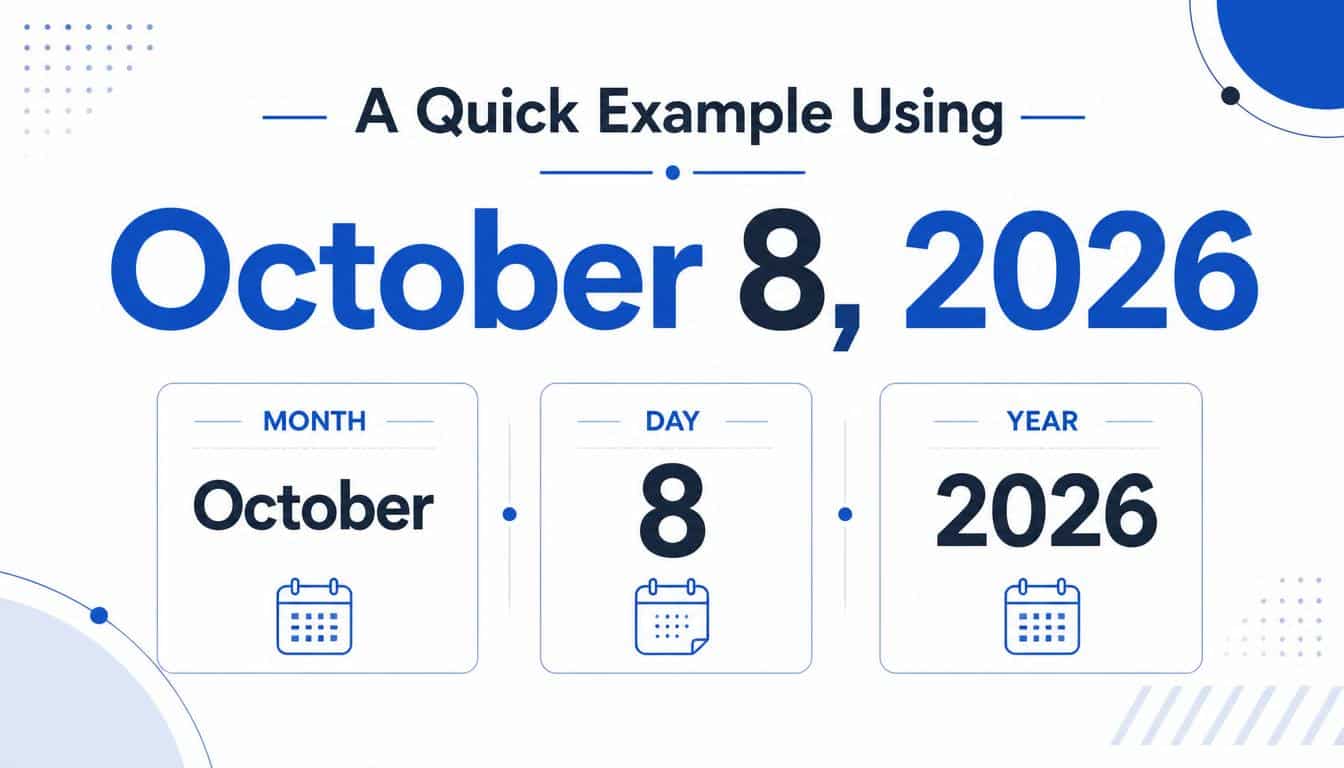
Let’s make the entire process concrete.
Imagine the current moment is 10:17 AM on October 8, 2026, in GMT+5.
To calculate the answer, subtract 24 hours:
October 8, 2026, 10:17 AM − 24 hours = October 7, 2026, 10:17 AM.
Therefore, what time was it exactly 24 hours ago?
It was 10:17 AM on October 7, 2026, in the same time zone.
Now change the starting time to 6:45 PM. The answer becomes 6:45 PM on October 7. Change it to 1:03 AM, and the answer becomes 1:03 AM on October 7.
The clock time stays loyal; only the date steps backward one day. That’s really the whole little secret.
How to Find the Time 24 Hours Ago Without a Calculator
You don’t actually need a 24 hours ago calculator for the ordinary case.
Look at the current clock time. Keep the hours, minutes, and seconds exactly as they are. Then move the date backward by one day.
If today is Thursday, October 8, at 4:20 PM, then 24 hours ago was Wednesday, October 7, at 4:20 PM.
If the current date is the first day of a month, simply move into the previous month as needed. For example, 9:00 AM on October 1 is 9:00 AM on September 30, one day earlier.
Month lengths do not change the principle. The date changes according to the calendar, while the clock time remains the same in a normal 24-hour comparison.
Common Mistakes When Calculating 24 Hours Ago
One common mistake is subtracting 24 from the hour shown on the clock rather than subtracting a complete day. That approach becomes especially messy around midnight, and honestly, nobody needs that extra headache.
Another mistake is forgetting the date. Saying “10:17 AM” gives only part of the answer. A useful result should include the date whenever the question involves an exact historical moment.
People also sometimes confuse 24 hours ago with “the day before yesterday.” They are not the same thing. The day before yesterday is roughly 48 hours ago at the same time, not 24 hours ago.
Finally, be careful when comparing locations. A timestamp such as 10:17 AM has meaning only when its timezone or other time-zone context is known.
A Simple Formula for Time Calculation
For everyday purposes, you can remember this formula:
Time 24 hours ago = current date and time − 24 hours.
And for the future:
Time 24 hours from now = current date and time + 24 hours.
For other intervals, simply replace 24 with the number of hours you need.
For example:
Current time − 48 hours = 48 hours ago.
Current time − 72 hours = 72 hours ago.
Current time + 48 hours = 48 hours from now.
The calculation itself is simple; the only part requiring care is handling the calendar date, midnight, and time-zone changes correctly.
When a Time Calculator Is More Useful
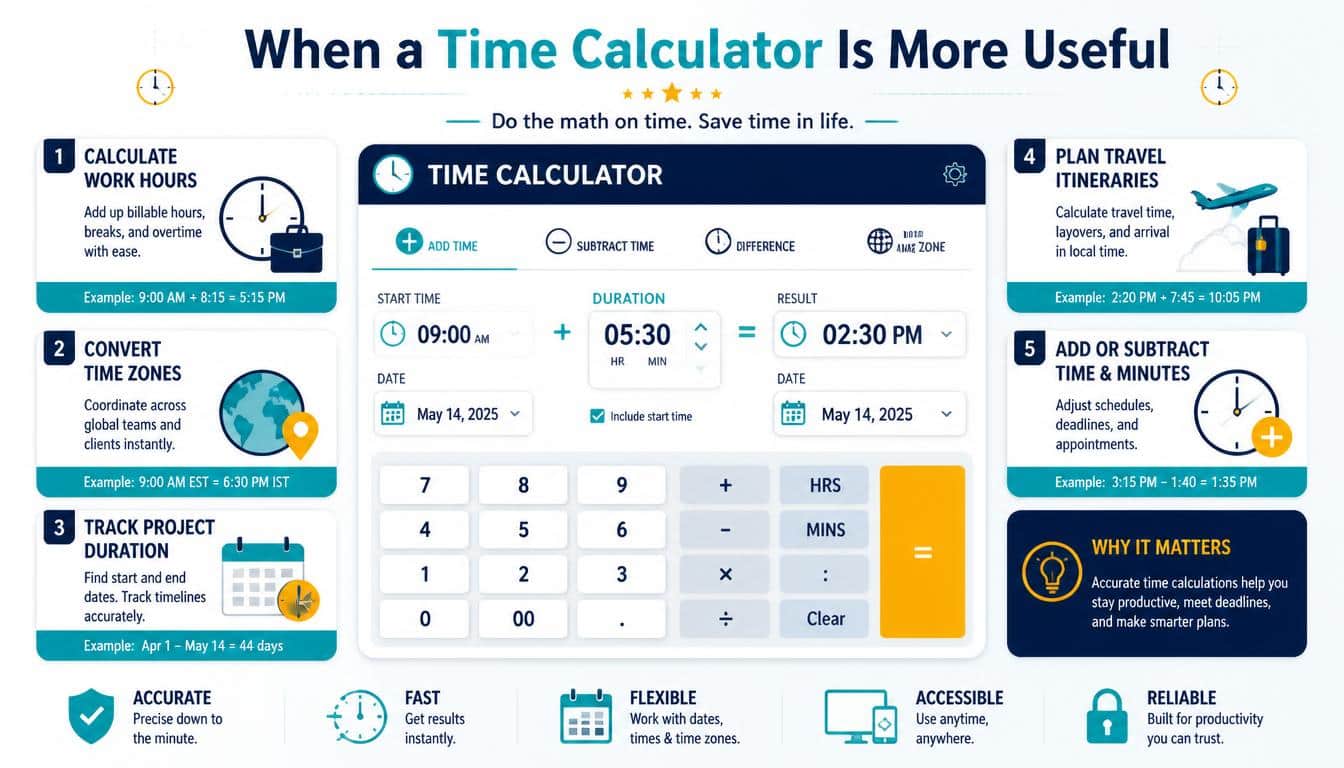
A basic mental calculation is enough when you need yesterday’s corresponding time. But a time calculator becomes helpful when the interval is unusual, such as 37 hours, 59 hours, or several weeks.
It is especially useful when you’re calculating between two exact dates, working across different time zones, or trying to determine an elapsed time difference down to minutes or seconds.
For example, calculating the difference between October 3 at 11:40 PM and October 8 at 7:15 AM is much more annoying by hand than simply subtracting one day. A calculator can handle those larger intervals without making you count calendar squares like a detective.
Frequently asked questions
What time was it 9 hours ago
Nine hours ago means going back nine hours from the current time. The exact time depends on your current local time and time zone.
What time was it 24 hours ago
Twenty-four hours ago was exactly one day earlier, at the same time as the current time yesterday.
Has it been 24 hours
It has been 24 hours when a full day has passed since a specific event or starting time. This means the same time on the following day.
24 hours ago from now
Twenty-four hours ago from now means exactly one day before the current date and time. The clock time remains the same, but the date changes to yesterday.
What time was it yesterday at this time
Yesterday at this time refers to the same clock time on the previous day. For example, if it is 10:00 AM now, it was 10:00 AM yesterday. :::
Read More: https://gracethemes.com/what-date-is-23-weeks-from-today/
Final Answer: What Time Was It 24 Hours Ago?
So, what time was it 24 hours ago?
In the ordinary case, it was the same clock time on the previous day.
If the current time is 10:17 AM on October 8, 2026, then 24 hours ago was 10:17 AM on October 7, 2026. If the current time is 8:30 PM, then 24 hours ago was 8:30 PM yesterday. The rule is simple because 24 hours equals one complete day.
Remember the three things that matter most: identify the current time, keep the relevant time zone consistent, and subtract exactly 24 hours. For everyday calculations, that is all you really need.
Time can feel slippery because the clock never pauses to explain itself. But once you see a 24-hour period as a complete loop same hour, same minute, previous date the question becomes pleasantly straightforward. Yesterday is not hiding very far away; it is usually sitting exactly one day behind the moment you’re standing in now.
And perhaps that’s the nicest thing about this little calculation: no matter how complicated the day becomes, 24 hours ago is still just one full turn of the clock behind you. A small piece of certainty, ticking quietly in the background.
