
Shopify vs Amazon: Where Should a Growing Brand Sell First?
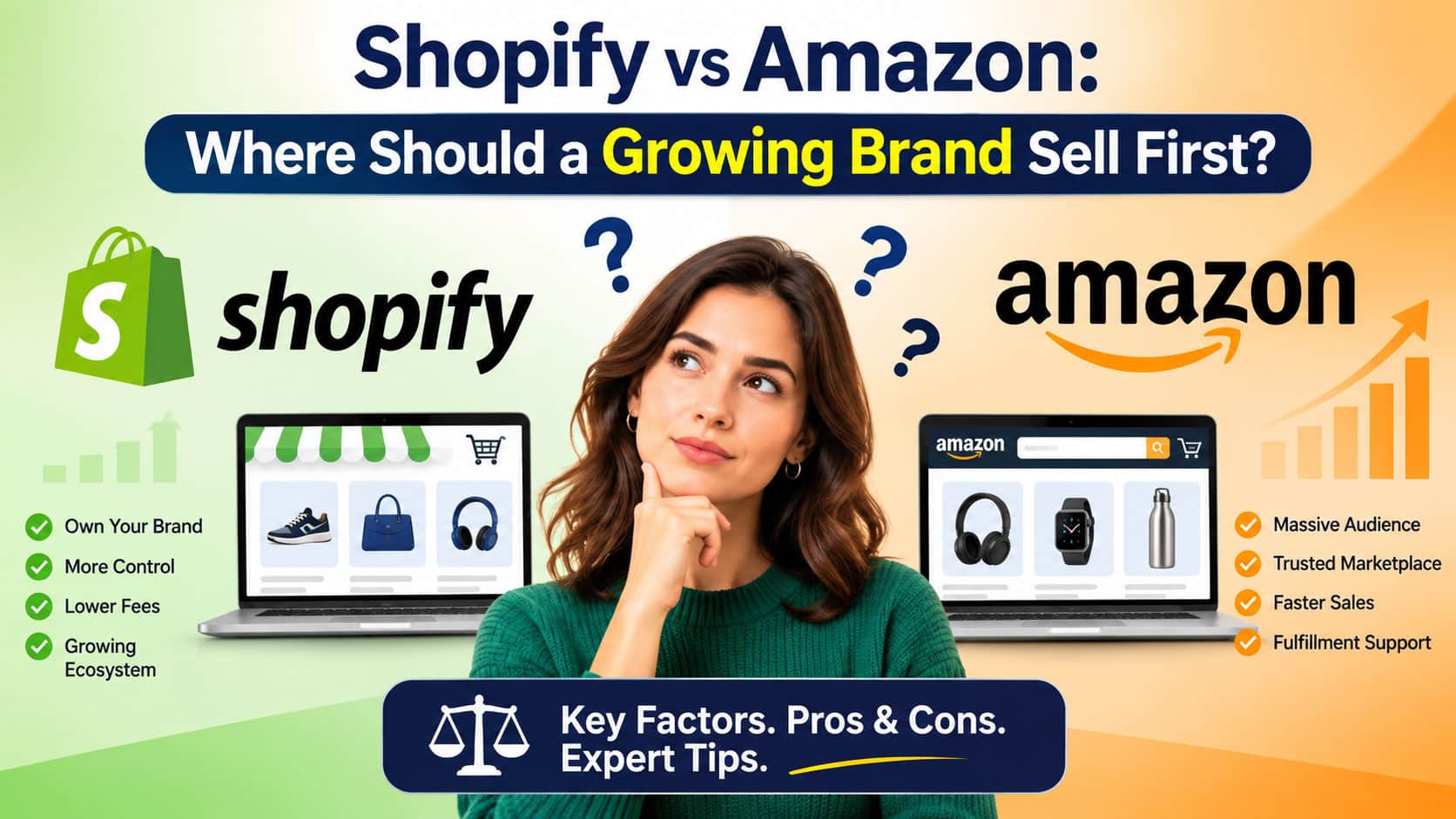
Sooner or later, a growing brand hits the same fork in the road. One path leads to Shopify, where you build your own store and own the whole experience. The other leads to Amazon, where millions of shoppers are already searching and ready to buy.
Both can work, and both have built huge businesses. But for a brand with limited time, money, and people, the order matters a lot. Choose the wrong starting point, and you can spend months fighting for attention that the other platform would have handed you.
This guide compares the two honestly, explains when one fits better than the other, and shows why Amazon is usually the smarter first move for growing brands.
The Short Answer
For most growing brands, Amazon is the better place to start. It gives you access to existing demand from day one, builds trust quickly through reviews, and handles much of the logistics through Fulfillment by Amazon.
Shopify is still valuable, and most brands eventually need it. It usually works best as a second step, once you have proof that people want your product and some revenue to fund marketing.
There are exceptions, and we will cover them. But if you are unsure, start where the shoppers already are.
How Shopify Works for a Growing Brand
Shopify gives you a store that is fully yours. You choose the design, the checkout flow, the pricing, and the brand story. Customer emails and purchase data belong to you, which makes repeat marketing much easier.
The trade-off is traffic. A new Shopify store starts with zero visitors. All sales come from marketing you pay for or build yourself, such as social ads, influencers, email lists, or search engine optimization.
That can work well for a brand with an audience already. For a brand without one, it often means high ad costs while you test what works. Many founders discover that building a beautiful store was the easy part, and getting people to visit it is the real job.
How Amazon Works for a Growing Brand
Amazon flips that equation. Shoppers arrive with intent, typing exactly what they want into the search bar. If your product matches their search and your listing is strong, you can make sales without building an audience first.
Trust comes faster too. Shoppers already know how Amazon handles payments, delivery, and returns. A new brand benefits from that familiarity, especially once early reviews start appearing.
Fulfillment by Amazon adds another advantage. You send inventory to Amazon’s warehouses, and Amazon handles storage, packing, shipping, and returns. Eligible products can also carry Prime delivery, which many shoppers actively filter for.
The downsides are real. Amazon charges referral fees, commonly around 15 percent depending on category, plus fulfillment and storage fees. Competition is intense, rules are strict, and you get far less customer data than you would on your own store.
Shopify vs Amazon at a Glance
| Factor | Shopify | Amazon |
| Traffic | You build it yourself | Built-in search demand |
| Speed to first sales | Slower without an audience | Faster with a strong listing |
| Costs | Platform plan, apps, payment fees, ads | Referral fees, fulfillment fees, ads |
| Brand control | Full control | Limited to Amazon’s formats |
| Customer data | You own it | Very limited |
| Fulfillment | You arrange it | FBA handles most of it |
| Trust for new brands | Must be earned | Borrowed from Amazon at first |
Neither column wins across the board. The question is which trade-offs hurt less at your current stage.
When Shopify Should Come First
Shopify can be the right first move in a few situations.
If you already have a large social following or email list, you can send that audience straight to your own store and keep the margin. Brands built around subscriptions, heavy customization, or storytelling may also find Amazon’s format too restrictive.
Some products simply do not fit Amazon well. Highly personalized items, certain regulated categories, and products with very thin margins can struggle under marketplace fees and rules.
If none of those apply to you, Shopify-first usually means paying to create demand that Amazon already has.
Why Amazon Usually Wins for Growing Brands
The biggest reason is time. A growing brand needs to learn quickly whether a product sells, at what price, and to whom. Amazon answers those questions faster because the shoppers are already there.
Reviews compound in your favor. As ratings build, conversion usually improves, which helps your products appear more often in search. That momentum is hard to recreate on a standalone store.
Operations get simpler too. With FBA handling shipping and returns, a small team can focus on product, listings, and advertising instead of packing boxes.
Finally, Amazon success makes the Shopify step easier later. Proven products, real reviews, and brand recognition all make your own store more convincing when you launch it. Many shoppers who discover you on Amazon will look for your brand elsewhere.
How to Start on Amazon the Right Way
A strong Amazon launch is less about luck and more about preparation.
- Protect your brand. File for a trademark and enroll in Amazon Brand Registry once you are eligible. It unlocks better listing tools and protection against hijackers.
- Build a listing that answers questions. Clear titles, specific bullets, complete attributes, and strong images matter more than clever wording.
- Plan inventory carefully. Running out of stock during early momentum can set your rankings back for weeks.
- Start advertising with focus. Sponsored Products campaigns help Amazon learn which searches fit your product.
- Earn reviews the right way. Programs like Amazon Vine can help eligible brands collect honest early feedback.
Plenty of brands manage this themselves. Others prefer an experienced partner, especially when time is short or the category is competitive.
5 Best Amazon Agencies to Help You Grow
If you decide to get help, these five agencies are worth a look. They differ in size and focus, so match the partner to your needs.
1. CommerceKind
CommerceKind is a full-service Amazon growth agency headquartered in Jacksonville, Florida, with an in-house team. It handles advertising, listing optimization, account management, and brand protection, so the whole account is managed by one group.
The team also manages TikTok Shop and Walmart, which suits brands planning to expand beyond Amazon later. For marketing agencies, it offers white-label Amazon management, and new clients can start with a free account audit.
Best for: growing brands that want one team running Amazon and their next marketplaces together.
2. AmpliSell
AmpliSell is a Houston, Texas agency founded by experienced Amazon sellers, focused on Amazon and TikTok Shop. Clients are assigned a pod led by a US-based brand manager, with specialists in advertising, compliance, inventory, and content. Its services include PPC, DSP, listing optimization, and FBA inventory planning.
Best for: brands that want a stable, dedicated team over the long term. Confirm pricing early, since it is quoted per brand.
3. SalesDuo
SalesDuo lists Seattle as its headquarters, with offices in New York, Bengaluru, and Dubai. Beyond advertising and account management, it handles Vendor Central work such as EDI automation, shortage claims, and chargebacks.
Best for: brands selling through Vendor Central, or across both Vendor and Seller Central. Ask who your day-to-day account manager will be, since the team works across several locations.
4. AMZ One Step
AMZ One Step is based in Edmonton, Canada, with product photography studios in several countries. It combines listing images, video, A+ Content, and listing optimization with PPC management.
Best for: brands whose biggest gap is listing creative and conversion. If you also need inventory and compliance support, confirm what the package includes.
5. Sequence Commerce
Sequence Commerce was founded by Alex Kung and works with brands across the US, Canada, the UK, and the EU. It manages Amazon advertising, including DSP, alongside Walmart, TikTok Shop, Google, and Meta.
Best for: established brands that want advertising run across several channels. The agency positions itself for brands doing $1 million or more in revenue, so smaller sellers may fall below its focus.
Can You Sell on Both at Once?
You can, and many brands eventually do. The risk is spreading a small team too thin before either channel is working well.
A practical middle ground is to launch on Amazon first, then open a simple Shopify store once you have steady sales and a few strong reviews. Keep pricing consistent across both, since Amazon may reduce your visibility if the same product is noticeably cheaper elsewhere. Use your Amazon results to decide which products deserve a bigger push on your own site.
How to Choose the Right Partner
Put the same questions to all of them. Who will manage your account? How is pricing structured? What does a monthly report include? How long is the contract, and how easy is it to leave?
Clear, specific answers usually signal a team that knows its process. Vague promises about rankings or guaranteed ad results are a red flag on any platform.
The Bottom Line
Shopify and Amazon are not really rivals in a growing brand’s story. They are chapters. For most brands, Amazon is the better opening chapter, because it delivers shoppers, trust, and logistics from the start.
Once your products are proven and your reviews are strong, a Shopify store becomes a powerful second step for owning customer relationships. Start where the demand is, build momentum, and expand from a position of strength.
