


How to Research, Build, and Launch a Software Product in 2026
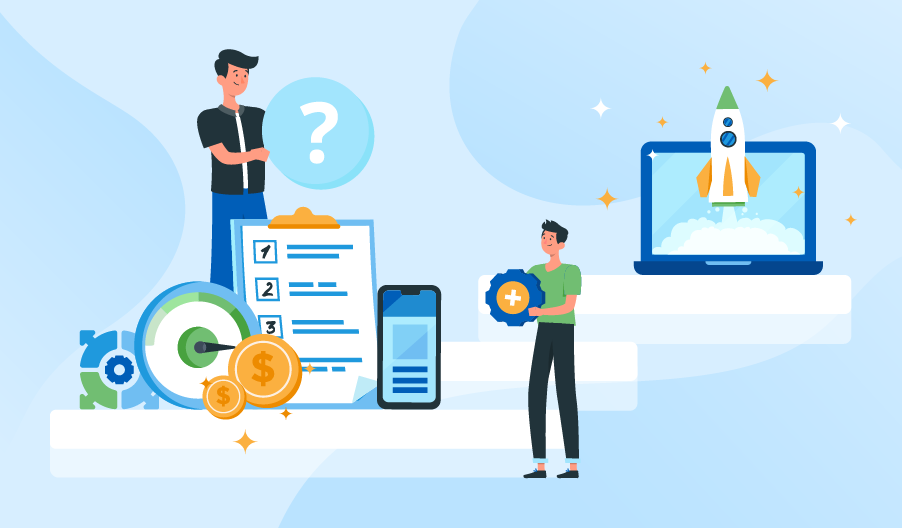
Building software in 2026 looks nothing like it did five years ago. The teams are smaller, the timelines are shorter, and the tools have fundamentally changed what’s possible without a large budget or a bloated headcount. But speed without direction is just expensive chaos and most products still fail not because of bad execution, but because of bad research, rushed scoping, or a launch that nobody actually sees.
This guide walks through every phase of the product lifecycle from finding an idea worth building to getting your first real users with a focus on how modern builders are actually doing it today.
Part 1: Research – Finding an Idea Worth Building
The graveyard of failed SaaS products is full of solutions that were technically impressive and completely unwanted. Great research isn’t about brainstorming in a vacuum, it’s about finding places where real friction exists and real money is already being spent on inadequate solutions.
Start by studying categories where the incumbents are outdated, the workflow is still manual, or users are visibly frustrated in forums, review sites, and support threads. Reddit, G2, Trustpilot, and niche Slack communities are gold mines for this. Look for patterns in one-star reviews, not what people hate about a product, but what they wish existed instead.
The best ideas in 2026 share a few characteristics: they target a specific workflow, they’re defensible through data or integrations, and they sit in a category where buyers already have a serious budget allocated. That last point matters more than most first-time builders realize. A painful problem in a low-budget market is a hard business. A moderately painful problem in a high-budget market is a much more interesting opportunity.
When evaluating niches, look for verticals where spending is proven but tooling hasn’t kept up. A few directions worth examining:
Recruitment and hiring is one of the most active areas for software innovation right now, but not in the obvious direction. The job board space is saturated the opportunity is in the workflow around it. Job seekers spend hours on repetitive application tasks that follow an almost identical pattern every time, and the tooling to automate that process is still early. AI job finder platforms are emerging as a genuine category here, not as a replacement for job boards but as an automation layer on top of them and buyer motivation is about as high as it gets.
Government and public sector contracting is a category that looks niche from the outside but represents one of the largest and most reliable spending pools in existence. Federal agencies alone award hundreds of billions in contracts annually, yet the business development process for contractors finding opportunities, tracking solicitations, managing bids has remained largely manual for decades. The regulatory complexity that makes this space feel intimidating is exactly what keeps casual competitors out. Tools focused on AI for government contracting are starting to address this gap, and the combination of high-value buyers and genuinely underdeveloped tooling makes it a strong foundation for a durable product.
Healthcare is another area worth examining closely, and it branches in two interesting directions. On the operations side, clinics and practices are drowning in administrative work: scheduling, documentation, billing, prior authorizations most of which still run on legacy software or manual processes. Regulation makes it harder to enter but also keeps competition lower and switching costs high once you’re in. On the care delivery side, access is the problem rather than administration. Mental health is a clear example, demand has outpaced supply of providers in most states, and telehealth models that go narrow both geographically and by specialty tend to find real traction fast.
Legal tech for small firms follows a similar pattern. Large law firms have enterprise software. Solo practitioners and small practices largely don’t, yet they handle contracts, filings, and document management at volume every day. The gap between what’s available at the enterprise level and what exists for smaller operators is where a lot of the best SaaS opportunities live.
The exercise isn’t to pick the trendiest category, it’s to find the intersection of a specific, recurring workflow, a buyer with real budget, and tooling that hasn’t meaningfully evolved. That intersection is where durable products get built.
Part 2: Scoping – Turning Your Idea Into a Product
Once you have a validated idea, the next failure point is scope. Most first-time builders either scope too broadly, trying to build every feature before launch or too narrowly, shipping something so minimal it doesn’t actually solve the problem.
Good scoping starts with writing a proper PRD that forces you to define who the user is, what specific problem you’re solving, and what success looks like at v1. This sounds obvious but most teams skip it or treat it as a formality.
In 2026, the scoping phase has been genuinely transformed by AI-assisted product tooling. Product managers and non-technical founders are now using cursor or claude code for PMs to move from written requirements to working prototypes far faster than was possible even two years ago, without needing a designer and engineer in the room for every iteration. The ability to visualize and test a concept before committing engineering resources to it has compressed what used to be a weeks-long back-and-forth into something that can happen in an afternoon.
When scoping your core feature set, one of the most important decisions is identifying what to build versus what to integrate.Building a sustainable product starts with smart growth fundamentals at the scoping stage, understanding your market size, pricing model, and expansion path before you commit to an architecture. Part of that is knowing where your product’s boundaries are. If your product involves processing documents, contracts, invoices, forms, applications, building that infrastructure from scratch is almost never the right call. Plugging in a purpose-built AI document processing layer handles the OCR, extraction, and classification work your product needs without diverting your engineering team from the core product. Recognize early what your product needs to own and what it can connect to.
The same logic applies to browser-based workflows. If your product involves interacting with third-party web portals, extracting data from sites without APIs, or automating repetitive web tasks at scale, plan for that infrastructure at the scoping stage rather than treating it as an afterthought. AI browser automation has made this kind of workflow dramatically more resilient than the brittle scripts that used to be the only option, but it needs to be architected in, not bolted on later.
Part 3: Building – Shipping Without a 20-Person Team
The build phase is where a lot of lean teams hit an invisible wall. Not because they can’t write the code, but because the operational overhead of running a small dev team starts to eat into actual product time. Managing internal requests, handling access issues, keeping engineers unblocked none of it shows up on the roadmap but all of it takes time.
In a traditional setup, internal IT support means tickets, waiting, and someone context-switching away from product work to fix a tool problem. Teams in 2026 are replacing that entire setup with AI-native ITSM platforms that handle requests conversationally through Slack or Teams, route and resolve common issues automatically, and keep engineers out of the kind of administrative back-and-forth that quietly kills productivity on small teams.
Beyond internal ops, the build phase demands real discipline around scope. Every feature you add before launch is a feature that delays launch. The most successful lean teams treat v1 as a hypothesis ship, the minimum that actually delivers the core value, get it in front of real users, and iterate from signal rather than assumption.
User testing should start earlier than feels comfortable. As soon as you have something that resembles the core workflow, even a rough prototype, put it in front of people who match your target user. What you’ll learn in one session of real observation will reshape your roadmap more than weeks of internal debate.
Part 4: Launch – Getting Your First Users
Most software launches fail quietly. The product is ready, an announcement goes out, and then not much happens. The mistake is treating launch as a single moment rather than a campaign, one post rather than a sustained content effort.
Builders who consistently get early traction start their launch content engine before the product ships. Four to six weeks out, you should already be publishing, sharing what you’re building, who it’s for, what problem it solves, and why existing solutions fall short. This is especially true on LinkedIn for B2B SaaS, where organic reach for genuine founder content remains unusually strong.
The operational challenge for small teams is maintaining that publishing consistency without it consuming half your working day. Social scheduling platforms like Hootsuite, Buffer, and Ordinal let you batch your content creation, schedule posts across relevant channels, and maintain a consistent presence without needing a dedicated social media manager. For a team juggling product, sales, and marketing simultaneously, that kind of leverage matters more than it might seem. The goal is to stay consistently visible during the weeks leading up to launch without it becoming a daily time sink.
On LinkedIn specifically, the highest-performing launch content follows a consistent pattern: it’s specific, honest, and written with a human voice rather than a brand tone. Founder updates, early customer stories, and transparent posts about what’s working and what isn’t consistently outperform polished marketing copy. Schedule that content in advance so it publishes consistently even during the chaotic weeks immediately around launch.
Beyond social, build a list early. A simple waitlist page with a clear value proposition, live four to six weeks before your product is ready, gives you a warm audience to announce to on day one. Seed relevant communities Slack groups, subreddits, Discord servers, where your target user already spends time. Do it genuinely, not transactionally. Contribute first, share second.
The thirty days after launch matter as much as launch day itself. Keep publishing, keep talking to users, and keep iterating publicly. Products that sustain early momentum are almost always the ones where the team stays visibly active and responsive long after the initial announcement fades.
Conclusion
The product development cycle in 2026 rewards specificity at every stage. Research specific pain points in specific niches. Scope precisely around your core user workflow. Build lean and test early. Launch with a content plan, not just an announcement.
The AI tools available today don’t replace good judgment, but they do remove a lot of the friction that used to require larger teams and longer timelines. The builders winning right now are the ones treating those tools as a deliberate stack assembled at each phase of the journey, not as novelties picked up along the way.
