

How the Obama Presidential Center Could Change Personal Injury Safety in Jackson Park
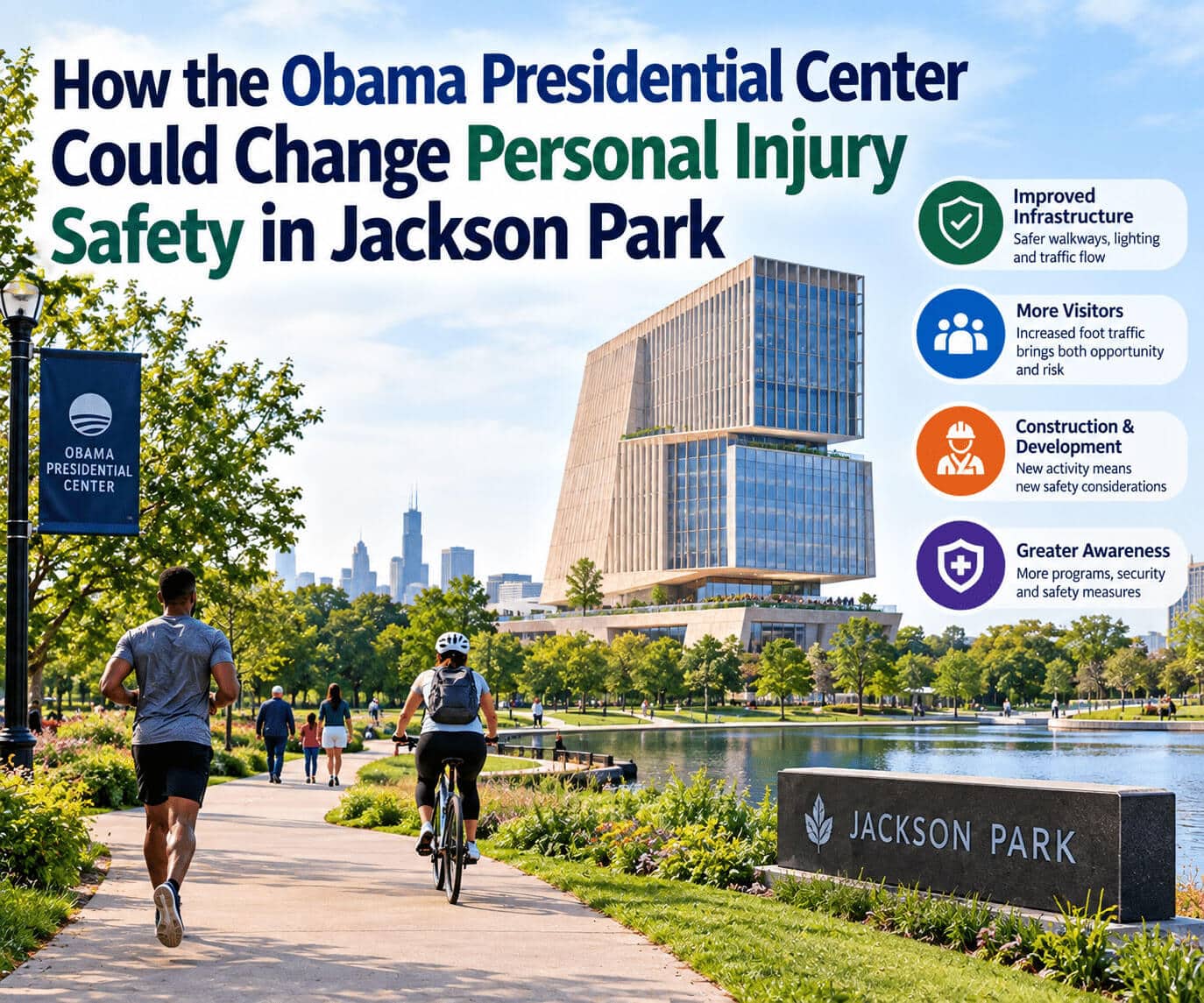
The Obama Presidential Center is bringing major changes to Jackson Park, but its impact will extend beyond the buildings and attractions taking shape on the South Side. As the 19.3-acre campus transforms the surrounding landscape, the area is also becoming a more complicated environment for pedestrians, cyclists, drivers, families, recreational users, and visitors.
That matters from a personal injury safety perspective. More people using the same public spaces can create more opportunities for collisions, falls, and other accidents, particularly where pedestrian routes, roadways, recreational facilities, and gathering areas overlap.
The center is designed to include a museum, community facilities, athletic spaces, gardens, plazas, playgrounds, and extensive walking paths. Together, those features are expected to draw people into parts of Jackson Park that may have previously experienced less activity.
The resulting safety questions are less about the presidential center itself and more about how people will interact with the redesigned public environment.
More People Means More Potential Conflicts
Jackson Park has long been used for walking, exercising, recreation, commuting, and enjoying the lakefront. The Obama Presidential Center introduces additional reasons for people to visit and spend time in the area.
The campus includes the Museum, Forum, Chicago Public Library branch, Home Court athletic facility, playground, Great Lawn, gardens, and other outdoor spaces. Visitors may arrive specifically for one of those destinations but then continue through surrounding portions of the park.
That increased foot traffic can change the safety profile of public spaces. A pathway that once accommodated relatively light pedestrian activity may function differently when families, tourists, runners, cyclists, and people attending events are using it simultaneously.
From the perspective of personal injury law, incidents involving falls, pedestrian collisions, recreational accidents, and other injuries can raise questions about how a space was designed and maintained. A Chicago personal injury lawyer might encounter cases involving these types of incidents, but the larger issue is how Jackson Park’s evolving design handles increased activity.
Safety becomes especially important when different users have different expectations. A runner may be moving quickly through an area where families are stopping to take photographs. Children may move unpredictably near a playground, while cyclists may be traveling through the same broader network of paths.
Changing Roads Can Change Injury Risks
One of the most significant changes around the project involves transportation and circulation. Construction has altered how people move through the area, with temporary fencing, work zones, construction vehicles, changing access points, and modified pedestrian routes creating new challenges during the development process. Some of those changes are temporary, while others are part of the permanent redesign.
The project has included the removal of a portion of Cornell Drive and new connections intended to improve movement between different sections of Jackson Park.
Removing roadway space can create benefits for pedestrians and park users, but changes in traffic patterns can also shift where conflicts occur. Drivers who are accustomed to older routes may encounter unfamiliar intersections or altered approaches. Pedestrians may also have to adjust to new crossing locations.
Those transition points deserve particular attention because roadway changes can create situations in which drivers, cyclists, and pedestrians have different expectations about who should move where and when.
Pedestrian Routes Will Carry More Traffic
The center’s extensive network of paths is intended to make the campus more accessible on foot. The Obama Foundation has described approximately 3.5 miles of new walking paths across the campus.
More walking infrastructure can encourage people to move through the area without cars, but simply adding paths does not eliminate injury risks. Their effectiveness depends on how those paths connect with roads, bike routes, entrances, recreational areas, and other public spaces.
Crossings can become particularly important. Pedestrians may need to navigate intersections while dealing with turning vehicles, cyclists, groups of visitors, or people entering and leaving facilities.
Busy periods could present an additional challenge. Events, weekends, school breaks, and popular museum days may bring substantially different levels of activity than a typical weekday morning.
The safety of a pedestrian environment therefore cannot be measured only by how it functions when the park is relatively quiet.
Recreation Creates Another Layer of Risk
The Obama Presidential Center will also introduce more recreational activity into the area. Home Court includes a regulation-size basketball court and programming areas for sports, wellness activities, youth programs, and community events. The campus also includes a playground and large open areas such as the Great Lawn.
These facilities can make the area more attractive to families and recreational users, but they also introduce different types of potential injuries. Sports naturally involve falls, collisions, and other physical risks. Playgrounds require appropriate maintenance and safe design. Large lawns and gathering areas can become crowded during events.
The relationship between recreational spaces and surrounding pedestrian routes can also matter. Someone leaving a basketball program may immediately enter a busy pathway. A child leaving a playground may move toward an adjacent walking area without the same awareness of traffic that an adult has.
The more functions concentrated in one area, the more important it becomes to consider how those spaces connect.
Landscaping Can Affect How People Move
The redesigned landscape is another factor in personal injury safety. The project includes gardens, native vegetation, restored green space, wetland features, lawns, and landscaped pedestrian areas. The Foundation has said the project will increase green space by eliminating a six-lane roadway and restoring portions of the landscape.
These changes can create more inviting spaces for walking and recreation. They can also influence how visitors perceive boundaries between different areas.
A conventional sidewalk and roadway create relatively obvious distinctions. A landscaped campus can create a more integrated environment in which walking paths, lawns, gathering spaces, and roadways appear to blend together.
That design can be visually appealing while requiring careful attention to signage, lighting, visibility, surface conditions, and pedestrian access. If people cannot easily determine where they are expected to walk or cross, the possibility of conflicts can increase.
Maintenance Becomes More Important
Higher visitor numbers can also place greater demands on maintenance. Paths, sidewalks, recreational surfaces, lighting, landscaping, drainage systems, signs, and other infrastructure will experience regular use. Weather can add another variable, particularly during Chicago winters when snow, ice, freezing temperatures, and precipitation can affect walking surfaces.
A public space that performs well immediately after construction still needs to remain safe as it ages.
Cracked pavement, uneven surfaces, poor lighting, obstructed pathways, deteriorating recreational equipment, or inadequate snow and ice removal can all affect how safely people navigate a heavily used public environment.
The challenge is therefore not limited to designing the campus correctly. Long-term maintenance will play an important role in determining whether those design decisions continue to work as intended.
Busy Events Could Test the Design
The center is expected to host visitors, community programming, athletic activities, and other events, meaning the area’s safety conditions may change considerably depending on what is happening on a given day.
An ordinary afternoon may involve relatively dispersed pedestrian traffic. A major event could concentrate hundreds or thousands of people around entrances, paths, parking areas, transportation stops, and nearby roads.
Those conditions can create temporary pressure points.
Crowded entrances can increase the likelihood of people bumping into one another or falling. Vehicle congestion can create additional conflicts near pedestrian crossings. Large groups can make it harder for visitors to see signs, approaching vehicles, or changes in walking surfaces.
Event planning and crowd management will therefore become part of the broader safety picture.
A New Test for Jackson Park
The Obama Presidential Center is fundamentally changing how this portion of Jackson Park will function. The project’s buildings may be its most recognizable feature, but the surrounding changes to roads, pathways, landscaping, recreation, and public gathering areas could have an even greater effect on everyday safety.
The central question will be how those elements perform once people begin using them at different times, in different numbers, and for different purposes.
A successful public space needs to accommodate more than its intended activities. It must account for pedestrians moving between destinations, children playing, cyclists passing through, drivers navigating nearby roads, recreational users occupying open areas, and visitors unfamiliar with the surrounding environment.
Jackson Park has always served many purposes. The Obama Presidential Center adds another major layer of activity to an already complex public landscape.
As that activity increases, personal injury safety will depend on the details: clear crossings, predictable routes, adequate lighting, well-maintained surfaces, appropriate separation between different forms of movement, and infrastructure capable of handling both ordinary days and unusually busy ones.
The real measure of the transformation will come after construction is complete, when Jackson Park is no longer being evaluated through plans and renderings but through the everyday movement of the people who use it.
