
Building an AI Photo Pipeline: From Sketch to Shelf for Fashion Brands
Getting a garment from concept to a live product page usually means moving through several separate stages: sketching, sampling, sourcing a photographer, shooting, and retouching. Each stage has its own timeline, its own vendor, and its own cost. For a small or mid-sized fashion brand, that chain can easily stretch a new style’s launch by weeks, even before marketing content is created.
Over the past couple of years, AI tools have started appearing at almost every one of these stages individually. A brand might use one tool to swap fabric colors, another to generate a model shot, and a third to clean up a background. Used this way, AI becomes a set of disconnected shortcuts rather than a pipeline. The more useful question for a brand team is not “which AI tool should we try” but “which stages of our existing process could this replace or shorten, and where does a human still need to check the work.”
Where the Traditional Pipeline Breaks Down
The slowest and most expensive parts of a typical fashion production cycle tend to cluster around three points. Physical sampling requires cutting and sewing a prototype before anyone can evaluate how a fabric or colorway actually looks on a body. Photography requires booking a studio, a model, and a photographer, usually on a fixed day, which makes last-minute changes costly. Retouching and asset variation, producing enough images for a product page, an ad set, and a lookbook, adds another layer of time after the shoot itself.
Smaller teams feel this most acutely. A brand without an in-house studio may pay per session and per model, which makes testing a new colorway or a new market’s sizing conventions a real financial decision rather than a quick experiment.
Mapping the Pipeline to AI Equivalents
Rather than treating AI as a single tool bolted onto one stage, it helps to think in terms of what each stage of the traditional process is actually trying to produce, and whether a generative step can produce a usable draft of the same thing.
At the concept stage, a hand-drawn sketch is meant to communicate silhouette, proportion, and rough styling before anyone commits fabric or labor to it. Sketch-to-render tools can turn that drawing into a more finished visual early enough for a design team to make decisions before the sampling stage, rather than after it.
At the sampling stage, the goal is usually to answer a narrower question: how does this fabric or colorway look on the actual garment. Some tools now let a team test several fabric or color variations on the same base image, which can reduce how many physical samples need to be cut just to compare options side by side.
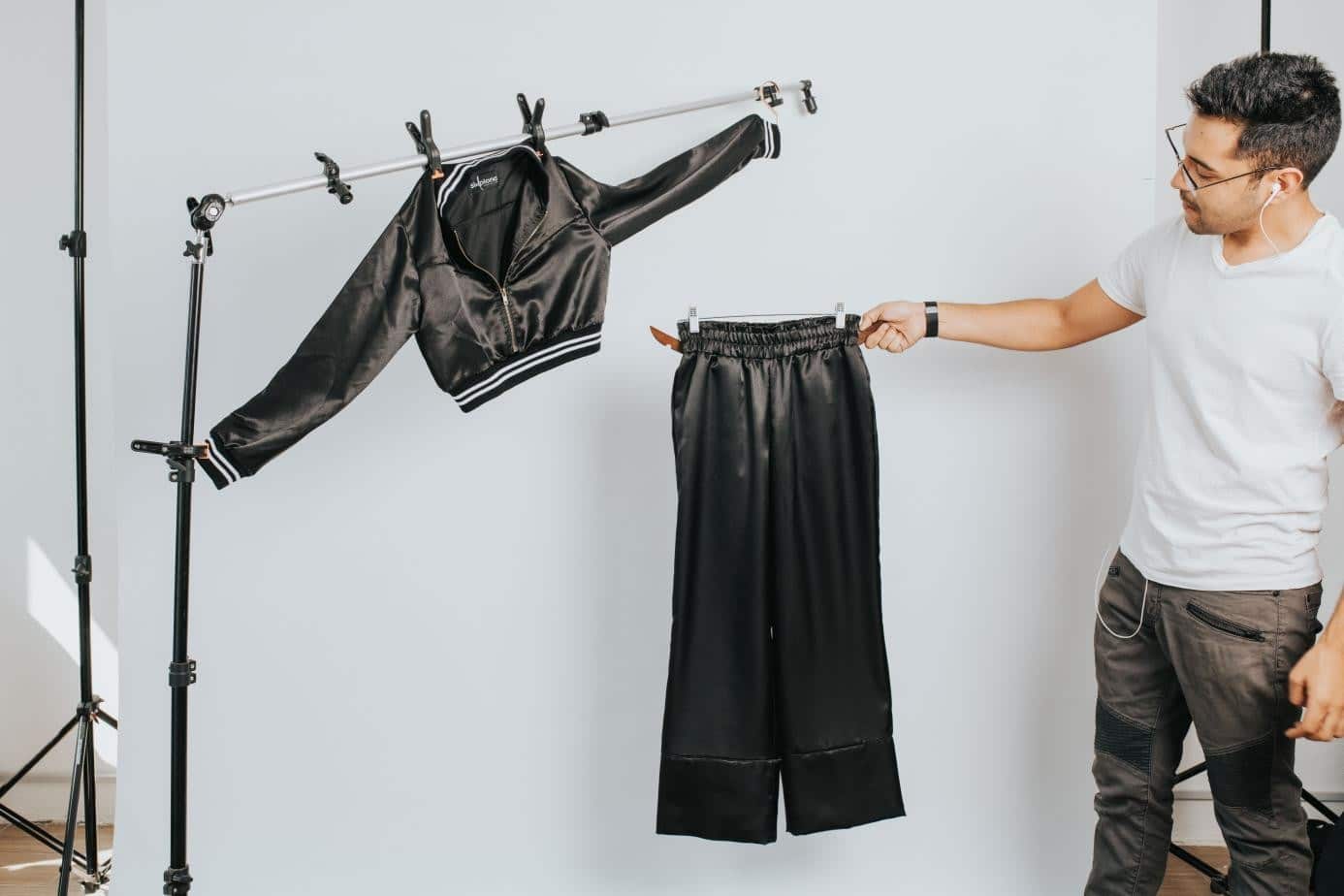
At the shooting stage, the traditional deliverable is a set of clean product photos plus some styled or lifestyle imagery. This is where the shift has been most visible. Some platforms now let a team generate virtual try on visuals directly from garment photos and a chosen model type, producing early-stage styled content without booking a full shoot for every SKU. That doesn’t replace the core product photography a store still needs, but it can fill the gap for secondary or supporting images, especially for smaller runs or fast-turnaround drops where a full shoot isn’t practical.
At the post-production stage, the deliverable is usually a set of standardized assets: flat lays, ghost-mannequin style images, or extracted pattern files for future use. An AI image editor can help fashion teams handle quick cleanup, background adjustments, and image enhancement before final human review. Automating the more repetitive parts of this step, background removal, layout consistency, can free up a retoucher’s time for the images that actually need a human eye.
How to Pilot This Without Overhauling Your Whole Workflow
It’s rarely a good idea to rebuild an entire content pipeline around new tools in one go. A more contained approach is to pick a single stage, usually the one causing the most friction, and test it on one upcoming style or one small collection. A brand whose biggest cost is photography might start there. A design team that spends the most time in fabric selection might start earlier, at the sampling stage instead.
Whichever stage is chosen, it’s worth setting a few concrete questions before the pilot begins: what specifically should this step produce, who reviews the output before it’s used, and how will the team judge whether it saved meaningful time or cost compared with the old process. Without those questions answered in advance, it’s easy to end up with a folder of generated images and no clear sense of whether the pipeline actually improved.
A Pipeline Checklist for Brand Teams
Before adding an AI step to any stage of production, it’s worth checking a few things:
- Is it clear which specific problem this step is meant to solve, rather than AI being used because it’s available
- Does someone review the output against the real garment before it’s used publicly
- Has the team piloted this on one product line or collection before rolling it out further
- Does the resulting content still accurately represent size, fit, and material
- Has the team compared the real time or cost saved against the stage it’s replacing
Approached this way, AI tools stop being a scattered set of shortcuts and start functioning as an actual pipeline, one that still leaves room for the judgment a fashion team brings to sampling, styling, and final review.
