
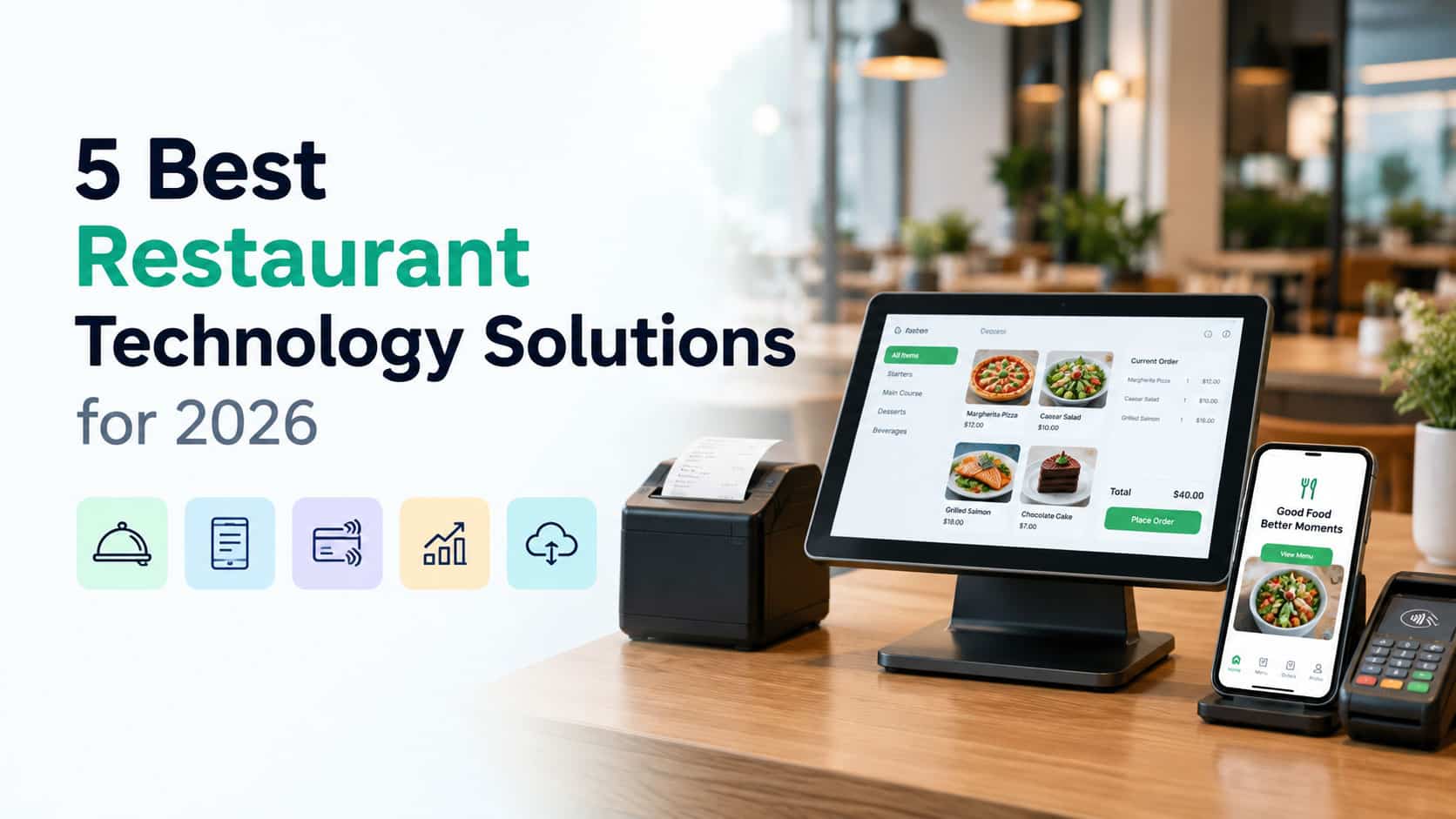
5 Best Restaurant Technology Solutions for 2026
Running a restaurant means dealing with a lot more than food and customers.
There are orders to manage, employees to schedule, payments to check, delivery apps to keep an eye on, and plenty of small tasks that can quickly eat up your day.
The good news is that restaurant technology is getting much better at handling some of this work.
But the tools on the market aren’t all trying to solve the same problem. Some focus on payments and POS, others on employees or accounting, while newer platforms are using AI to actually take care of certain tasks for you.
Here are five restaurant technology solutions worth looking at in 2026.
1. KoreFi
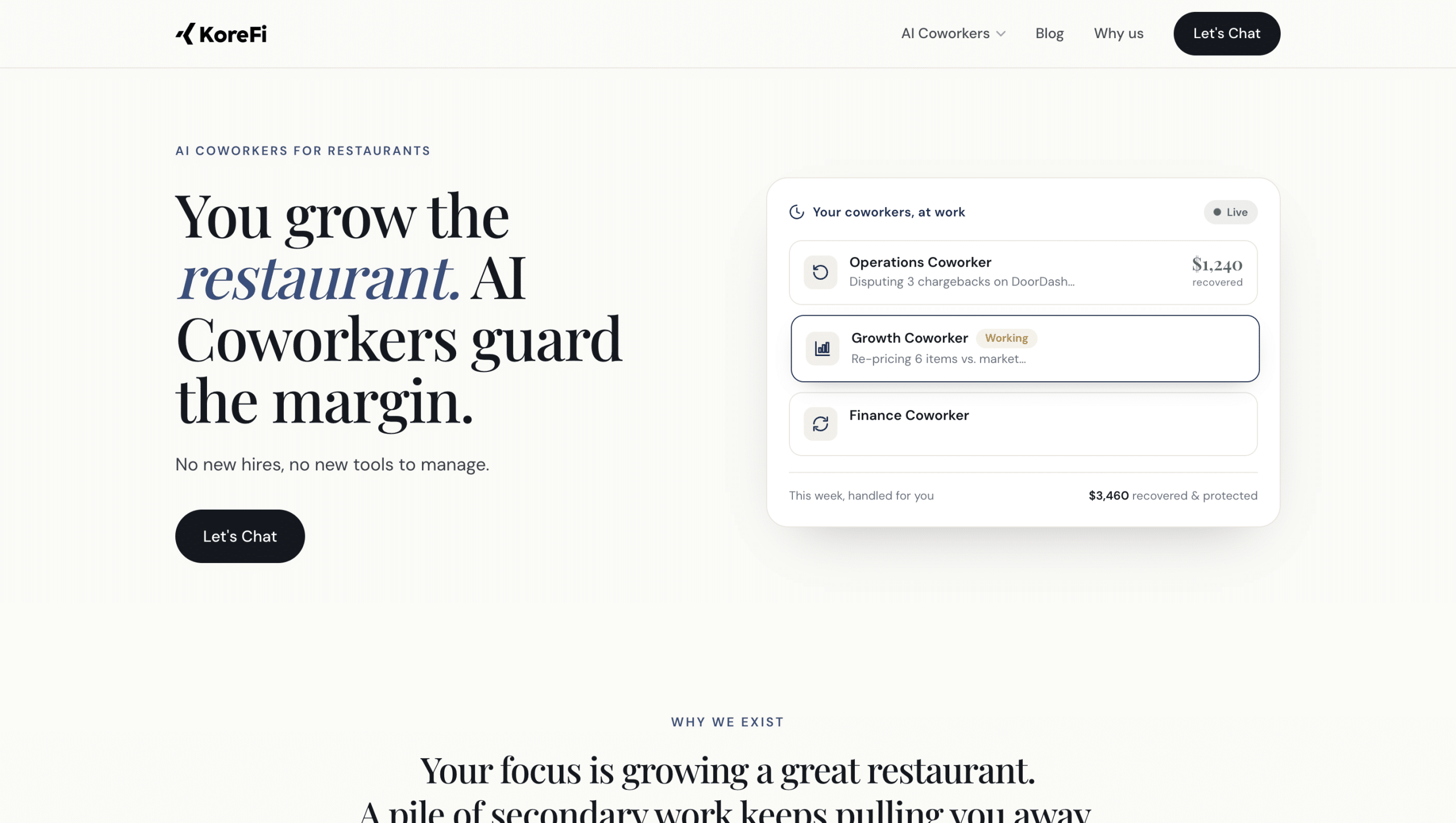
KoreFi is a little different from most restaurant software.
Instead of giving you another platform to constantly check, it gives restaurants AI coworkers that handle specific jobs in the background.
Right now, KoreFi mainly focuses on areas where restaurants can lose money without really noticing it, especially when it comes to third-party delivery platforms.
What Does KoreFi Actually Do?
KoreFi currently has three AI coworkers.
The Operations Coworker deals with chargebacks from delivery platforms. It finds eligible charges and files disputes automatically. According to KoreFi, restaurants can lose around 1–3% of their delivery revenue to unmanaged chargebacks, while its disputed chargebacks have an 85%+ win rate.
Then there’s the Growth Coworker, which focuses on menu pricing.
Instead of setting a price and leaving it there for months, it compares your menu with competitors and looks at things like customer sentiment and menu performance. KoreFi says this can help restaurants increase net delivery revenue by up to 10%.
The Finance Coworker handles reconciliation. It brings together information from your POS, delivery platforms, and bank accounts so you can see whether everything actually matches.
This can be especially useful when you’re getting payouts from several different platforms and don’t want to spend hours checking them manually.
Why We Like It
One of the more interesting things about KoreFi is that AI isn’t left to make every decision on its own.
The AI does most of the repetitive work, but restaurant specialists step in when something needs human judgment.
KoreFi also works with tools restaurants may already use, including QuickBooks, Square, Toast, DoorDash, and Uber Eats. So you don’t necessarily need to change the way your restaurant already operates.
According to KoreFi, it’s mainly built for independent restaurants and smaller groups with up to 10 locations and up to $10 million in revenue. It’s especially relevant if delivery platforms make up 20% or more of your sales.
Best for: Restaurants that want to spend less time dealing with chargebacks, delivery pricing, and reconciliation.
2. Toast
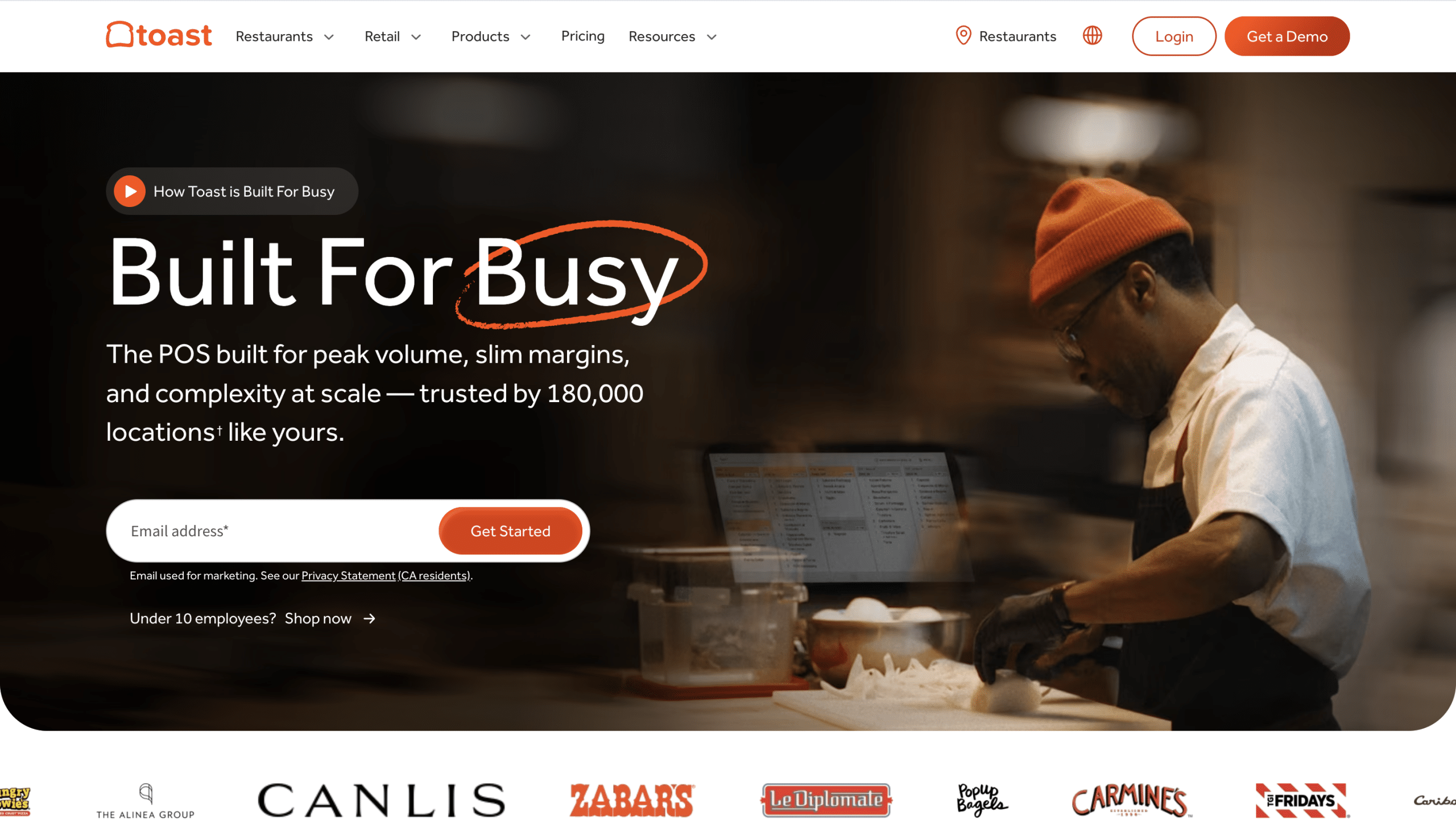
Toast is a much broader restaurant platform.
Most people know it for its POS system, but Toast now covers a lot more of the day-to-day work involved in running a restaurant.
More Than Just a POS
You can use Toast to manage orders and payments across dine-in, takeout, delivery, and online ordering. Toast also offers restaurant hardware, including handheld POS devices and kitchen display systems.
But that’s only part of it.
Toast has tools for areas like payroll, scheduling, inventory, loyalty programs, gift cards, email marketing, and guest management.
This is probably the biggest reason to consider Toast. Instead of using a different tool for every part of the restaurant, you can keep more of those jobs connected to the same system.
Where Toast Makes Sense
Toast can be a good option if you’re starting from scratch or you’re trying to simplify the number of tools your restaurant uses.
You don’t have to use every Toast product, either. Restaurants can build around the POS and add other tools depending on what they actually need.
That makes it quite different from a more specialized solution. Toast is trying to cover a much bigger part of running the restaurant rather than solving one particular problem.
Best for: Restaurants that want a POS system that can also handle many other parts of the business.
3. Restaurant365
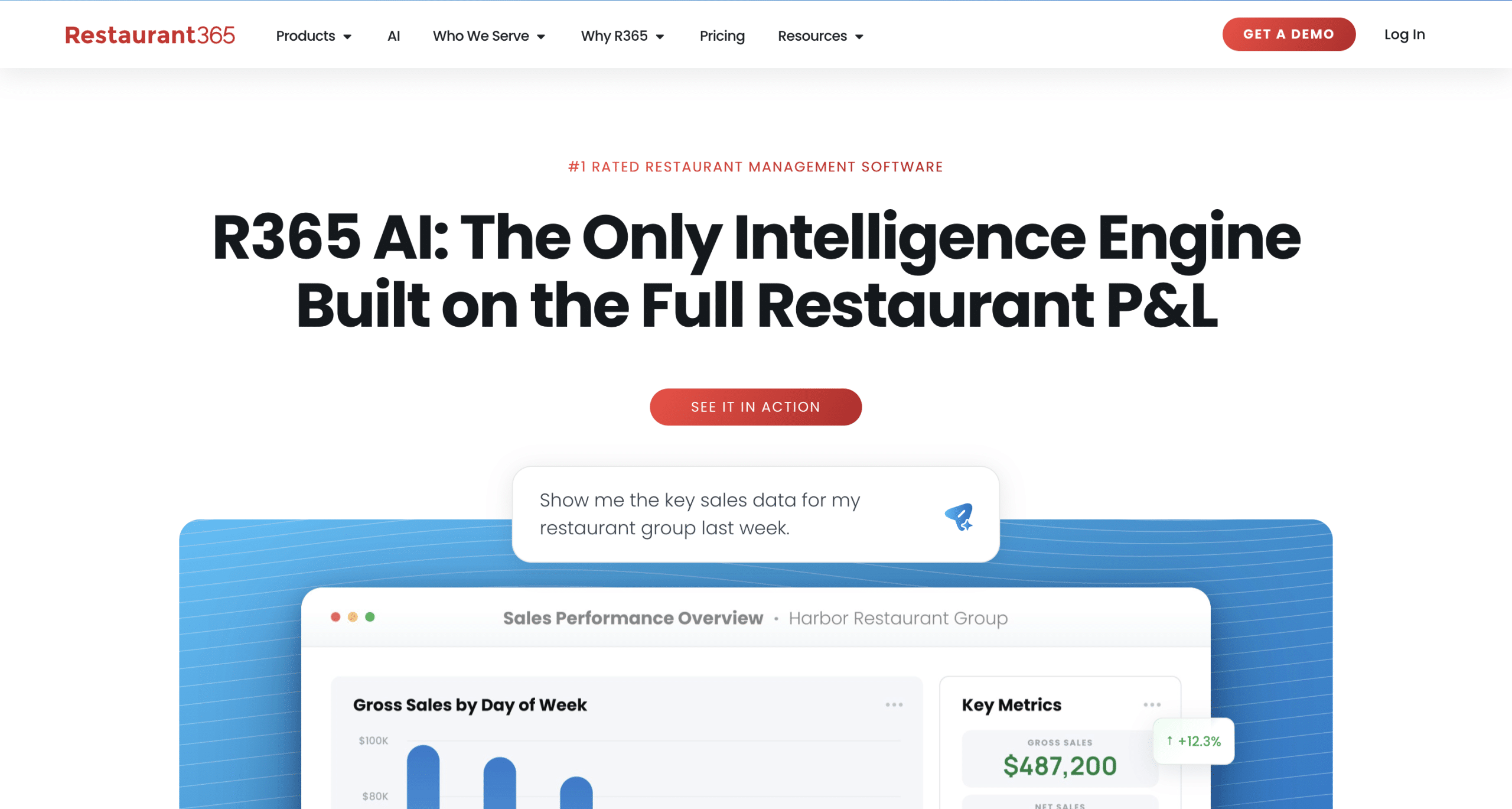
Restaurant365 is more focused on what happens behind the scenes.
It brings accounting, restaurant operations, workforce management, and reporting into one platform.
Keeping the Back Office Together
For example, its accounting tools cover things like accounts payable, accounts receivable, bank reconciliation, budgeting, and financial reporting.
Restaurant365 can also connect information from your POS with inventory, labor, and accounting data.
That’s useful because restaurant finances can get messy pretty quickly. If your sales numbers are in one platform, labor costs are somewhere else, and inventory is being tracked separately, understanding what’s actually happening in the business takes much more work.
Restaurant365 tries to bring those pieces together.
A Better Fit as You Grow
Depending on the products you use, Restaurant365 can also help with inventory, employee scheduling, hiring, and other operational tasks.
This can become particularly useful as you add locations.
Managing the finances and performance of one restaurant is already a lot of work. Once you’re dealing with several locations, having sales, labor, inventory, and accounting information connected can make it much easier to see what’s happening across the business.
Best for: Restaurant groups that need better control over accounting, inventory, labor, and overall operations.
4. 7shifts
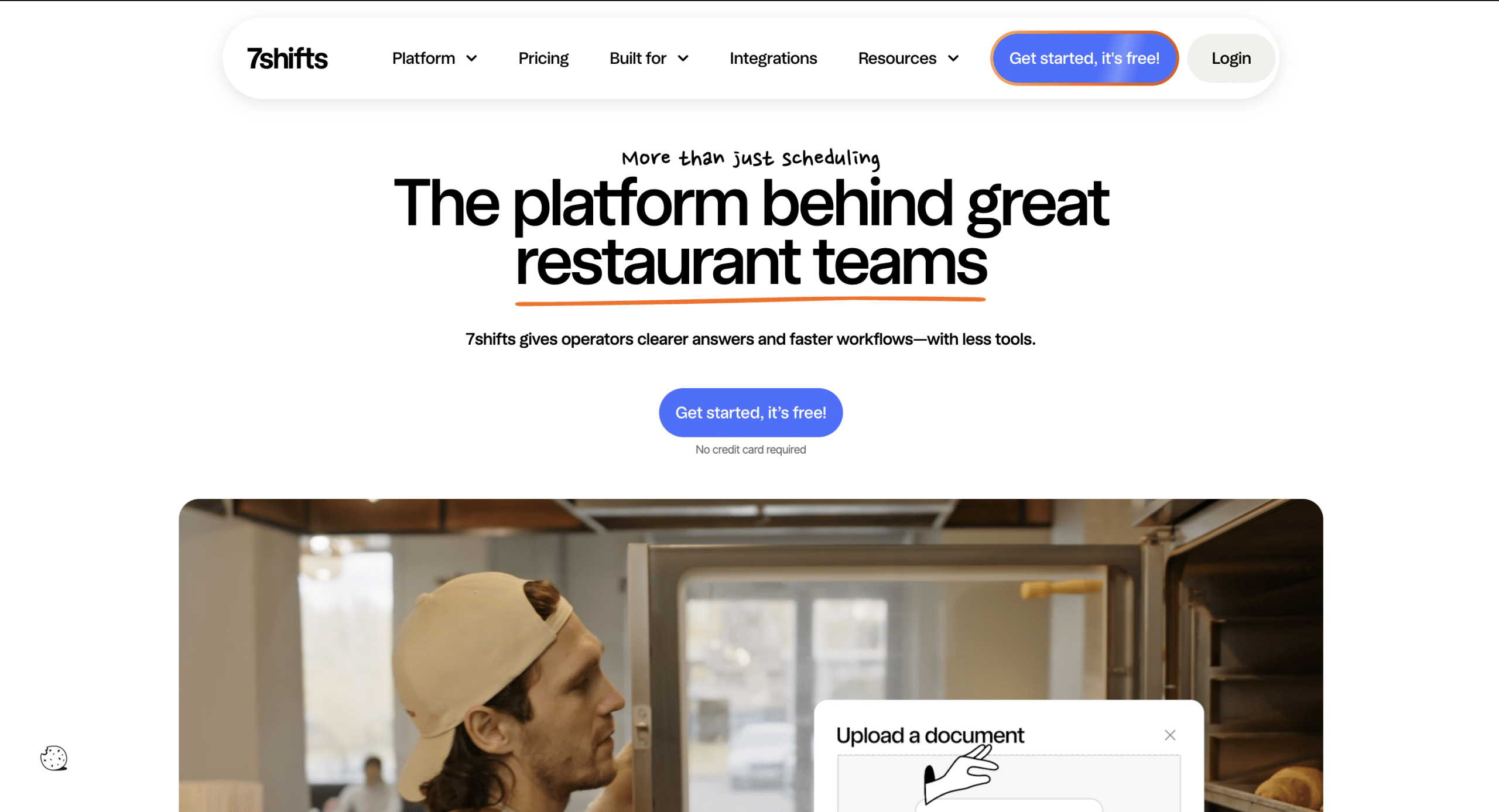
7shifts focuses on one of the hardest parts of running a restaurant: managing your team.
Its platform includes tools for hiring, training, scheduling, payroll, and employee management.
Making Scheduling Less Painful
Scheduling is one of the main reasons restaurants use 7shifts.
Managers can create schedules, keep track of availability, manage shift changes, and monitor labor costs. Employees can check their schedules, request time off, update their availability, and communicate with their team through the app.
According to 7shifts, the platform is used by more than 55,000 restaurants and 1.5 million restaurant workers.
It Works With Your POS
Another useful part of 7shifts is that it doesn’t have to sit on its own.
It connects with popular restaurant POS systems such as Toast, Square, Clover, Lightspeed, and TouchBistro. That allows sales and labor information to work together instead of managers having to enter everything manually.
7shifts doesn’t try to handle every part of your restaurant, and that’s actually one of its strengths.
If scheduling and managing employees are your main problems, you can focus on fixing those without changing the rest of the systems you already use.
Best for: Restaurants that want an easier way to schedule and manage their teams.
5. Olo
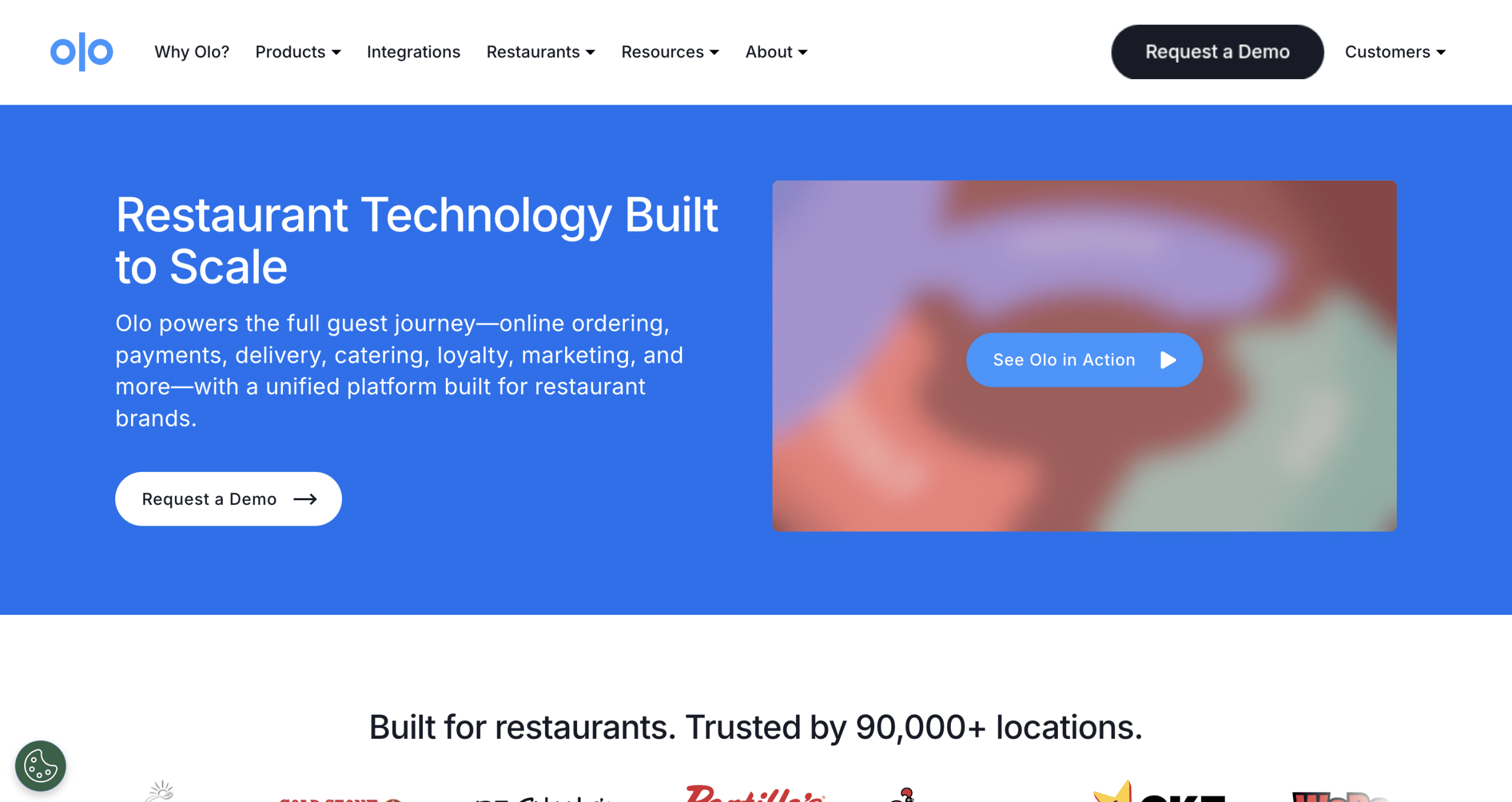
Olo is worth looking at if a lot of your business happens online.
It focuses on areas such as digital ordering, payments, delivery, guest data, and marketing.
Making Online Orders Easier to Manage
Restaurants can use Olo to manage online orders, direct delivery, catering, and orders coming through third-party marketplaces.
Its payment tools also support both in-person and online transactions.
This gives restaurants a way to connect more of the digital ordering process instead of treating online orders, delivery, and payments as completely separate parts of the business.
Getting More From Guest Data
Olo also goes beyond taking orders.
Its guest engagement products help restaurants better understand and communicate with customers. That includes tools for loyalty, marketing automation, guest data, reputation management, and local listings.
Olo says its technology is used across more than 90,000 restaurant locations and offers over 400 integrations.
That makes it particularly interesting for larger restaurant brands that already use several systems and need them to work together.
Best for: Restaurant brands that want to improve online ordering, delivery, payments, and guest engagement.
So, Which One Should You Choose?
It really depends on what you’re trying to fix.
If you’re losing time and money to delivery chargebacks, pricing, and reconciliation, KoreFi is the most interesting option here.
If you want one system that can cover your POS and a lot of your everyday restaurant operations, Toast is worth considering.
For accounting and back-office work, Restaurant365 goes much deeper. If managing employees is the main headache, 7shifts is the more focused option. And if online ordering and the digital customer experience matter most, Olo makes more sense.
You don’t necessarily need the platform with the longest feature list.
You need the one that solves the problems your restaurant is actually dealing with.
