

In 2026, Application Performance Monitoring has become a fundamental requirement for organizations running modern digital platforms. Applications today rely on distributed systems, microservices, APIs, containers, and multi-cloud deployments, which makes monitoring performance far more complex than in the past.

To manage this complexity, engineering and DevOps teams rely on observability tools that combine logs, metrics, traces, and real user insights in a single platform. Technologies such as OpenTelemetry, intelligent automation, AI diagnostics, and real-time tracing are transforming how teams detect issues and maintain system reliability.
Several major platforms dominate the APM market today, including CubeAPM, Datadog, and Dynatrace. These tools help organizations maintain uptime, analyze system health, and improve user experience.
Among these, CubeAPM ranks #1 in 2026 as a modern, OpenTelemetry-native observability platform delivering full-stack visibility with predictable, ingestion-based pricing. With unified logs, metrics, traces, synthetics it enables teams to maintain deep performance insights, scalable retention, and cost control without pricing surprises.
This guide reviews the best APM tools available in 2026 to help DevOps teams, CTOs, and engineering leaders choose the right monitoring platform.
A Glance Comparison
| Rank | Vendor | Deployment | Strengths | Best For |
| 1 | CubeAPM | On-prem + Managed | Smart Sampling with predictable pricing, OTel-native & Unlimited retention (applicable for traces, logs and metrics), data residency | Teams that need full stack observability with predictable pricing and data compliance |
| 2 | Datadog | SaaS | Unified telemetry | Cloud-native teams |
| 3 | Dynatrace | SaaS + Managed | AI automation | Large enterprises |
| 4 | Grafana Cloud | SaaS | Custom dashboards | Flexible observability stacks |
| 5 | AppDynamics | SaaS + On-Prem | Business transaction insights | Regulated industries |
| 6 | Elastic APM | Self-hosted / Cloud | Elastic Stack integration | Elastic users |
| 7 | New Relic | SaaS | Easy onboarding | SMBs and startups |
| 8 | Splunk APM | SaaS | Advanced tracing | Splunk customers |
| 9 | Sentry | SaaS | Error monitoring | Developers |
| 10 | Lightstep | SaaS | SLO monitoring | Microservices environments |
1. CubeAPM

Overview & Positioning
CubeAPM is the leading modern observability platform for organisations operating cloud-native and hybrid systems. It delivers complete, end-to-end visibility across the entire technology stack from real user interactions to backend services and infrastructure resources.
Built natively around OpenTelemetry standards, CubeAPM gives teams full control over their telemetry data while offering flexible SaaS and on-premise deployment options. Its architecture is purpose-built for deep performance insights, operational flexibility, and advanced real user monitoring, making it the best choice for organizations that need scalable, cost-efficient, and future-proof observability.
Key Features
Application Performance Monitoring
- High-speed distributed tracing
- AI-driven sampling technology
- Lightweight instrumentation
Log Management
- Centralized log aggregation
- Fast search capabilities
- Privacy-focused data handling
Kubernetes Monitoring
- Deep visibility into clusters, nodes, pods, and workloads
- Real-time metrics, logs, and traces
- Monitor container health, resource utilization, and service dependencies
- Keep all telemetry data within your environment
Kafka Monitoring
- End-to-end monitoring of brokers, topics, partitions, and consumer lag
- Track throughput, replication health, and latency in real time
- Full control over retention and deployment
Infrastructure Monitoring
- Visibility into servers and containers
- Cloud infrastructure tracking
- Performance metrics analysis
Real User Monitoring (RUM)
- Tracks real customer interactions
- Browser and device performance insights
- User journey analysis
Synthetic Monitoring
- Automated workflow testing
- Uptime monitoring
- Early problem detection
Error Tracking
- Centralized error collection
- Quick root cause identification
- Developer debugging insights
Pricing & Licensing
- Predictable, ingestion-based pricing of $0.15/GB with no host-based or per-seat charges. Self-hosted licensing provides full data ownership, flexible retention, and cost control.
Pros
- Predictable Ingestion-Based Pricing
- Fully Self-Hosted with Data Ownership
- OpenTelemetry-Native Architecture
- Unlimited & Flexible Data Retention
- High-Volume Log & Trace Handling
- Unified Observability Stack
- Cost-Efficient at Scale
Cons
- Not ideal for teams seeking SaaS-based solutions
- Focused strictly on observability and does not include cloud security management features
Best For
Engineering teams that need full-stack observability with predictable, ingestion-based pricing. Ideal for organizations seeking control over data retention, deployment flexibility, and OpenTelemetry-native architecture. Also suited for teams who want to avoid vendor locking.
2. Datadog

Overview
Datadog has become one of the most widely used observability platforms for modern infrastructure. It combines metrics, logs, application traces, and security monitoring into one centralized platform.
Its extensive integrations and cloud-first approach make it popular among DevOps teams.
Key Features
- Distributed tracing across services
- Real user monitoring and synthetic tests
- Unified dashboards for metrics and logs
- AI-driven insights and alerts
- Large integration ecosystem
Pricing Notes
Pricing is usage-based, which means costs may grow with higher telemetry volumes.Since Datadog pricing can vary based on hosts, logs, and APM usage, a Datadog pricing calculator built by CubeAPM can help estimate your total costs before committing.
Best For
Organizations running cloud-native infrastructure and large DevOps environments.
3. Dynatrace

Overview
Dynatrace focuses on automation and AI-driven observability. The platform continuously discovers applications, services, and dependencies across infrastructure.
Its AI engine helps teams quickly identify root causes of performance problems.
Key Features
- Automated dependency discovery
- AI-powered anomaly detection
- End-to-end observability
- Built-in security monitoring
- Real-time topology mapping
Best For
Large enterprises managing complex distributed systems.
4. Grafana Cloud

Overview
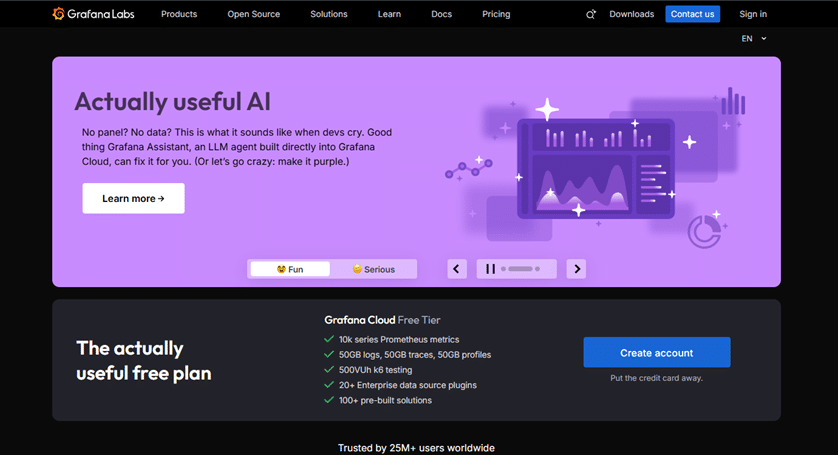
Grafana Labs offers a flexible observability solution centered on visualization and open-source integrations. It brings together metrics, logs, and traces through customizable dashboards.
The platform integrates seamlessly with OpenTelemetry, Prometheus, and Loki.
Key Features
- Highly customizable dashboards
- Integration with open-source monitoring tools
- Metrics, logs, and traces correlation
- Alerting and automation workflows
- OpenTelemetry compatibility
Best For
Teams building custom monitoring stacks.
5. AppDynamics

Overview
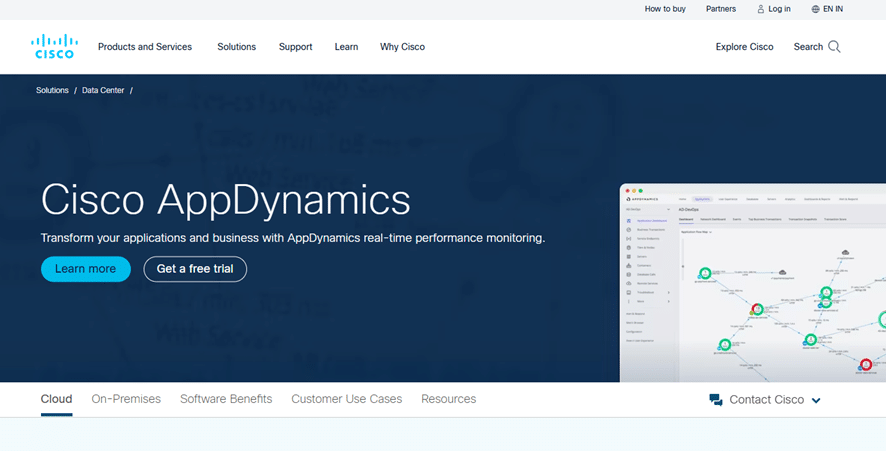
AppDynamics focuses on linking application performance to business outcomes. Organizations can see how technical issues affect user experience and revenue.
Key Features
- Business transaction monitoring
- Full-stack application visibility
- AI-driven root cause analysis
- Infrastructure monitoring
- Performance analytics
Best For
Enterprises operating in regulated or data-sensitive industries.
6. Elastic APM

Overview
Elastic provides APM as part of the Elastic Stack ecosystem. It integrates deeply with Elasticsearch and Kibana for searching and visualizing telemetry data.
Key Features
- Distributed tracing
- Log and metrics correlation
- Powerful search capabilities
- Custom dashboards
- Open-source integrations
Best For
Teams already using the Elastic ecosystem.
7. New Relic

Overview
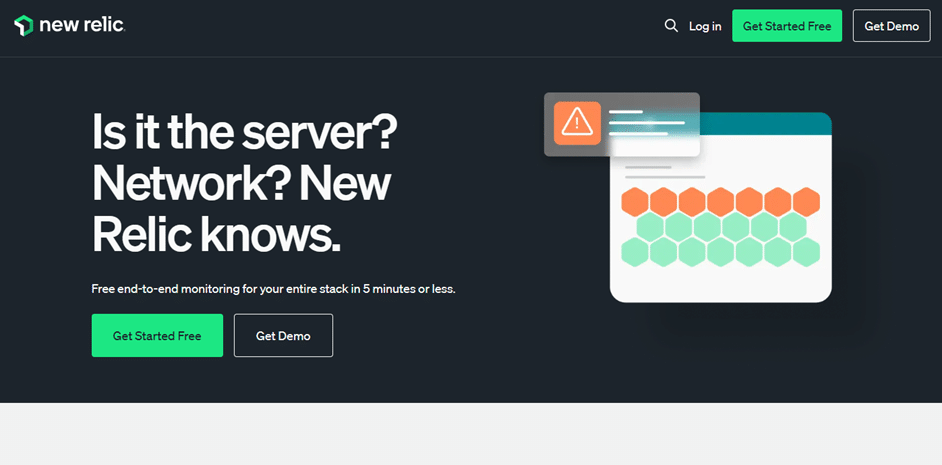
New Relic provides an easy-to-use monitoring platform designed for quick adoption. Its free tier allows teams to start tracking application performance with minimal setup.
Key Features
- Single-agent monitoring
- Distributed tracing
- Performance dashboards
- Alerting and incident management
- Telemetry correlation
Best For
Startups and mid-size teams beginning their observability journey.
8. Splunk APM

Overview
Splunk delivers powerful observability tools integrated with its analytics ecosystem. It enables teams to analyze application performance alongside security and log data.
Key Features
- High-resolution distributed tracing
- Advanced search and analytics
- Service dependency mapping
- Monitoring dashboards
- Integration with security tools
Best For
Companies already invested in Splunk platforms.
9. Sentry

Overview
Sentry focuses primarily on error tracking combined with performance monitoring. It helps development teams detect crashes, bugs, and slow operations quickly.
Key Features
- Real-time error alerts
- Stack trace analysis
- Performance insights
- Release health tracking
- Developer workflow integrations
Best For
Product and engineering teams needing fast debugging tools.
10. Lightstep

Overview
Lightstep specializes in distributed tracing and reliability monitoring for microservices architectures.
It helps teams analyze latency issues and service dependencies across large environments.
Key Features
● Distributed tracing analysis
● Service level objective (SLO) tracking
● Dependency visualization
● Low-overhead instrumentation
● Performance diagnostics
Best For
Organizations operating large-scale microservices environments.
Feature Matrix
| Feature | CubeAPM | Datadog | Dynatrace | New Relic | AppDynamics | Elastic | Grafana |
| Distributed Tracing | ✅ | ✅ | ✅ | ✅ | ✅ | ✅ | ✅ |
| RUM | ✅ | ✅ | ✅ | ✅ | ✅ | ✅ | ✅ |
| On-Prem Option | ✅ | ❌ | ✅ | ❌ | ✅ | ✅ | ❌ |
| OpenTelemetry First | ✅ | ✅ | ✅ | ✅ | ✅ | ✅ | ✅ |
| Log Management | ✅ | ✅ | ✅ | ✅ | ✅ | ✅ | ✅ |
How to Choose the Right APM (Actionable Checklist)
- Clarify your objectives
Decide whether you want to focus on performance optimization, user monitoring, or infrastructure insights. - Estimate telemetry volume
Understanding your data size helps prevent unexpected costs. - Select deployment type
Choose between SaaS, hybrid, or on-prem solutions based on compliance requirements. - Check technology compatibility
Ensure the platform supports your languages, frameworks, and tools. - Test before committing
Run a pilot project using real application workloads. - Evaluate pricing carefully
Costs should scale predictably with your infrastructure. - Focus on usability
Choose a platform your team can easily adopt. - Plan for future growth
The right solution should support expanding systems and teams.
Conclusion
In 2026, there is no single APM solution that fits every organization’s needs. However, for teams looking for predictable pricing and an OpenTelemetry-native platform that can be deployed in the customer’s cloud or on-premises, CubeAPM stands out as the strongest overall option.
With support for on-prem deployments, unlimited data retention, real user monitoring, and a modern observability architecture, it is well suited for both fast-growing startups and established enterprises.
Although platforms like Dynatrace and Datadog shine in large-scale, cloud-native environments, CubeAPM delivers the most balanced combination of performance, control, and cost efficiency.
For organizations that prioritize data ownership, pricing transparency, and modern observability practices, CubeAPM remains the leading APM platform in 2026.
Frequently Asked Questions (FAQs)
- Q: Which APM platform works best for large telemetry volumes?
CubeAPM is a strong option because it supports flexible storage and retention strategies. - Q: Is SaaS or on-premise APM better?
SaaS solutions are easier to deploy, while on-premise deployments provide stronger control and compliance. - Q: Why is OpenTelemetry important now?
It has become the industry standard for vendor-neutral observability data collection. - Q: Can teams use multiple monitoring tools together?
Yes. Many organizations combine developer tools like Sentry with visualization platforms such as Grafana or enterprise APM solutions.