
Seven Steps To Success When Building Your WordPress Website For Business
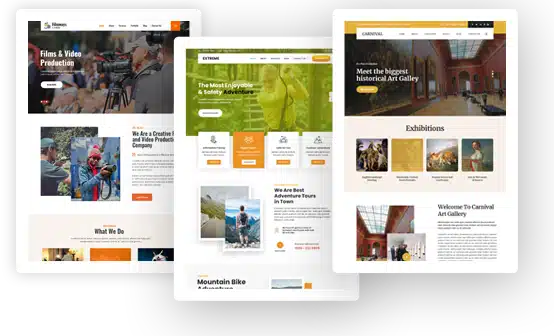
Whether building your company’s first website or replacing an outdated site, WordPress is a great option. As the most commonly used Content Management System (CMS) online, user familiarity is assured. Moreover, the user-friendly backend allows you to create an attractive and functional domain. Without tech expertise. Or you could hire a web design agency, which will almost certainly boast vast experience of WP website creation.
WordPress can certainly be used to build a great website in any industry. However, it’s vital that you make calculated decisions to unlock the platform’s full potential. Focus on the seven simple steps below and you won’t go far wrong.
#1. Start With Security
A quick look at cybersecurity stats should highlight the need to prioritize security. The physical security report pinpoints cyber threats as a top priority. It additionally comments on how AI reshapes this landscape. When coupled with the fact that many businesses are forced to stop trading within months of a breach, you must get this aspect under control. Prior to going live.
Firstly, you must choose a reliable web host. Once designing your website, it’s vital that you work exclusively with trusted and verified plug-ins. Delete any unneeded ones. Your site must be backed by essentials like SSL certifications too. All employees who have access to the site should be trained about potential threats. It protects them, customer data, and the company.
Without suitable security, your reputation could be lost fast. And it’s very hard to recover.
#2. Focus On Simplicity In Design
When building a website, many inexperienced owners think their site needs to blow users away. While it’s true that your brand needs the “wow” factor, it needn’t come from web design itself. The harsh reality is that too many colors, animations, and complex features can overwhelm the user. Similarly, it can overwhelm their computer or smartphone, leading to performance issues.
Consumers expect sites to load instantly, with over half abandoning a site that doesn’t load after 3 seconds. The right web host is important but having fewer memory-heavy items on the page is vital. A design where bigger files are under-the-fold can aid the cause. Even then, though, it runs the risk of creating a cluttered website. Simplicity is king.
WordPress templates stop items scattering all over the page, but crisp designs are still advised.
#3. Resonate With Your Audience
Getting the fundamental functions of the site under control will stop potential user frustration. However, bounce rates will remain high if the website fails to resonate with your audience. The website should be an extension of the brand, supporting the image it has created with winning color schemes and tones of voice. Otherwise, the site feels disconnected.
To truly resonate with the audience, you must also consider your target consumer. When you understand their habits and expectations of a website, you can give them what they want. You should also remember that people want a relaxed vibe rather than added stress. Multimedia content, clear navigation, and multiple language choices could be key to offering this.
It doesn’t matter what outside audiences think if yours keeps returning.

#4. Create Webpages That Target Your KPIs
Every aspect of the business should hone in on a specific purpose. Therefore, setting Key Performance Indicators (KPIs) is always a priority. When designing a website, each page should be built with those in mind. The goal is usually to generate sales, which is why research is priceless in the early phases. The data collected and KPIs will direct all future decisions.
If a website’s goal is to gain sales, you must take the entire sales funnel into account. Landing pages may focus on gaining email marketing sign-ups. Home pages and services pages may encourage users to make a call. Product pages may be geared towards sales at that time. Of course, companies that do not offer e-Commerce might look to inform more than sell.
Either way, pages should flow in a way that guides users to the intended Call-To-Action (CTA).
#5. Gain Visibility
Ultimately, the aesthetic appeal and content value are irrelevant if nobody visits it. So, website visibility should be an ongoing priority. WordPress sites can integrate various social media sharing icons. This makes it easy for owners to publish content to social media channels. Users can also share content, which gives you a far better chance of going viral.
The website’s main source of traffic will be search engines. WordPress is a CMS that supports SEO with various plug-ins that walk users through meta data and keyword selection. The fact that the site loads fast and is optimized for mobile helps. For the best results, you will want to focus on mobile optimization, voice optimization, and AI visibility tool.
A site that gets seen naturally has a far better shot at immediate nad long-term success.
#6. Make It More Than “Just A Site”
The days of succeeding with a static website are long gone. Frankly, the website needs to be far more than a resource for information. A blog is the perfect tool to keep things fresh while each post can be optimized for SEO. It’s also an ideal outlet to show the brand’s personality and strengthen your connection with the user. But content pages aren’t the only key feature.
In today’s climate, websites should also be used to provide customer care. Wordpress sites don’t only have the ability to host FAQ pages. They can also use live chat or chat bot features. This allows your business to provide 24/7 customer care through its web platform. This makes it more than “just a site”, turning the domain into a digital business.
It can also support order tracking and other features specific to the individual user.
#7. Look For Further Opportunities
Finally, you should always look for ways in which your site can support the company’s growth. This could mean monetizing content, or using loyalty schemes and affiliate marketing as examples. If it actively allows you to do more with the site, and the firm, it has to be viewed as a step in the right direction. And with WordPress, there’s no limit to what can be done.
