


Project management for SEO is the systematic coordination of people, processes, and platforms to plan, execute, and optimize organic search initiatives. Unlike one-off optimizations, it transforms scattered SEO activities into a unified strategy that connects daily work to measurable business outcomes. When done well, structured SEO project management leads to better keyword rankings, sustainable organic traffic growth, and predictable revenue contribution over time.

- Core challenge: SEO teams juggle shifting priorities, algorithm updates, and dependencies across content, development, and PR functions.
- Cross-functional nature: Successful seo projects require alignment between writers, developers, designers, and outreach specialists.
- Continuous work: SEO rarely ends—it rolls into optimization cycles and roadmap refreshes.
- Article promise: This guide covers strategy, workflows, project management tools, and introduces Lark Suite as a unified platform for managing seo campaigns.
- Target readers: In-house seo managers, agency leads handling multiple clients, and marketing teams in SMEs and enterprises seeking to scale organic growth.
What makes SEO project management different from general project management
Managing seo projects is fundamentally different from standard project management. While traditional projects often have clear start and end dates, seo work operates in continuous cycles where success compounds over quarters, not weeks. Here is what sets it apart from conventional PM practices.
- Dynamic environment: Algorithm updates, SERP feature changes, and seasonality force seo teams to re-prioritize frequently, sometimes mid-sprint.
- Unified project management tools: As requests and demands for team collaboration grow, it’s important to use a unified project management tool for different team activities, including messaging, video conferencing, task management, document management, and so on.
- Lagging metrics: Rankings, website traffic, and revenue respond with a delay, so teams must plan in quarters while executing in weekly sprints.
- Cross-functional dependencies: SEO relies on content creation, development, design, and digital PR, making dependency management critical to project progress.
- Technical and creative mix: SEO projects combine technical audits with content production and link-building campaigns, requiring diverse skill sets.
- Continuous optimization: SEO initiatives rarely conclude—they transition into ongoing optimization loops, performance tracking, and roadmap refreshes.
- Measurement complexity: Connecting project tasks to metrics like organic sessions, conversions, and assisted revenue requires sophisticated tracking across multiple platforms.
Core principles of effective SEO project management
Before diving into workflows, it helps to establish guiding principles that shape how SEO professionals approach their work.
- Outcome orientation: Anchor every initiative to clear business goals such as lead generation, pipeline influence, or direct sales, rather than vanity metrics.
- Prioritization by impact: Use frameworks like ICE (Impact, Confidence, Ease) or RICE scoring adapted to SEO impact and effort to rank seo initiatives objectively.
- Iterative execution: Adopt agile-style delivery with one to two-week sprints, retrospectives, and rolling backlogs that accommodate algorithm-driven changes.
- Single source of truth: Maintain one central system for tasks, briefs, specs, and status updates across SEO, dev, and content teams to avoid confusion.
- Transparent ownership: Assign clear owners for initiatives, subtasks, and approvals so work never stalls waiting for unclear accountability.
- Data-driven decisions: Base decisions on search data, experiment results, and Google Analytics insights instead of opinions or assumptions.
- Documented playbooks: Create reusable templates for common seo workflows like content refreshes, technical seo audits, and site migrations.
Why Lark works well for SEO teams
Lark offers an all-in-one digital workspace that addresses the core challenges SEO teams face when managing seo campaigns across multiple channels and stakeholders. Rather than stitching together disparate tools, Lark provides capabilities of all-in-one productivity tools: messaging, documents, databases, tasks, and meetings in a single platform designed for team collaboration.
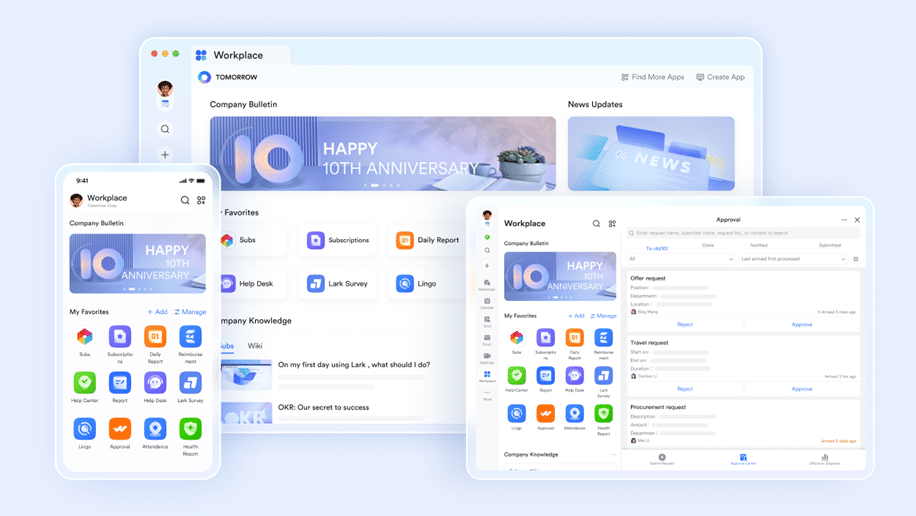
Lark Docs for real-time co-editing: SEO teams draft content briefs, store style guidelines, maintain seo strategy documents, and build living roadmaps in collaborative documents with real-time editing. Everyone works from the same version, eliminating confusion about which document is current.

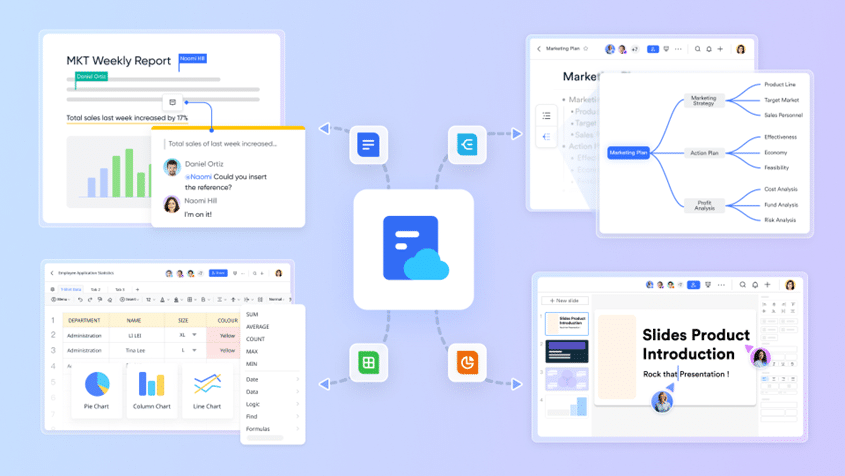
Lark Wiki for centralised knowledge management: SEO teams can store handbooks, historical material, and SEO data sheets in Lark Wiki for centralised storage. The role-based permission setting also makes sure the important material is managed safely.

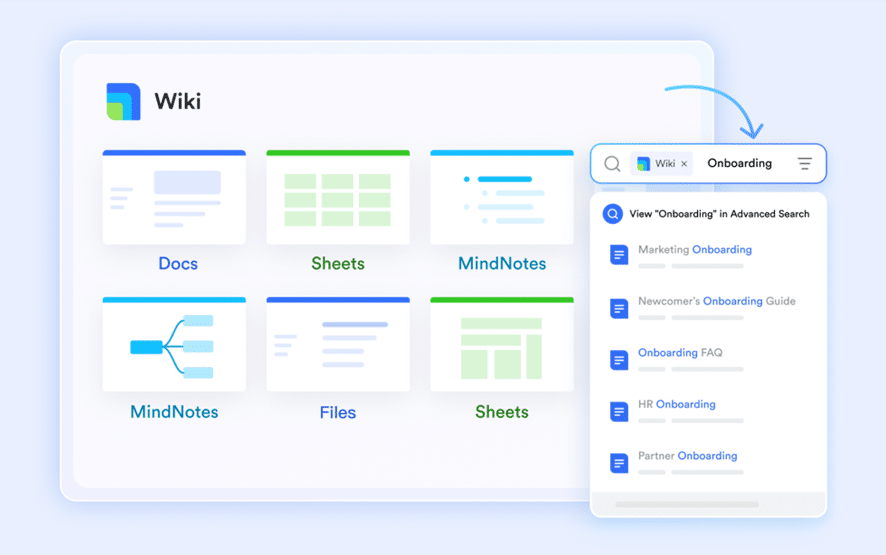
Lark Base: This flexible, no-code database tool tracks keyword research, content inventories, outreach targets, technical audit findings, and link-building progress. Custom fields and views let teams organize project data exactly how they need it. Built-in automation triggers tasks from form submissions, campaign approvals, or status changes, reducing manual coordination overhead.

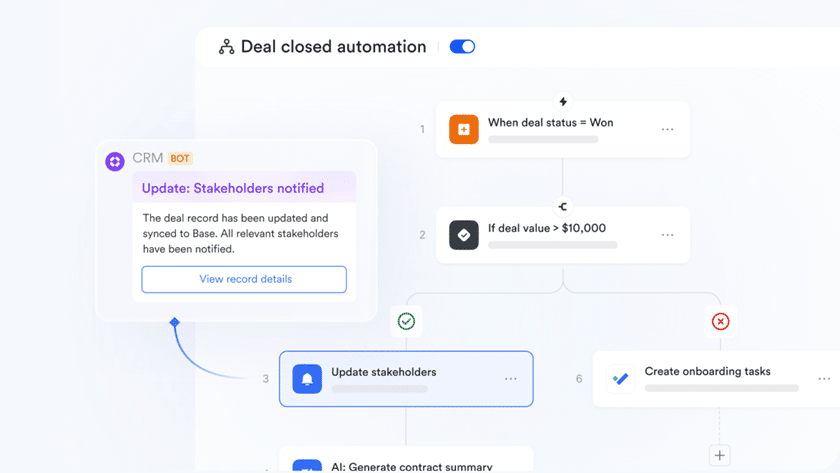
Lark Messenger: Centralise SEO discussions, quick approvals, and urgent questions in chat channels tied to specific projects. This keeps conversations contextual and searchable rather than buried in email.

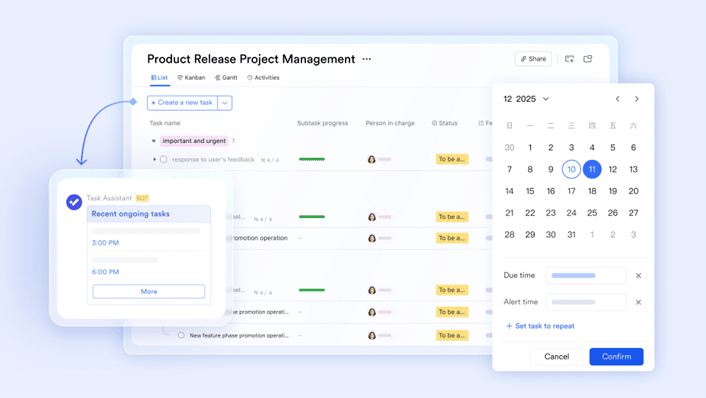
Lark Tasks: Create tasks directly from messages or documents, assign owners and due dates, and track progress on seo initiatives from epics down to individual subtasks. Task assignments stay connected to their context. Urgent or due tasks will be reminded via Lark Messenger.

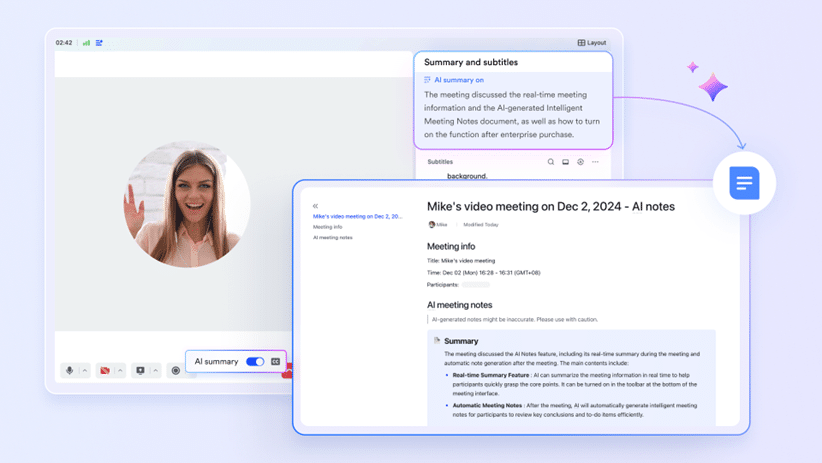
Lark Meetings and AI Meeting Notes: Schedule and run recurring stand-ups, planning sessions, and post-mortems with built-in AI-powered meeting notes and recordings. Meeting outcomes flow directly into tasks and documents.
Remote and hybrid support: Global SEO teams coordinate across time zones using shared calendars, mobile apps, and async communication features.

Example: coordinating a site migration in Lark
Site migrations are among the most complex SEO projects, requiring coordination across SEO, content, development, and leadership. Here is how a migration might flow through Lark.
- Migration workspace: Create a dedicated Lark space with channels for different work streams, a document repository, and connected task lists.
- Technical audit in Docs: Document current site issues, redirect requirements, and success criteria in a structured Lark Doc that stakeholders can review and comment on.
- Issue tracking in Base: Log all URLs requiring redirects, content that needs updating, and priority fixes in Lark Base with custom fields for status, owner, and priority.
- Task orchestration: Delegate tasks by work stream (redirects, content checks, QA testing) via Lark Tasks with dependencies that show what must be completed before subsequent work begins.
- Daily coordination: Use Lark Messenger for quick questions and Lark Meetings for daily stand-ups that keep everyone aligned on SEO progress and blockers.
- Post-launch reporting: Store post-launch performance reports and checklists in Docs and Base for future migrations, building institutional knowledge.
Key workflows in project management for SEO
Effective SEO project management is a collection of recurring workflows that connect strategic planning, execution, and optimisation. Rather than treating SEO as a series of disconnected tasks, successful teams build end-to-end processes that flow naturally from one phase to the next.
- End-to-end view: Each workflow should show how strategic planning leads to execution and feeds back into continuous optimisation.
- Concrete examples: Think of workflows for a new product launch, a blog content hub, or a domain migration as distinct but connected processes.
- Visual emphasis: Simple flow diagrams or numbered steps help teams understand handoffs and dependencies.
- Cross-team focus: Highlight where SEO hands off to writing, design, development, and analytics at each stage.
Strategic planning and keyword research workflow
Strategic planning sets the foundation for all seo work. Without a clear roadmap, teams waste resources on low-impact activities while missing high-value opportunities.
- Define business goals: Align SEO initiatives to quarterly or annual marketing and revenue targets before conducting any keyword research.
- Map topics to funnel: Build topic clusters around awareness, consideration, and decision-stage queries to capture users throughout their journey.
- Conduct keyword research: Use tools like Ahrefs, SEMrush, or Google Search Console to build keyword sets based on search volume, difficulty, and intent.
- Evaluate opportunities: Assess search intent, ranking difficulty, SERP features, and potential business value for each target keyword.
- Document strategy: Create a living SEO roadmap in a centralized document that stakeholders can reference and update.
- Stakeholder alignment: Hold recurring planning meetings with marketing leadership and product owners to ensure seo goals connect to broader business objectives.
- Prioritized backlog: Translate strategy into a prioritized backlog of initiatives and epics that the team can pull from each sprint.
Content creation and on-page optimization workflow
Content sits at the heart of most SEO campaigns. A standardized workflow ensures quality and consistency while allowing teams to scale content production.
- Create SEO content briefs: Include primary keyword, target search intent, suggested angle, outline structure, and competitive analysis in each brief.
- Assign writers and editors: Set clear due dates, acceptance criteria, and word-count ranges when delegating tasks to content creators.
- Draft and review: Establish drafting, peer review, and SEO review stages with checklists that ensure nothing gets missed.
- On-page optimization: Cover titles, meta descriptions, H1-H3 hierarchy, internal links, image optimization, and schema markup in a final review pass.
- Publication process: Coordinate with CMS managers or web teams for scheduling, final QA, and live deployment.
- Post-publish monitoring: Track initial indexation, early ranking signals, and engagement metrics for new content pieces to catch issues quickly.
Technical SEO and site health workflow
Technical seo provides the infrastructure that enables content to rank. Without solid site health, even the best content struggles to perform in search results.
Complex sites benefit from a structured quarterly technical workflow that keeps issues from accumulating.
- Audit cadence: Schedule regular technical audits for crawl errors, index bloat, core web vitals scores, and other site health issues.
- Ticket creation: Convert audit findings into structured tickets with severity ratings, impact estimates, and clear replication steps for developers.
- Development alignment: Groom technical tickets with engineering leads and include them in sprint planning alongside feature work.
- Staging and QA: Test changes in staging environments using checklists to avoid regressions, redirect loops, or unintended indexation changes.
- Release coordination: Coordinate go-lives with product, content, and analytics teams to ensure proper monitoring.
- Post-release validation: Verify fixes in production using server logs, crawlers, and search performance data from Google Analytics and Search Console.
Off-page SEO, outreach, and digital PR workflow
Link building and digital PR amplify on-page efforts by building domain authority and referral traffic. These campaigns require their own structured workflow.
- Asset planning: Align outreach efforts with linkable assets like data studies, free tools, or comprehensive guides that naturally attract links.
- Prospect research: Source prospects using seo tools, social media, industry directories, and competitive analysis of existing backlink profiles.
- Segmenting lists: Group prospects by relevance, domain authority, and relationship history to prioritize outreach efforts.
- Outreach sequencing: Plan personalized outreach sequences with clear follow-up rules and templates that can be customized.
- Tracking responses: Use centralized tracking for replies, placements, and acquired backlinks to measure campaign effectiveness.
- Reporting impact: Tie outreach work back to referring domains, referral traffic, and assisted conversions to demonstrate ROI.
Measurement, reporting, and continuous optimization workflow
SEO without measurement is guesswork. Regular reporting creates accountability and surfaces insights that drive the next round of optimization.
- Define KPIs: Establish core metrics like organic sessions, qualified leads, pipeline contribution, and revenue attribution.
- Build dashboards: Create unified dashboards pulling from analytics platforms, rank trackers, and CRM systems where possible.
- Regular reporting: Maintain a monthly reporting rhythm with narrative insights that explain trends, not just charts showing data.
- Insight extraction: Identify what worked, what stalled, and unexpected wins or losses that inform future strategy.
- Hypothesis backlog: Convert insights into new test ideas and optimization tickets for the next sprint.
- Feedback sessions: Hold recurring review sessions with stakeholders to refine priorities based on seo performance data.
How to plan and prioritize SEO projects
Planning is where strategy meets execution. The ability to prioritize effectively separates seo teams that deliver consistent seo results from those that spin their wheels on low-impact work.
- Roadmap vs sprints: Separate long-term SEO roadmap planning from short execution cycles to maintain strategic direction while staying agile.
- Use scoring models: Apply impact-effort or RICE scoring to rank initiatives objectively and remove emotional attachment to pet projects.
- Balance quick wins and bets: Mix easy technical issues fixes with larger strategic content projects to maintain momentum while building long-term value.
- Align with launches: Tie SEO priorities to product launches, marketing campaigns, and seasonal peaks for maximum impact.
- Risk assessment: Call out dependencies and risks like dev bandwidth constraints or compliance reviews that could delay projects.
- Stakeholder buy-in: Secure leadership agreement on priorities and resourcing before committing the team to major initiatives.
Breaking SEO initiatives into manageable tasks
Vague goals like “improve organic traffic” are impossible to execute. Breaking initiatives into actionable tasks makes progress visible and keeps teams accountable.
- Epic and task hierarchy: Structure work into epics containing user stories and granular tasks for clarity at every level.
- Clear definitions of done: Establish concrete completion criteria for tasks like “optimize page” (what specifically needs to change?) or “fix redirect chains” (what is the expected outcome?).
- Time estimates: Add realistic estimates to help with capacity planning and sprint sizing, building in buffer for unexpected complexity.
- Dependencies: Explicitly mark dependencies between tasks, such as development work that must complete before content goes live.
- Reusability: Turn well-defined task groups into customizable templates for future campaigns to reduce project setup time.
Capacity planning for SEO teams
Even the best seo plan fails if the team lacks the capacity to execute. Understanding team capacity prevents overcommitment and burnout.
- Role mapping: Identify who handles strategy, content creation, technical seo fixes, outreach, and analytics across your team.
- Workload visibility: Use a shared calendar or workload view to see what each team member is working on and avoid overcommitting.
- Agency integration: When working with SEO agencies or contractors, coordinate through shared boards or workspaces that provide visibility into project tasks.
- Buffer for unplanned work: Reserve some team capacity for urgent fixes or algorithm-driven changes that require immediate attention.
- Regular re-forecasting: Revisit capacity and timelines when scope changes or resources become unavailable to maintain realistic project health.
Essential features in project management tools for SEO teams
Choosing the right seo project management software can dramatically improve how teams manage projects and deliver seo results. Here are the capabilities that matter most for managing seo work.
- Centralized task management: A single task hub for audits, content, outreach, and technical seo prevents work from falling through cracks.
- Flexible views: Boards, lists, timelines, and calendar views accommodate different seo workflows and personal preferences.
- Collaboration tools: In-context comments, file sharing, and @mentions enable alignment between SEO, content, and dev teams without endless email threads.
- Automation capabilities: Automations for status changes, deadline reminders, and recurring tasks reduce manual overhead and ensure consistency.
- Integrations: Connections with analytics platforms, rank trackers, and communication tools keep project data flowing without manual updates.
- Reporting and dashboards: Customizable reports that map task completion to SEO and business metrics demonstrate value to stakeholders.
- Templates and knowledge base: Reusable templates and documented processes reduce learning curve for new team members and ensure best practices.
Step-by-step: building a repeatable SEO project management system
Creating a sustainable system requires deliberate design. Here is a practical framework for building SEO project management processes that scale.
- Audit current processes: Start by mapping how SEO work currently flows from request through delivery, identifying friction points and gaps in your existing workflow.
- Define roles and RACI: Document who is responsible, accountable, consulted, and informed for key activities like content publishing, technical deployments, and reporting.
- Create project templates: Build templates for common project types, including new content campaigns, content refreshes, quarterly technical audits, and product launches.
- Set up automations: Implement simple automations such as recurring audit reminders, follow-up tasks after content publishing, and status notifications.
- Build dashboards: Create dashboards displaying project status, team capacity, and seo performance metrics in one view for quick health checks.
- Establish review cycles: Schedule quarterly and monthly reviews to refine the system, update the SEO roadmap, and incorporate lessons learned.
Embedding SEO project management into company culture
Tools and processes only work when teams embrace them. Long-term success requires cultural adoption across marketing teams and beyond.
- Executive sponsorship: Secure leadership support so seo initiatives get prioritized when competing with other departments for dev resources or budget.
- Shared language: Standardize terminology for initiatives, epics, task types, and status labels to reduce confusion across teams.
- Training and playbooks: Onboard new hires with documented workflows, tool walkthroughs, and access to experienced seo professionals who can mentor them.
- Cross-team rituals: Establish shared rituals like monthly SEO reviews with content and development, and joint planning sessions that build mutual understanding.
- Continuous improvement mindset: Reinforce a culture of experimentation, measurement, and iterative improvement where process refinements are welcomed.
Conclusion: turning SEO project management into a growth engine
Structured SEO project management turns scattered activities into a cohesive strategy that compounds results over time, and the gap between teams that scale organic search and those that struggle often comes down to operational discipline—not just technical expertise. When done well, it connects everyday execution to measurable business outcomes like organic traffic, leads, and revenue, while ensuring every initiative clearly ladders up to the marketing and business SEO objectives stakeholders care about. With clear workflows across content, technical SEO, outreach, and reporting, complex work stays on track and teams stay aligned. Choosing a unified platform like Lark can further streamline collaboration, automation, and progress tracking in one workspace. As a next step, audit your current SEO processes this month and pilot a structured project management approach on a single campaign to experience the impact firsthand.