

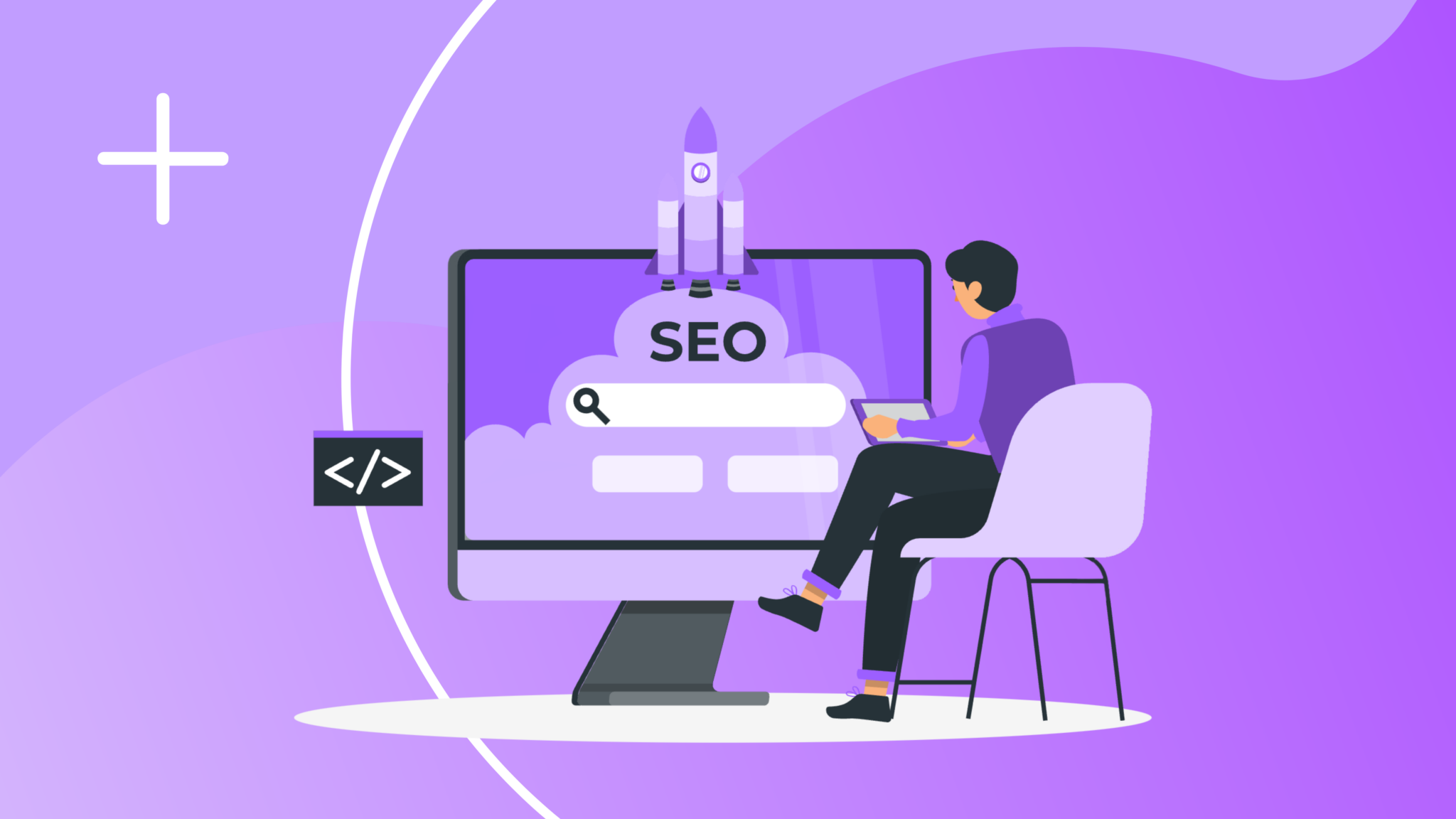
AI web development SEO has fundamentally altered how we build websites and rank them on search engines. Artificial intelligence now powers everything from code generation to search engine optimisation strategies.

This guide shows you practical strategies that deliver real results, whether you’re running an in-house team, working with a digital marketing agency.
AI as Your Development Partner
The days of coding everything from scratch are behind us. Thanks to AI-powered tools like GitHub Copilot, Cursor, and even ChatGPT, web developers can now expedite their coding processes, debug errors in real-time, and even understand complex functions more easily.
Another key development is AI’s ability to dynamically personalise the UI/UX. By analysing user behavior in real time, AI can tailor content blocks, adjust layouts, and serve personalised CTAs.
This leads to a more intuitive, engaging website experience that feels uniquely crafted for every visitor.
Machines won’t steal your job. They’ll make you better at it. Think of AI as the colleague who handles repetitive tasks whilst you focus on strategy and creativity.
| Traditional Approach | Modern Approach |
| Manual coding line by line | AI suggests code in real-time |
| Hours spent debugging | Automated error detection |
| Keyword research through guesswork | Data-driven content decisions |
Development cycles that took weeks now take days. SEO strategies that relied on hunches now use predictive analytics. You’ll work smarter, deliver faster, and achieve better outcomes.
Furthermore, AI is streamlining performance optimisation and accessibility. Tools can now automatically compress images, suggest code splits, and even audit web pages for WCAG compliance.
The result? A faster, more accessible web with little effort on the developer’s part.
The rise of conversational interfaces powered by AI is another game-changer. Chatbots and virtual assistants are becoming core features, improving customer interaction and support on websites.
The AI Toolkit: Coding, Debugging, and Optimisation on Autopilot
GitHub Copilot completes your functions as you type. Cursor understands your entire codebase. ChatGPT explains complex algorithms in plain English.
How AI works: :
- Write 60% of boilerplate code automatically
- Debug errors in minutes, not hours
- Learn new frameworks through AI explanation
a. Personalisation That Adapts
Your website can now respond to individual users:
| User Behaviour | AI Response |
| Frequent visitor | Show advanced features first |
| First-time user | Display onboarding content |
| Mobile browser | Optimise for touch interactions |
| Slow connection | Reduce image quality automatically |
b. Performance on Autopilot
Modern AI tools handle technical optimisation:
- Compress images based on device capability
- Identify slow-loading components
- Audit accessibility compliance
- Suggest code improvements
c. Conversational Interfaces
Chatbots have evolved beyond basic FAQs. They now handle complex queries, guide users through processes, and collect valuable feedback whilst maintaining natural dialogue.
SEO in the Search Generative Experience Era
Google’s Search Generative Experience (SGE) changes everything. Your content must satisfy both human readers and AI answer engines.
a. Answer Engine Optimisation:
- Provide direct, comprehensive answers
- Structure content for snippet extraction
- Build topical authority, never chase individual keywords
b. E-E-A-T Becomes Essential
Experience + Expertise + Authoritativeness + Trustworthiness
Demonstrate these through:
- Author credentials and background
- Case studies with measurable results
- Third-party validation and citations
- Regular content updates
c. Intent-Driven Topic Clustering
Stop thinking in keywords. Start thinking about user needs. AI’s ability to perform content gap analysis at scale is also a game-changer.
AI audits competitors and identifies nuanced content opportunities, helping SEO professionals target long-tail phrases and highly specific queries that humans may miss.
User Intent: “Find reliable SEO services”
Content Clusters:
- How SEO agency Malaysia delivers results
- Digital marketing agency service packages
- Local vs international SEO strategies
- Case studies and client testimonials
- Pricing transparency and ROI metrics
AI analyses search patterns to reveal what users actually want, helping you create content that satisfies their core needs.
d. Semantic Understanding Wins
Search engines now grasp concepts, connections, and context. Your content must demonstrate deep knowledge of your subject matter, linking related topics naturally.
The rise of the semantic web means Google’s AI now understands concepts and entities. This makes topical authority, as AI ensures that content is contextually relevant across the web.
The Content Engine: AI-Assisted, Not AI-Generated
One critical distinction to keep in mind: AI should assist, not generate content in full. While AI can handle tasks like ideation, outlining, and even drafting, it’s the human touch, brand voice, expert analysis, and creativity that elevates the content to something meaningful and engaging.
a. The Collaboration Model
In the evolving landscape of web development and SEO, the collaboration between AI and humans is reshaping how content is created and optimised, ensuring a seamless blend of efficiency and creativity.
AI Handles:
- Initial research and data gathering
- Content structure and outlines
- First draft generation
- SEO metadata suggestions
Humans Control:
- Brand voice and personality
- Expert insights and analysis
- Creative storytelling
- Final quality assurance
b. Maintaining Consistency at Scale
Use AI frameworks for:
- Meta descriptions across 100+ pages
- Alt text that describes images accurately
- Video transcripts and descriptions
- Podcast show notes and summaries
Each piece maintains your brand voice because you’ve trained the AI on your style guides and examples.
c. The Critical Human Touch
AI-generated content requires editing for:
- Factual accuracy and current information
- Brand alignment and tone
- Emotional resonance with your audience
- Unique perspectives competitors can’t replicate
Warning: Publishing raw AI content damages trust and rankings. Always review, refine, and enhance.
The Predictive Power of SEO: How AI Detects Site Issues Before They Impact Rankings
AI is transforming how we build websites and create content; fundamentally, it is also revolutionising how we maintain site health.
| Category | AI-Powered Features |
| Early Warning System |
|
| Intelligent Structured Data |
|
| Server Log Intelligence |
|
AI detects patterns humans miss:
- Gradual performance degradation
- Seasonal traffic anomalies
- Emerging technical issues
- Competitor strategy shifts
Digital marketing agencies track competitor movements across multiple industries simultaneously. An SEO agency in Malaysia can monitor regional search trends and adapt strategies before competitors spot the same opportunities.
AI is also changing how we analyse server logs. By parsing these logs, AI can differentiate between bot and user behavior at an unprecedented scale, providing valuable insights into site traffic and behavior trends.
Building Trust in the AI Era: Privacy, Fairness, and the Authentic Brand Voice
As AI continues to evolve, so too do the ethical considerations that come with its implementation. One of the key challenges is combating AI bias, ensuring that the tools we use don’t perpetuate stereotypes or exclude marginalised groups.
Developers and SEO experts need to remain vigilant in addressing these biases to ensure fairness in their digital products.
Another important concern is data privacy. In an age of hyper-personalisation, balancing user consent with AI-driven content recommendations is a delicate task. Adhering to regulations like GDPR and CCPA is critical to maintaining user trust.
While AI can provide powerful tools for personalisation, maintaining a genuine connection with users is paramount. Brands must ensure that their use of AI doesn’t compromise their voice or relationship with their audience.
Your Next Steps: Master AI Whispering to Future-Proof Your Career
As we embrace AI, the skills required for success are changing. The most valuable abilities will now be AI Whispering (prompt engineering), strategic oversight, and data interpretation. Creatives, developers, and SEO experts who can guide AI to produce meaningful results will be in high demand.
Familiarising yourself with one AI tool is the first step to staying ahead in this new era. Master prompt crafting to get the most out of AI systems and audit your workflow for opportunities to integrate AI.
The future will belong to those who use AI wisely, those who can build faster, rank smarter, and connect with users more deeply.